

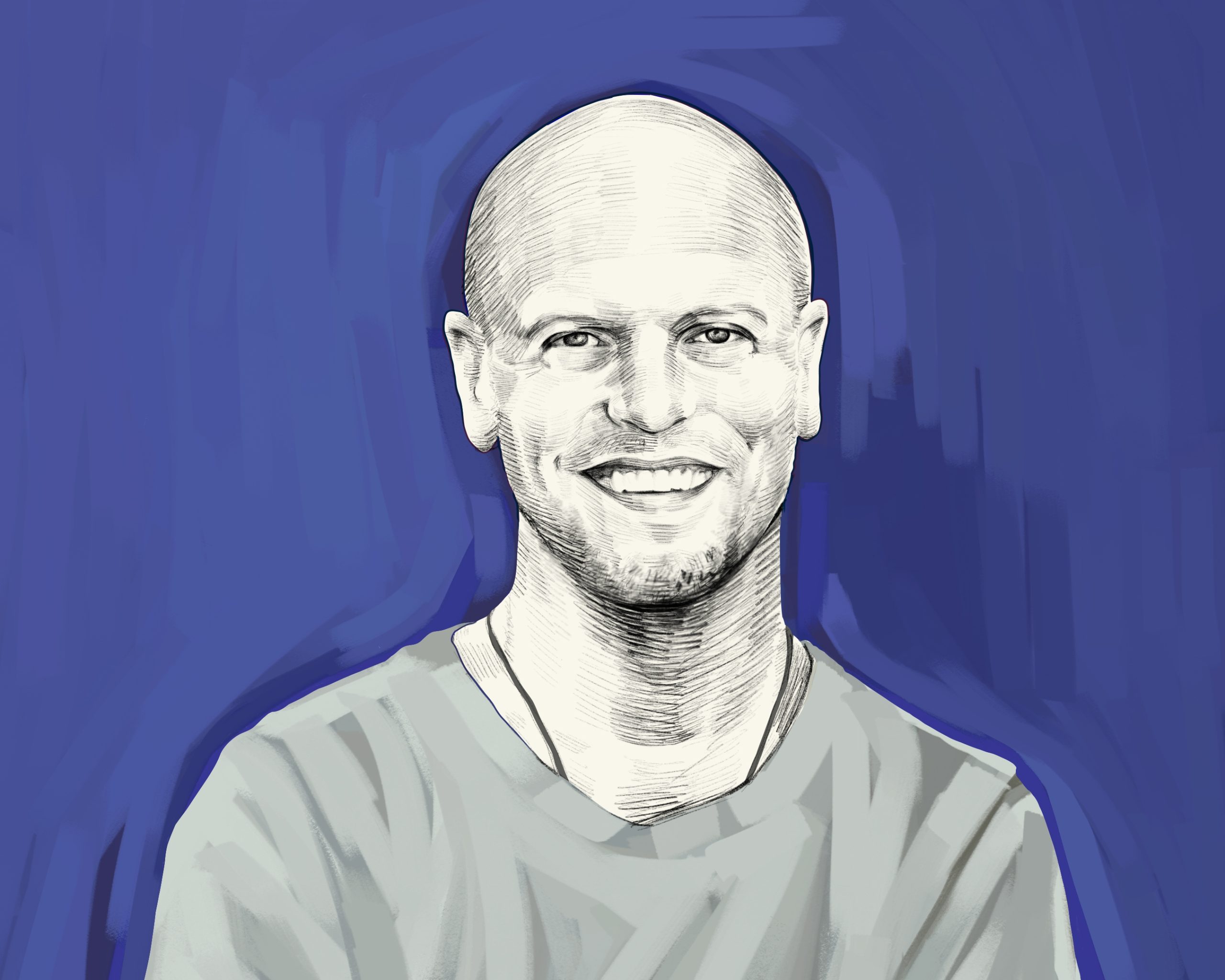
Please enjoy this transcript of a different kind of episode, where I am in the hot seat. Dan Harris (@danharris) interviewed me for his show, the 10% Happier with Dan Harris podcast, and I thought it was worth sharing here. We cover my most recent brain stimulation protocol, where I’ve landed on optimization, and avoiding traps of self-help. Dan is a wonderful interviewer. He is the bestselling author of 10% Happier and Meditation for Fidgety Skeptics: A 10% Happier How-To Book.
Dan’s full bio
Books, music, and people mentioned in the interview
Legal conditions/copyright information
Tim Ferriss — How to Quiet the Ruminative Mind, Avoid Traps of Self-Help, and Focus in a World of Promiscuous Overcommitment
Additional podcast platforms
Listen to this episode on Apple Podcasts, Spotify, Overcast, Podcast Addict, Pocket Casts, Castbox, YouTube Music, Amazon Music, Audible, or on your favorite podcast platform.
Transcripts may contain a few typos. With many episodes lasting 2+ hours, it can be difficult to catch minor errors. Enjoy!
Dan Harris: Tim Ferriss, welcome back to the show.
Tim Ferriss: Thank you, sir. Nice to be back. Nice to see you.
Dan Harris: Likewise. Let me ask you a ridiculously basic question, but I think maybe deceptively simple. I actually never know how to say, is it deceptively complex or deceptively simple? Anyway, my question really is how are you? How are you doing these days? You’ve publicly kind of gone on a ride talking about your own stuff, some of it quite heavy. I’m just curious, how are you?
Tim Ferriss: That is a both deceptively simple and complex question. My answer thankfully is really straightforward, better than ever. I feel absolutely fantastic. We could dive into how and why that’s the case if you’d like, but I would say keeping it short and sweet for the moment, I would say fantastic, better than ever, mind, body, soul, psycho-emotionally, musculoskeletally, really feeling holistically very good, optimistic, we could keep going, so I’ll let you take that anywhere you’d like to.
Dan Harris: I love to hear it. Seriously, I really do love to hear it and I would be curious to follow up and hear from you like what has brought you to this point?
Tim Ferriss: Yeah, I would say a few things. So, one of the risks of personal development, or let’s just call it more broadly self-help, is that it can very easily become self-infatuation or self-obsession.
Dan Harris: Yeah.
Tim Ferriss: And the counterbalance to that, the bet that offsets it is it’s very simple. Relationships, really doubling down, tripling down on relationships. We are evolved to be a social species, and whenever you are in isolation physically or simply in thought loops in your own head, that tends to catalyze or worsen tremendously any type of instability or OCD or depression or anxiety or fill-in-the-blank psychiatric condition. So, my policies, which were already in place last time we spoke that I have really continued to invest into are doing a past year review every year, looking at my top relationships that are nourishing, energizing energy in as opposed to energy out, and then blocking out time in advance for the entire year for extended periods of time with those people. Now extended will depend on your circumstances. For me, that could be anywhere from a long weekend to a week spending say five days in the wilderness in Montana with some of my oldest closest friends, et cetera, et cetera.
That will do — not to denigrate therapy in any way — but sometimes talking more about your problems, if it were to solve all of your problems, would’ve worked already. There’s a place for talk therapy, but it is not, nor does it need to be the only tool in the toolkits. So, simply spending time around your silly, dumb, amazing friends and laughing, whether it’s around a bottle of wine or a meal or a campfire, really, really goes a long way. So, that’s one piece of it. Second piece is to hit a familiar thread is very consistent meditation typically twice daily, 10 minutes, very, very straightforward in my case.
And then also if we’re going out to the edges a bit technologically speaking, there is something that some of your listeners may have never heard of, which is accelerated TMS. TMS stands for transcranial magnetic stimulation. It’s a type of brain stimulation that has existed for decades, but the hardware and the software, everything about these technologies has improved dramatically in the last five to 10 years, particularly in I would say the last five years.
Thanks to certain researchers like Nolan Williams out of Stanford, who sadly passed away in the last six months and others. But what accelerated TMS looks like is typically up to, let’s just call it maybe one or two years ago, accelerated TMS takes what you might do in conventional TMS over several months where you go in, you have this paddle put against your head, it produces a magnetic field that just to keep it very simple, either excites or inhibits certain parts of your brain, certain types of circuitry, and that can be applied to depression, it can be applied to neurodegenerative diseases. In fact, in some cases it can be applied to anxiety, OCD and so on, depending on the target where you place these coils. And in the case of accelerated TMS, you’re taking what you might do over three, four, five months and you’re compressing it into one week.
So, every hour on the hour, 10 hours a day for one week, you’re going in and getting, let’s just call it a few minutes, three to nine minutes of pulses on your brain, and then you take 50 minutes off, you go back in, you get hit again, and that has been referred to at least in one format. The SAINT Protocol S-A-I-N-T, they’ve shied away from it, but it was developed at Stanford and the SAINT Protocol in many, let’s call them patients, produces 70%, 80% remission of depression. That is quite durable. It’s not one shot you’re done. Typically, people will, let’s just say do a five-day sequence, then they might go in and have one to three-day booster sequences three months, six months later. And this technology has tremendous effects. I’ve experimented with this over the last handful of years. The first time I did it, it had near miraculous results.
I went from having severe and I’ve been officially diagnosed, so this is not just throwing it around loosely, but moderate, severe OCD with lots of rumination. I’m not flipping light switches or washing my hands, but I have these ruminative loops that I get caught in. People I’m sure some listening can identify with this where you just can’t turn off these kind of compulsive thought loops. Could be a grudge, could be a fear, could be something you’re planning for, could be a conversation you need to have. It just loops and loops and loops, which causes insomnia, which causes fatigue and just general wearing down of the system, which leads to depression. I’ve realized that’s my sequence. It actually starts with anxiety, not depression out of the gate. And I was having, let’s just call it seven, eight out of 10 symptoms when I went in to the first treatment, I did a five days that’s really severe for people who are not clear.
It’s really, really severe. It’s affecting every aspect of my life. Had the treatment, there was a delayed onset and even the scientists most involved with this don’t really have a great explanation for how or why this would happen, but nothing really happened for two, three weeks and then flipped a switch and had basically zero anxiety, zero rumination for, let’s call it three to four months. I’ve never experienced anything like it. And that includes psychedelic assisted therapies, which I know very well and have supported a lot of science underlying. This is a bit of a long answer I realize, but for people who are interested, I really recommend the conversation I did with Nolan Williams. Then there are different types of hardware, but I tried it then with boosters several times afterwards. Null effect, zero, didn’t work.
And I started to lose hope again because I thought this was going to be a replicable, reliable tool that I could use. I was so excited and did a Hail Mary kind of last ditch round with the accelerated TMS recently. I did this in Northern California instead of doing five days. So, keep in mind, it’s like, let’s just call it three months of TMS gets compressed into five days. Instead of doing five days, I did one day, but I pre-dosed with something called D-cycloserine, DCS, as it’s sometimes referred to in the literature, is in many ways an antiquated antibiotic that used to be used for tuberculosis and sometimes urinary tract infections, which affects the NMDA receptors in such a way. I think it’s a partial antagonist, it might be an agonist, so don’t quote me on it, but the point is this little drug that is not typically used anymore is a catalyst for neuroplasticity.
And when you take this beforehand, you can do something like one day of accelerated TMS and sometimes the results are better than what you previously, let’s just call it seven years ago, would get from three, four months. And I did one day and Dan this time around, it was just like a switch basically the next day and it has now been two or three months, and I don’t want to set expectations that it’ll be this way for everyone. It seems to be particularly effective, yes for depression, but it seems to be particularly effective in a very small sample size at this point for anxiety and OCD and it’s just a different life. It is a different life.
So, all of those things in combination plus the basics, right? The kind of basic macronutrients of health, exercise, et cetera, et cetera, et cetera, diet and so on, are just doing their job together. The last one I’ll throw in and then I’ll shut up because I realize this has turned into a TED Talk, is intermittent ketosis. So, the ketogenic diet and ketosis overall, which can be achieved a few different ways, which I’m in right now, is absolutely phenomenal for addressing a lot of psychiatric pains, psychoemotional pains that are failing to be treated by medication. And there’s something called metabolic psychiatry. Chris Palmer out of Harvard and others have looked at this very closely. All right, thanks for coming to my TED Talk.
Dan Harris: I just want to assure you, TED Talks are welcome here. You’re a podcaster, you know long answers are fine. So, please delete that sheepishness from your mind.
Tim Ferriss: All right, will do.
Dan Harris: I have a million follow-up questions. Let me just say just high level, a different life, those three words really did make me very happy to hear that that’s what’s going on for you.
Tim Ferriss: Thank you, Dan. Yeah, it is impossible to overstate the difference between an eight out of 10 of non-stop ruminative monkey mind with a fixation on things that are anxiety-producing to getting to a one or two out of 10. Those are two different lived experiences. They are so far apart from each other. It’s really remarkable.
Dan Harris: So you mentioned transcranial, is it magnetic stimulation, TMS?
Tim Ferriss: Magnetic stimulation. Mm-hmm.
Dan Harris: I will drop a link in the show notes for people who want to listen to Tim’s conversation with Nolan Williams, with the caveat of course that you’re not the researcher, the world’s leading expert, you’re more of the Guinea pig and patient. But can you tell us a little bit more about is TMS widely available? Is it a thing that average people can access and also how strong is the evidence?
Tim Ferriss: All right, I’m happy to tackle that with, as you said, the disclaimer, I am not a doctor, nor do I play one on the internet, but I do spend a lot of time in these waters. So, what I’ll say is that the evidence for TMS broadly, they’re decades of evidence with different applications of TMS. As we look at accelerated TMS, there’s actually I would say very compelling body of evidence. Once we get into the vanguard, which is always risky, right? You don’t necessarily want to be one of the first 100 monkeys shot in the space, but in this particular case, the pain was great enough that I decided to opt-in. Then you’re getting into the bleeding edge, which is this D-Cycloserine, DCS plus TMS. That’s very much at the outer reaches. I would say at least based on the clinic that I went to, and maybe overall for all I know I am one of perhaps 60 patients with OCD/generalized anxiety disorder who have been treated that way. So, it’s a very small number.
In terms of accessibility, there are, let me start from the top in no particular order, but I’ll just say that there’s a hardware stack. So, the two companies that I’m most familiar with, which make hardware that I’ve used myself, are BrainsWay, that’s one company and then another one is MagVenture. The hardware are different. I know people who have responded very well to both of them, so you can vet certain providers. I would say not saying this is the only way, I’m not saying it’s fair perhaps there are other technologies out there, but as you would expect, there’s a fair bolus of fly-by-night operations that are promising miracles and offering “TMS” that is actually not following any protocol whatsoever. I think that’s very unethical, but BrainsWay, MagVenture are two types of hardware and then you really want to look, it is available is the short answer. Accelerated TMS is available in a lot of major cities. It is not as widely distributed as I would like because it is generally not covered by insurance.
Accelerated TMS is generally not covered. TMS, let’s just call it conventional TMS is often covered by insurance depending on the indication, but accelerated TMS where you’re basically taking a week off work and just getting your brains up 10 hours a day for five days straight, typically not covered. And part of why I’m so excited about the implications if the data scale and are robust and show comparable or superior results with this pre-administration of this drug is that the ability of anyone, whether they are average, less financially stable or very well-heeled of taking one day off of work, is not only logistically so much easier if they’re able to pre-administer with this DCS, but it should be much less expensive.
So, I’m hoping even if people have to pay out of pocket that these breakthroughs, hopefully they’re breakthroughs with combination therapies of TMS, accelerated TMS and D-cycloserine will really make it much more widely available. That’s my hope. It’s going to take a little while, but it is available. I know there are clinics in, for instance, New York, I know there are clinics in California and Chicago that are credible. They may exist in other places as well.
Dan Harris: The other thing you mentioned in terms of having a different life is your focus on relationships, and I saw myself in that answer. There was a kind of desertification or desertification, I don’t know how you pronounce it, of my social life for many years because I was such a careerist and such a workaholic, and then in recent years have really turned that around and I see such a massive difference in my mental health. I’m curious, you mentioned that in recent years you’ve at the top of every year you make a plan to see the people who, to use the cliche fill your cup. Had you gone through a period like I did where there was a certain amount of isolation or inattention to this lever?
Tim Ferriss: Oh, for sure. There were a few different reasons for that. I don’t know if hindsight’s 20/20, but I think it’s easier to see from my vantage point now, and it’s a balancing act because there’s compulsive socializing because you are incredibly uncomfortable or afraid of being alone or with yourself.
Dan Harris: Yes.
Tim Ferriss: Right. There’s compulsive socializing to distract yourself, like protect yourself from yourself, which is problematic. And then there’s compulsive isolation and I would say I probably leaned far more towards the compulsive isolation and there were two reasons for that. One was workaholism back in the day for sure, and I just felt like I was more effective, able to produce, more able to focus on business, finances, whatever it might be in isolation and there might be some truth to that. Then I would say there was also this belief that I think at the time was really implicit. I don’t think I explicitly grasped it, which was I’ve written this incredibly long essay that maybe I’ll publish at some point, but talking about some of the dangers of self-help and one of them is the following, which ties into what we’re talking about and leaning towards isolation.
This implicit belief or explicit that you need to work on yourself and fix yourself and “do the work” and then you’ll be ready to interact with other people and have a significant relationship and engage with your family if that is an option or you want it to be an option, et cetera, et cetera. So, in effect, the analogy that I’ve drawn for some friends is you want to play soccer, but first you’re going to read all the textbooks and get a master’s degree and PhD in soccer and then you’re in a practice dribbling and penalty shots and so on by yourself and you want to become as perfect a player as possible by yourself before you ever actually get on the field and play the game of soccer and you can start to believe that you’re playing soccer by yourself. There’s always more room for improvement. You’re never going to be perfect.
And if you get caught in that trap, which is the partial trap of self-help, you’re always polishing this self and it can become this real recursive dangerous trap, this fixation on the self, and you never actually fucking play soccer. And at a point you start to believe that you are, but you’re not. You’re simulating by yourself life, but not actually engaging with life. And I have, who knows, maybe this is a function of getting older. I don’t think so necessarily, but for so many decades I was interested in the cutting edge of everything, and I still am, but I’ve become interested equally in things that have lasted millennia or more than millennia.
And I recommend, if you’re trying to learn how the latest LLMs differ from one another, et cetera, you also spend some time looking at evolutionary biology and studying the things that we have evolved to optimize for to experience. And man, it’s just like, I think it was Reaganomics, right? “It’s the economy, stupid.” It’s the relationship, stupid, right? If you don’t have physical contact with people, if you have these in real life physical experiences, if you model that in animals, they become a complete disaster. They exhibit the same types of behaviors that we now see spiking in humans—anxiety, depression, lethargy, sitting in a cage, not doing anything. We need this type of contact. So I’d say that I’ve offset the bleeding edge with the very, very super dull edge of things that have lasted a long time.
Dan Harris: Amen.
Coming up, Tim talks about the perils of self-op optimization and the secret to what we actually should be optimizing for, the ketogenic diet, using AI as a means of working on your health. In other words, should you be talking to chat box about your medical stuff and much more.
The question I’m about to ask might bring us back to your unpublished essay about the dangers of self-help, but you mentioned the word optimizing and in some ways I kind of think of you as the proto-optimizer, 4-Hour Workweek.
Tim Ferriss: Sure.
Dan Harris: I’m just curious where you are on self-optimization now?
Tim Ferriss: I would say that I still focus on certain areas to optimize. I still pull certain levers and what I would say I have become much better at, and it takes practice, it’s going to sound so rudimentary, is asking simply what are you optimizing for before you optimize? Why are you optimizing? And it’s easy, I would say particularly if you are being shaped by social media, which seems to basically offer you the seven deadlier cardinal sins on a silver platter, you get to pick your poison. If you’re being shaped by that, then you can end up optimizing without a direction necessarily or questioned. You haven’t interrogated the direction. And that could be because you’re following someone online who’s a multi-billion dollar real estate developer/serial entrepreneur/fill in the blank and the chase for money is on. But that never really gets interrogated. I think The 4-Hour Workweek does a good job of breaking down kind of work for work’s sake and money for money’s sake.
So, for me, I have three relatives right now with rapidly progressing Alzheimer’s disease, including those who do not have the genotype. If we look at say, APOE status, right? They’re APOE 3/3, whereas I’m APOE 3/4. So, that’s scary. There are other factors to consider for Alzheimer’s. I am doing things to try not to die from something that is hopefully preventable from the perspective of cardiac health, cardiovascular health, and then also trying to mitigate my risk of neurodegenerative disease. And that’s why I’m in ketosis right now, for instance, and juries out on some of this, but very plausibly, there are mechanisms by which going into ketosis on a fairly regular basis for a few weeks at a time, let’s just say in my case two or three times a year may have neuroprotective effects, also anti-cancer effects.
And people can listen to my interviews with Dominic D’Agostino, he’s a researcher out of Florida or other people for the science behind this. And it’s also an intervention, and this comes back to your question about optimizing that is very, very well studied in the sense that I have very high confidence that the downside risk is low and very manageable, whereas if you’re just mainlining GLP-1 agonists, amazing results that we’ve seen in the literature so far. But have we had anyone on these for 10, 20 years? No, at least not 20 years. Maybe some of the first monkeys shot in the space like me with the accelerated TMS and the DCS has been on for that period of time. That doesn’t mean don’t use GLP-1 agonists, but understand that there are a lot of unknown unknowns.
With the ketogenic diet, it’s like look, the ketogenic diet in its modern incarnation using heavy cream or other types of fats, what’s designed for epileptic children, and this goes back probably 100 years at this point, if not 100 years close to it, and humans have the metabolic machinery to go into ketosis and have had that machinery for millennia upon a millennia upon millennia. That would be an example of something that passes the test for me of seemingly credible upside potential, even if we don’t understand all the mechanisms, limited downside potential that I can offset with certain prescription drugs, let’s just say because I’m a cholesterol hyper-absorber. And okay, great, we’re going to do that.
Intermittent fasting would be another one. During ketosis or outside of ketosis, the one thing that has most dramatically changed my blood tests with respect to specifically insulin sensitivity and avoiding prediabetes, which runs rampant in my family, intermittent fasting. In my case, that means I’m eating within an eight-hour window each day. It might be even a little shorter, like 2:00 p.m. to 8:00 p.m. and that’s it. I just don’t eat until 2:00 p.m. or 3:00 p.m. And for some folks, it’s arguably better for you if you do like a 12:00 noon to 8:00 p.m. kind of eating window. It’s also called time-restricted feeding. There’s a lot of good science for this, not just in animal models, but in humans. And the results I’ve seen from that are just absolutely incredible and it’s so simple because you don’t actually need to change what you eat, you’re just changing when you eat.
So, those would be two that people might think of as optimizing. And then I’m taking a handful of prescription drugs to offset the cardiovascular risk because it doesn’t matter if I am eating an all-fat diet, an all-protein diet, a vegan diet, a fill-in-the-blank diet, there are certain biomarkers that are just trash, they’re so bad. And that seems to be just straight from the code, straight from DNA. And for that reason, I’m like, “Ah, no spring chicken anymore. You know what? I think I’ll just bite the bullet and take some of these.”
And when, for instance, I talk with my doctors now, the first thing is if you have a blood test and something is out of range, my recommendation would be before you get on 12 different drugs to deal with it, and if it’s an emergency, it’s an emergency, but if it’s not an emergency, like your triglycerides are high, all right, well, it’s probably not going to kill you in the next week.
My recommendation would be talk to your doctor, replicate the test, do the test again the next week, maybe on a different day and see if you can replicate the error. Because for instance, if you had a heavy weekend of drinking or a fatty meal the night before and then you do your blood test at a.m. the next morning fasted, well, you might look like you’re on the road having heart attack in two months, but actually it was just behavior and diet. So, replicate, replicate, that would be number one. Don’t base the outcome of the basketball match on one photograph. Try to get tested more frequently and pay attention to when you’re getting tested. So, if you’re, for instance, coming back to the example I gave, if you’re taking your test, your blood test on Monday mornings, make sure your next test that you’re comparing it to is also on Monday morning.
If it’s Wednesday morning, it might be completely different. By the way, if it’s something like cortisol, testosterone, et cetera, these things have diurnal cycles. They really fluctuate throughout the day. So, if you get a test at 8:00 a.m., I’ve seen this with friends of mine, male friends who get a test at like 8:00 a.m. and I have to interrogate how they did things for them to Sherlock Holmes this, but they’re concerned about their testosterone levels or the free testosterone, they take a test at 8:00 a.m., looks great. They do another test three months later, six months later, they do it at 11:00 a.m. and it’s 200 points lower. Looks crazy. And it’s not crazy. They don’t actually — in this case, this guy had no problem. He was about to get on all sorts of hormone replacement therapy and all this stuff that is pretty powerful.
And I said, “Go back, do it at 8:00 a.m. again, two weeks. Let’s see what happens.” Guess what? It was the same as the first test. So, that’s step number one. And then when I’m looking at possible interventions for me, again, I’m not a doctor, don’t play one on the internet, but the way I approach it, and people get very little guidance on this, most doctors are overstretched, right? They get 11 minutes per patient. The easiest thing for them to do is say, “Look, this guy has a problem or this girl has a problem. If we throw these three drugs at it, it’s probably going to fix it. My job, as far as I’m concerned, as far as my time allows is to keep this person from dying. Okay. Start these three drugs.” But what I have tried to do, and I did this with my own particular cardiac situation, and I think Boston Health is the testing that I did to get a more granular understanding of things with a little higher resolution.
But since I’m a cholesterol hyper-absorber, that informs the type of drug I might take doesn’t necessarily have to be something like a statin. And there were three or four drugs that I was suggested to take and I said, “What is the longest study of these with the best side effect profile that is the most innocuous that I can start with? And we can do another test in two months. This is not an emergency. I’m not about to have a pulmonary embolism or heart attack, don’t have any arteries blocked. What is it?” And it was in my case, not everybody, something called ezetimibe, otherwise known as Zetia, very well studied, very well tolerated. I said, “Let me try this in case I am a hyper responder,” because sometimes you can be a hyper responder or a non responder, but I was like, “Let me just try it out.”
And statistically very unlikely that I would be, the doctor said. Nonetheless, tried it. Two months later, retest, guess what? I’m a hyper responder. So, I was able to use the minimum effective dose for medication and ultimately added one more thing, but how many decades of possible side effects did I just spare myself by doing basically like one and a half drugs instead of starting with four or five and doing that indefinitely from that point forward?
Dan Harris: When you’re dealing with your doctors, to what extent do you consult AI? I have found personally that talking to a chatbot has been incredibly helpful. Now, with the caveat that they hallucinate and they fuck things up all the time, and so I’m not taking it as gospel because your chatbot doesn’t get bored of you and doesn’t have an 11-minute window to talk to you. So, you can really spend a lot of time, and then what I found is that I can then run what I’ve learned by my doctors. Is that an experience you’ve had?
Tim Ferriss: For sure, and I do use AI and these LLMs a lot. What I would say is that if you’re going to do something like that, my recommendation would be, and I’ll give a shameless plug just because I’m involved with this company, I think they’re doing great things, but you could use something like a ChatGPT, but there’s some tools that are designed for learning. There’s one called Oboe, O-B-O-E.com. Get some basic literacy, just the ABC’s of basic medical terminology that would be helpful for understanding things like blood tests. It’s like 100 words, maybe 200 words perhaps at the very, very tippity top if you want to be an overachiever, develop an understanding of the basic vocabulary so that you can also discuss these things in shorthand with your doctors. So, once you develop basic medical literacy, you could also use that to learn how to read studies, learn how to read a scientific abstract and study. That would be one of the best investments you could ever make with your time.
Spend an afternoon doing that or two afternoons, holy shit, the ROI, and that is unbelievable. The number of medical problems averted, the number of medical procedures averted. The number of non-obvious solutions found that my basic literacy has helped to solve for is unbelievable. It doesn’t take very long. So, I would use the tools to kind of do that first. So, that’ll help you with prompts. The answers are only going to be as good as your prompts. Once you’ve done that, then I use AI all the time and there’s an expression which has been helpful for me. I can run pretty hot. I think that’s chilled out a lot, but I can run pretty hot. I’m typically very impatient. I have been since I was a toddler, and the expression is don’t attribute to malice what you can attribute to incompetence, but it goes further than that.
Just because somebody doesn’t reply to you, it doesn’t mean it’s a personal front. Just because someone does something stupid and they answer one of your questions out of the three, you emailed them, you can be like, “Ah.” You can get really wound up. But I would go further than that, which is don’t attribute to malice or incompetence, what can be explained by a busy schedule. People are busy. Everybody’s busy. But what you can do is you can, after developing this basic literacy, you can go in and then you can ask questions that your doctors may not have time for. I am always checking for contraindications between medications and also supplements because doctors will miss these. They will miss them. They might not miss the most obvious, but there are some that are not as obvious.
For instance, there are sleep medications like trazodone, which really affect the serotonergic system. It’s effectively — this is an overstatement, but it’s effectively a failed antidepressant. So, if you don’t know that, and it’s not technically exactly an SSRI, like a Prozac, but there are some similarities, if you don’t know that because you’re taking a sleep medication and then you go out and take something that’s contraindicated for this entire class of serotonin specific antidepressants, you can get yourself into trouble.
So, I will regularly check for contraindications. That’s one thing I do. I have friends who’ve uploaded their whole genome to some of these LLMs and ask for insights, and they’ve identified some remarkable things. The risk in doing all of this is that you may uncover issues that if you are prone to anxiety, for a lot of reasons, I’m kind of inoculated against this with medical stuff because I’ve spent so much time in the medical and scientific world.
But — give you an example, another thing that I do once a year or twice a year is a full body MRI, and there are companies that do this. I think Biograph is the highest level. Prenuvo is also pretty good, but I’ve seen a couple of people have cancers missed, which isn’t great. So, if you get a full body MRI and you are over the age of 40, you’re going to find something, you’re probably going to find some type of internal cysts.
You might find if you had as a friend of mine did like a small brain aneurysm, you’re probably going to find something. And the question is, can you handle that? Can you handle either doing something about it, which is presumably why you’re doing it in the first place, or can you deal with the overwhelming likelihood statistically that the doctor’s going to say, “Yeah, we found X, Y, or Z, you don’t need to do anything about it? We’ll just keep an eye on it.” Are you going to be able to handle that without becoming a stress case who’s combing through LLMs and WebMD all day making yourself crazy? Anyway, I’ll stop there. But yes, I use these tools all the time. If you’re going to use one tool, use another tool to fact check it. So, if you get something from chat GPT, absolutely have that thing cross examined by Claude or another tool. Do not trust these tools with their first answers.
Dan Harris: Just on the pan-scan thing, the full body MRI, the ultimate, this is a bit of an aside, but I have figured out the ultimate health hack, which is marry a doctor because she can’t get out of here, and I ask her a lot of questions, but she is really against these pan-scans for the very reason that you just stated, which is you will find something and it may stress you out, or it may put you in the market for a procedure you don’t need. Yeah, so it’s interesting that there’re different POVs on this.
Tim Ferriss: One of my favorite quotes is “Be suspicious of what you want.” That’s a Rumi quote, going way back. It’s like we think that we want all of the health information we can possibly get, but you should be a little skeptical and suspicious of that if you’ve never dealt with a huge amount of health information at high resolution. So, yeah, it’s very personal thing. In my case, psychologically, this particular type of data overwhelm, I’m pretty good with.
Dan Harris: So I asked before about where you are with optimizing now and you said you’re more surgical now in how you optimizing. You listed a bunch of areas including how you eat. You did put out a podcast in August of 2025 talking about some of your rethinking of optimizing. I’d just be curious, where are you at with that now?
Tim Ferriss: I think that optimizing is the how, broadly speaking, how you do something. Much more important than how you do something is the few some things that you choose in the first place to do. This applies to learning quickly. This applies to making a lot of money. This applies to getting in great shape. What you do in a sense matters a lot more than how you do anything. You can get very, very, very good, very optimized, very efficient at doing something unimportant that does not make it important, just makes you very good at doing something that you probably shouldn’t be doing in the first place. Modern productivity porn is indiscriminate in how it applies, optimizing to everything and everything.
There’s some very funny morning routines that are these YouTube videos that are four or five hours long of people going through their day. There’s a point at which your morning routine just turns into a five-hour warm-up for life each day.
That’s obviously a really extreme example, but for me, if you were to have a nanny cam hidden in a little stuffed bear in my house, my office, this Airbnb where I’m right now, and you watched me on any given day, you’d just be like, “What is this guy doing?” I mean, it’s like a poorly programmed Roomba. Is this Blair Witch Project? It doesn’t seem to be doing much work. What is he doing? And part of the reason I can get away with that is that I think I am very good at measuring twice and cutting once. In this context, what that means is I’m spending a lot of time looking at doing 80/20 analysis, asking myself, what can I do that is not easily replicated by someone else that I find easier to do than other people? Which is kind of a shortcut to finding things that you’re good at that you’ll also have the endurance for because it’s easier for you or you’re obsessed with it.
Okay, what am I obsessed with? What am I doing in my off hours? Okay, let me try to find a Venn diagram of that and then focus on those things. I’ll test it for a very short period of time to see if number one, I can sustain it. If I am actually as good as I thought I would be, I need to be the best in the world, but better than average. Then over time, as I’m throwing a lot against the wall and then I’m looking back and saying, “Okay, I tried these three things, or I made these four investments. I had these assumptions at the time. Did they pan out? Why or why not?” And then course-correcting. They’re actually very, very, very, very few things you have to get right, in my opinion, to have an incredible life. You don’t need to be great at a lot of things is my perspective.
It’s like, look, I remember talking to Jerry Seinfeld and one of his conclusions was if you lift weights and do Transcendental Meditation, that’ll solve pretty much all your problems. And I’m paraphrasing, but it wasn’t too far from that. He’s like, “If you lift weights and do TM, it will solve most of your problems.” I like that because I think there’s a whole hell of a lot of truth to it that distilling down and it makes life seem much more manageable. If people feel like they have to win this super ultra decathlon of life where instead of 10 sports, there are 150 sports you have to be good at, who’s going to actually surmount that and cope with it well? Nobody. So, for me, it’s like, look, if I had to just pull a rabbit out of a hat right now to pick a few, I’d be like, “Read Nonviolent Communication.”
Figure out how to talk to people without sounding overly defensive or aggressive. Life, unless we’re going to be a monk of some type or a nun, and even then probably, there’s some crazy internal politics at the Hamlet in China, if you know the abbot, you’re going to have to deal with that abbot. So, work on your communication. Take that very seriously as the connective tissue for everything. Don’t invest in things you don’t understand. It’s like when in doubt, read a few books on low-cost index funds and the S&P 500. Go look at the graph over the last five, 10, 15, 20 years.
You might have some hard dips here and there, but if you’re trying to get fancy and invest in individual AI stocks, like wow, maybe you’ll pick Amazon and Google out of all the trash there is right now. But most of us, I don’t think I can do it. Lift weights, try to do some zone two training where it’s like you could speak in single sentences, but you don’t really want to do that for 30 to 60 minutes a few times a week and then don’t eat processed crap, Michael Pollan rules. If your grandmother wouldn’t recognize the ingredients, don’t eat it. Try that. I think you’ll do pretty well.
Dan Harris: Hard to argue with any of that. Coming up, Tim talks about why you need to say no more often and the tools you need in order to get better at saying no, doing a digital detox, defanging your careers and a new game he designed.
One of your current projects is called The No Book, and the book, as Tim has pointed out, may come out in 10 years because he’s working on it slowly. But he has released a couple of chapters online and I’ve read at least one of them and it’s really interesting. So, before I say too much, maybe you could describe what is The No Book and why are you writing it if only slowly?
Tim Ferriss: Yeah, I have an 800-page draft right now, so it’s going to need to get whittled down a little bit. But The No Book started something like, boy, six years ago where I noticed a lot of people in my audience, my listeners, my readers struggling with focus and saying no, because fundamentally the road to where you want to be in life is Wizard of Oz, golden brick road is saying yes to a few things, a few things. There are just a few things you have to get right. That’s the yes road and it’s very few things. The guardrails for that are no. You have to say no the entire way. I was writing this book, I reached out to a bunch of my friends, these are very accomplished friends, in this case, to ask them for their recommendations. I thought they would help me write this thing and they were like, “Oh, my God, are you kidding me? This is the biggest pain in my life. Please send me an early copy when you can.”
So, my friends, there were a few who were actually very helpful, but the vast majority were like, “Oh, my God, I thought that life was going to get easier. It has only gotten harder with respect to saying no.” It just became this massive project. So, I put it on the back burner and then a friend of mine, Neil Strauss, some people might recognize that name, he’s written something like 10 New York Times bestsellers and he’s terrible at saying no, it turns out. And he was busting my balls about not writing this book, and he kept harassing me about finishing it, and he was actually kind of creating a kerfuffle over a group dinner after a few drinks. And I was just like, “Neil, if you want to read this book so badly, why don’t you just help me finish writing it?”
And I thought that put it to bed, and then the next day when we all sobered up, he was like, “If you’re serious, why don’t we talk about it?” At the same time, I was noticing with social media, certainly with AI, it’s going to get a thousand times worse. First of all, the external forces that want to distract you are almost unbeatable. It’s incredible how sophisticated they are. Secondly, the way that enables self interruption and distraction is something that humanity has never seen before. There is this incredible pain in terms of paradox of choice. What should I do? Who should I listen to? What should I watch? What should I pay attention to? That is fracturing the psyches of people. And this, by the way, geographically, does not discriminate. Economically, it’s like up and down the chain, left, right, front, center, everywhere.
The problems just seem to be getting bigger and bigger and bigger. So, wrote this book with Neil basically as the student and what’s fun about it, I think it’s my most entertaining and hilarious book in a way, because I’m giving Neil these assignments and then he’ll try them, but it’ll be passive-aggressive and he’ll screw one up or he’ll actually not do 50% of the assignment and then I’ll follow up and he’ll have all this guilt. But we have real examples of emails he tried to send, text messages he’s trying to send. He’s trying everything in the book and learning as he goes. And I would say there are a few people who have proofread the whole thing and they’d proofread it like a year ago. They’ve come back — and these are fans of my stuff who’ve read my other books and they’re like, “This book has had a huge impact on my life,” and they still give me examples.
So to then answer the question of, well, what exactly is the book talking about? The book is talking about how to say no in a world of compulsive yes, but what’s important to note about this is it’s not enough to just have a couple of index cards or templates for doing exercise for saying no. If that would’ve worked, it would’ve worked already. Sure, I can give examples and I give tons of examples of lines that are helpful for saying no. Like Martha Beck, who was Oprah Winfrey’s life coach and was an amazing woman in her own right for a lot of reasons. She turned me down for something and I include these real nos because I kept my favorite declines and rejections over 10 years. And so, I share a bunch of them and she said to me, “I really wish I could, but I can’t do the life Tetris.” Do the life Tetris.
And I was like, “Wow, that is so good. You’re not explaining, you’re not defending, you’re not giving a bunch of stuff that someone can try to negotiate around.” It’s just like, “Hey, I really wish I could. I just can’t do the life Tetris.” And so, I give examples like that, but that is not enough. Once you start really digging into why people have trouble saying no, it’s not only because they lack templates, it’s because of certain core beliefs, which are thoughts we take to be true, to quote Byron Katie and philosophies they have that they’re not even aware of that make it almost impossible to say no. And that could relate to FOMO. It could be related to a very scarcity minded, limited number of opportunities, a belief that you can’t generate opportunities yourself. You have to wait for things to come as inbound.
And I hit these very early on, and actually I think they’re in the sample chapters that people can get if people go to tim.blog/nobook. So, tim.blog is the actual URL/nobook, one word. I think it’s 30 or 40 pages of the book that will get into this, but a lot of folks will say, “I’m too nice for that.” Okay, we unpack that because there’s a lot there, right? Must be nice for Tim or fill in the blank because they’re already successful. I don’t have that luxury. Right. Okay, well, let’s actually double-click on that and start to interrogate some of these beliefs and on and on and on. So, saying no in a durable way, really developing a toolkit, which as far as I’m concerned is a self-preservation necessity now. When I first started it six years ago, I was like, “If people really want to get 10X results in their life and continue to apply the things from The 4-Hour Workweek, like 80/20, et cetera, they really need to have a reliable toolkit for saying no.”
But now, looking at social media AI, social media enabled AI, blah, blah, blah, blah, blah, what it’s going to do to inboxes, messaging, et cetera, like personalization spam, you fill in the blank that are indistinguishable from humans, this is knowing how to breathe as far as I’m concerned. You have to have a toolkit like this. You’re going to be a roadkill, I think. That sounds probably very dramatic, but it’s like I’m sitting at Silicon Valley right now for my first trip here for a few weeks in duration in like eight years, I’m telling you guys the stuff that’s coming is going to be amazing. It’s going to be incredible. It’s also just going to be catastrophic for a lot of minds that are unprepared with the proper toolkits. So, saying no is important.
Dan Harris: Agreed. And it’s a huge struggle for me. You have a beautiful phrase in your book, promiscuous over commitment, and I am really, really guilty of that. There’s another nice phrase you say, “The book will help you build a benevolent phalanx, protective wall of troops to guard your goals.” We don’t have time to talk about all of the tools in there, but is there a tool in particular you think that would be very, very powerful for people?
Tim Ferriss: Yes, absolutely. A lot of folks have perhaps heard the apocryphal story of — and I think I give proper credit in the book, and this is one of the chapters that people can get. So, there’s plenty of value that people get from the free stuff, but, I mean I’m not even selling it yet, so maybe I’ll give away more. One of the culprits, one of the biggest causal factors for why people have trouble saying no is they don’t have big enough yeses to defend.
And for instance, if you had a brand new child, or someone you loved, God forbid, had a serious cancer diagnosis, if you had a tiger by the tail and knew that you were working on a business, I’m using an extreme example on purpose, they could be worth billions of dollars. You would not have trouble saying no to things. So, then we go back to the other end of the spectrum, it’s like, well, if you don’t have really clearly defined big yeses that get you excited, that have the potential for huge payoff, not necessarily financially, and you are kind of searching around your inbox for things to answer when people send you an invite to a dinner or they want to have coffee to pick your brain, or it could be anything, a costume party you don’t want to go to, that’s a real example from Neil actually, and you’re going to say yes because what’s scarier than having lots of little or promiscuous over commitment, it’s a big void.
So, the apocryphal story that I was hinting at is the story of the professor who comes in, and I want to say this was from originally Stephen Covey or maybe Stephen Covey adapted it. The 7 Habits of Highly Successful People, I believe was the book. It might’ve been in his teaching and not in the books themselves, but the story is along these lines. The professor goes in and he puts out on the desk in front of the students like a large mason jar, a handful of big rocks, three or four, a bunch of gravel, and then a bunch of sand. And he challenges the students, asks them first how they would fit as much as possible into the mason jar, and they try different approaches. So, if you put in the sand first, then you get a little bit of gravel in, can’t fit the rocks. Well, ditto if you put the gravel in first, then you put in the sand, maybe you fit one rock, and ultimately the lesson is you have to put in the big rocks first, then the gravel fits around that, and then you can fit in the sand.
In the version that I tell, I make a modification to that and I say, “No matter what they do, there’s still sand left over on the table.” And I think the lesson is if you’re looking at this in terms of commitments, the big rocks are those kind of life-changing yeses, the few things you need to protect on that golden road to get really where you want to be. Then the gravel, to me are the smaller, but critical things you need to do. Got to file your taxes, got to do A, B, or C. And then the sand is all that extraneous stuff, mostly distractions. You can fit some of it, but if you schedule all that stuff first, it’s going to crowd out the gravel or it’s certainly at the very least going to crowd out all the big yeses.
So in the sample chapters, I just walk people through how I do this past year review and how I actually pick the big yeses because the book on no is equally a book on — to answer the question, how the hell in a world of infinite options, in a world of temptation around every corner do you pick a few things to focus on that are really high leverage? How do you do it? That seems like a simple question, but it’s actually a very hard question to answer. So, I would say that if you’re having trouble saying no, underneath that probably is the fact that you don’t have a big enough yeses that are worth defending. And then there’s a lot that leads from that. How do you commit to a yes and insure against reneging or something else? This is intended to be, hopefully all of my books, a very practical book.
So what happens when you screw up? There’s an entire chapter on how to renegotiate commitments after you have already overcommitted. Because guess what? If you have that tendency, you’re going to overcommit. You’re going to look at your calendar for the next few weeks or month and say, “Good Lord, I’m screwed.” And then what do you do? You’re going to have to have some very potentially uncomfortable conversations. So, we’re learning to renegotiate commitments is also an art form that is going to be included in it, but fundamentally it’s big yes is worth defending, I would say is another one.
And sure, there are lots of things that you can do that you could do today. You don’t have to look at any of these chapters. I have not had social media on my phone in three years. Why? Because I feel like you are bringing a butter knife to a gunfight if you have these tools on your phone. And if it’s too scary to unplug for three years, you don’t have to commit to that. I didn’t in the beginning. It’s like do a one or two week social media fast, at least on your phone. So, I can still access social media if I need a hit of the heroin, I can still access social media through my laptop, but it adds enough friction that I’m not going to end up looking at Instagram while I’m on the toilet and wondering why I can’t feel my legs 40 minutes later. It’s going to avoid that type of thing. Or the compulsive sort of dopamine scratching. Whenever you have free 30 seconds, jumping into social media, this is not good for your ability to focus. It’s not good for your ability to single task.
It’s not good for your mental health when you always have that escape. I mean, look, I’m telling people things they probably agree with, but perhaps haven’t implemented. So, you could do something like that. You can use an app like Freedom. There’s an app called Freedom that you can use to block certain things for certain periods of time. I mean, there are these technical tools that you can use, but at the very base, you can’t use more window dressing technical tricks to fix fundamental problems with goal selection. Big yes is worth defending. And core beliefs, if I say no to this person or something bad is going to happen and they’re not going to like me, they’ll stop inviting me to things.
If you have these and that is going to what? You have to ask, and then what? And then what? I’m going to end up alone? Okay, well, these are sort of Rubicons you need to get comfortable crossing in the sense that my experience is, this is also Neil’s experience, he had tons of fears as did I in the beginning stages. It’s like when you start to stand up for the things that are important in your life, I think this is a Dr. Seuss quote, but it’s like “The people who mind don’t matter and the people who matter don’t mind.” You actually do a lot of pruning in your life that you should do anyway. And it’s a forcing function for that.
Dan Harris: It’s so interesting. It really is about courage in the end.
Tim Ferriss: It is. And you can train that. You can train that. It’s not something you are born with or without. That is something through actually understanding what your fears represent and what’s underneath them. It could be from childhood, it doesn’t necessarily have to be, but when you start to actually examine them — there’s an exercise people could do today also. They can find a TED Talk on this called fear-setting.
You start to do fear-setting around these fears, you defang them, and guess what? Suddenly you have this thing that others might call courage, but what it is, it’s clarity. It’s clarity around the actual downside, which is limited versus the upside of protecting these big yeses over a year, two or three. And I will say not to continue to beat this dead horse, but with all of the noise that is here, but that is coming with AI, it’s going to be 10, 100, 1,000 times worse within two years. If you can single task on important things for not even four hours a day, two hours a day without interruption, you are going to be from the perspective of let’s just say an attention economy in the top one percent of performers. It’s never been easier and it’s never been harder in a way.
Dan Harris: I’m going to lose you in nine minutes, so I do want to make sure I quickly ask you about Coyote, another of your projects. This is a game that you’ve designed. What is it and why?
Tim Ferriss: Yeah. So, Coyote, it’s a tiny little card game that I designed with some of my friends at Exploding Kittens, which people might recognize. They have a lot of very, very popular games and it’s a fun family game. It’s something like, if you could imagine charades meets hot potato meets brain-teaser, something that I hope at some point I’d actually like to do a clinical study on this, but it makes you just a little bit smarter than the people who play. It is a casual card game. You can learn a few minutes. Each game lasts about 10 minutes. And the reason I created it, I always wanted to make a game, number one, and this is actually a good illustration of some of the stuff that is in the book that’ll come out in 100 years, but people can apply it today, which is I choose projects based on which projects will allow me to win even if they fail.
What does that mean? I assume that any project could fail for reasons totally outside of my control. It’s happened before, it’ll happen again, happens to people every day. So, how am I then choosing things to commit to? Well, generally I’m doing all these two-week experiments on various things like the diet and this, that and the other thing. With projects, it’s like a six-month commitment. I’m looking at a six to 12 month project where I really go all in. By the way, that makes it easier to say no to things when you’re doing a sprint as opposed to a very slow walking marathon. So, I’m committing to something that I think will be six to 12 months and I am optimizing for what I will learn, the density of learning and also the relationships that I’ll deepen or develop.
So, it could be with new people, could be with people I already know, with the belief that those relationships and those skills or knowledge will transcend that project even if the public hates it, even if in my case, for instance, China tariffs for a game that’s sold for $9 or $10 coming from China, that just kills the economics. Not that this was ever a moneymaking thing for me, but it’s like there are things that came up that made this suddenly much harder from a business perspective. And thank God I checked those other boxes because fortunately it’s got 9.7 or 9.8 stars on Amazon and it’s available everywhere. It’s doing really well. But what I really care about is like Elan Lee, who’s the co-founder and CEO of Exploding Kittens has become a super close friend. He was a good friend beforehand, we’re even closer now. This guy’s one of the most amazing polymaths I’ve ever met in my life. Awesome, hilarious guy.
And I have learned so much about mass retail, the Walmarts, Targets and so on. I’ve learned so much about how you have to play the politics and the Game of Thrones with that. I’ve learned about overseas manufacturing, I’ve learned about, you name it, right? I’ve learned so much and those were the reasons for me picking this. And if you look at, for instance, there’s a blog post people can find for free, angel investing, like investing in early stage companies, which is like 90% of my net worth, which I started well before I could “afford it.” There’s a blog post called “Creating a Real World MBA,” which explains kind of how I approached it, which was the same way I approached this, learning and relationships that I think will transcend that project and snowball over time so that it’s very hard to lose long term.
But coming back to the game itself, if you’ve got kids in-between the ages of, let’s say, it says 10 on the box, but really it’s kind of like age eight. If your kids are pretty smart, like age 15, this is kind of a no-brainer. The game works really, really well. Adults also really like it. So, it’s not just for kids, but if you’ve got some kids around or adults who don’t care being a little goofy, then I think it’s a really simple, fun game that hopefully does something cognitive for folks as well. That was kind of the goal. Coyote game. You can find it everywhere.
Dan Harris: It is always an enormous pleasure to talk to you, Tim. And I know you say no to most shit, so thank you for saying yes to this.
Tim Ferriss: Yeah, I love what you do, man. I love what you do. One of my very close friends who is a professor at a very well-respected university had pains in his body, this just horrible, pervasive pain in joints in his body for years and years. Started using 10% Happier, meditating every day. And it was like boom, within four weeks, pains went away, crazy. I have some theories on that. I think it’s actually might be synchronized breathing and vagus nerve stimulation, but that’s a separate conversation. And I just think you’re very thoughtful and you do a lot of good in the world, and I just enjoy hanging out. So, it’s always a pleasure to connect.
Dan Harris: Thank you. I really appreciate that. Immensely actually.
DUE TO SOME HEADACHES IN THE PAST, PLEASE NOTE LEGAL CONDITIONS:
Tim Ferriss owns the copyright in and to all content in and transcripts of The Tim Ferriss Show podcast, with all rights reserved, as well as his right of publicity.
WHAT YOU’RE WELCOME TO DO: You are welcome to share the below transcript (up to 500 words but not more) in media articles (e.g., The New York Times, LA Times, The Guardian), on your personal website, in a non-commercial article or blog post (e.g., Medium), and/or on a personal social media account for non-commercial purposes, provided that you include attribution to “The Tim Ferriss Show” and link back to the tim.blog/podcast URL. For the sake of clarity, media outlets with advertising models are permitted to use excerpts from the transcript per the above.
WHAT IS NOT ALLOWED: No one is authorized to copy any portion of the podcast content or use Tim Ferriss’ name, image or likeness for any commercial purpose or use, including without limitation inclusion in any books, e-books, book summaries or synopses, or on a commercial website or social media site (e.g., Facebook, Twitter, Instagram, etc.) that offers or promotes your or another’s products or services. For the sake of clarity, media outlets are permitted to use photos of Tim Ferriss from the media room on tim.blog or (obviously) license photos of Tim Ferriss from Getty Images, etc.
