

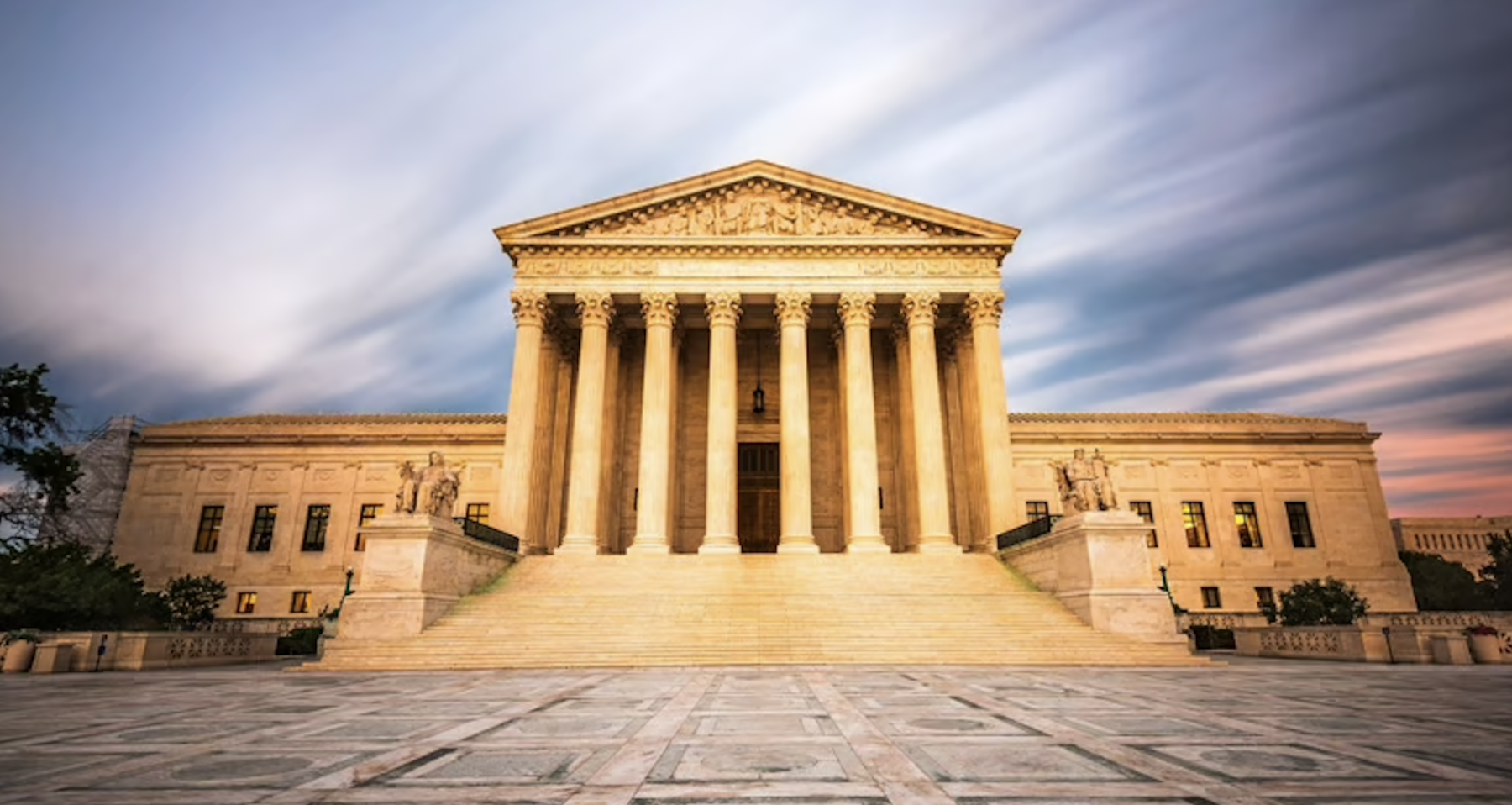
SCOTUS: Article I, Section 8, of the Constitution specifies that “The Congress shall have Power To lay and collect Taxes, Duties, Imposts and Excises.” The Framers recognized the unique importance of this taxing power—a power which “very clear[ly]” includes the power to impose tariffs. Gibbons v. Ogden, 9 Wheat. 1, 201. And they gave Congress “alone . . . access to the pockets of the people.” The Federalist No. 48, p. 310 (J. Madison). The Framers did not vest any part of the taxing power in the Executive Branch. See Nicol v. Ames, 173 U. S. 509, 515.
–U.S. Supreme Court, February 20, 2026
The long-awaited Supreme Court decision on tariffs is finally out; it was a 7-2 decision in part, 6-3 decision more broadly (I thought this should have been 9-0 or 8-1, but…).
As we have seen in prior legal decisions with broad economic impact, the street doesn’t quite understand the subtle nuances of the case.1 Regular readers have seen my tariff criticism since Liberation Day (April 2, 2025); I have been tracking the case and thinking about the ramifications as it wound through the courts.
Rather than spike the football, I would rather take a moment to step back and consider the winners and losers of tariffs.
WINNERS:
• Consumers: There’s no way around it, but tariffs operate like a European VAT tax on consumers (minus free health care and college). The average American household has been paying ~$1,000 or more annually for tariffs; even more from wealthier families that account for nearly half of US consumer spending. The administration has been angry at people reminding consumers of this. 2
But the US Consumer is the big winner here. Assume about half of those few thousand dollars are no longer going to be a dragon their annual budgets.
The $5-7,000 tariff penalty on automobiles still exists, but at least other products may see higher prices ease.
• Companies that already filed for tariff refunds: Many of America’s largest companies have already filed for refunds. It is not all that simple or easy to demand a refund on paid tariffs – shepherding it through the process makes filing your taxes look easy. But many of the biggest retailers and manufacturers have already lined up for the nearly $200 billion in tariffs companies already paid. This will straight to the bottom line, as the consumers who willingly paid higher prices won’t see any of the cash refunds.
• The US Dollar: During 2025, the US Dollar fell 9.3%. The last time the US dollar fell this much was in 2017. Both years were the first year of a Trump Administration; each time there were substantial rises in tariffs, along with consternation from allies and trading partners, along with a modest repatriation of overseas investments in the United States.
Depending on how the White House responds, we could see the dollar’s decline slow and reverse itself over the course of the year.
• Neal Katyal: Obama’s former solicitor general argued and won the case at both the DC Court of Appeals and U.S. Supreme Court. His thoughtful approach to constitutional arguments have consistently carried the day. He has cemented his legacy as one of the most effective SCOTUS litigants of the modern era.
• Inflation: if tariffs are inflationary then the overturning of some or all tariffs should be disinflationary. The net impact on this going forward is positive for bonds. This might even clear the way for the Federal Reserve to have faster FOMC rate cuts.
• Separation of Powers, US Constitution: The plain language of Article 1, Section 8 reserves the power to tax, including levying duties and tariffs, to Congress. It’s not a big leap to suggest that this is the first time since January 20, 2025, that the US Constitution is the controlling factor in a major policy decision.
• Retailers, Manufacturers, and Consumer Discretionary: The biggest impact of the tariffs has fallen on several groups:
-Traditional Retailers: Walmart, Amazon, Costco Target, Best Buy
-Home improvement: Home Depot, Lowe’s, IKEA, Williams‑Sonoma, etc.
-Appliance makers: Apple, Samsung, LG, Electrolux, GE Appliances, Lenovo
-Industrial Manufacturers – Caterpillar, Deere, Polaris, Stanley Works, etc.
-Consumer discretionary –Lululemon, Nike, Revlon Luxottica
-Auto parts importers: Toyota, General Motors, Ford, Volkswagen, BorgWarner, Kawasaki, Goodyear, Yokohama Tire, etc.
-Food importers: Dole Fresh Fruit Co., Bumble Bee
That’s a short list; there are obviously hundreds more public companies and thousands more private ones that benefit from this ruling.
• Supreme Court: The past few years have not been kind to SCOTUS (although these have all been self-inflicted wounds). They have been mired in a kickback/gifts to sitting justices scandal; the lack of a standing, enforceable set of ethics rules is a disgraceful embarrassment. But the bigger issue has been a series of unconscionable and undefendable decisions. When partisan rulings remind constitutional law scholars of the Dred Scott “separate but equal” decision, the court has jumped the tracks.
There was every opportunity for the court to blow this decision ignore the plain written word of the constitution and the concept of separation of powers. It’s no surprise that Chief Justice Roberts, an institutionalist, wrote the lead decision himself, rebuking the president for his overreach.3
Coming later: The IEEPA Tariif Ruling’s Losers
Previously:
IEEPA Tariffs Update (January 27, 2026)
It’s Tariff Week! * (January 12, 2026)
Tariffs Likely To Be Overturned (November 5, 2025)
Might Tariffs Get “Overturned”? (July 31, 2025)
The Muted Impact of Tariffs on Inflation So Far (July 17, 2025)
Are Tariffs a New US VAT Tax? (March 31, 2025)
MiB: Special Edition: Neal Katyal on Challenging Trump’s Global Tariffs (September 3, 2025)
Neal Katyal on Challenging Trump’s Global Tariffs (September 8, 2025)
Which States Could Suffer the Most From Trade War Tariffs? (September 16, 2019)
__________
1. The usual pontificating pundits, whose track records leave much to be desired, have been opining in a breathless race to demonstrate their ignorance of jurisprudence. If you must preface your TV remarks with “I’m not a lawyer but” then perhaps you should pull for yourself a tall glass of STFU and simply admit that you don’t know.
2. Companies like Amazon originally threatened to break out tariffs expenses in their displayed prices were met with wrath from the President; more recently, consider Kevin Hassett’s embarrassing hissy fit at independent New York Fed research that found consumers shouldered as much as 94% of the tariff expense.
3. It will be fun to watch the Justices sit in the front row of the State of the Union and suffer through Trump’s wrath. He won’t be able to help himself, and it could even mark an interesting moment in how things proceed.
