

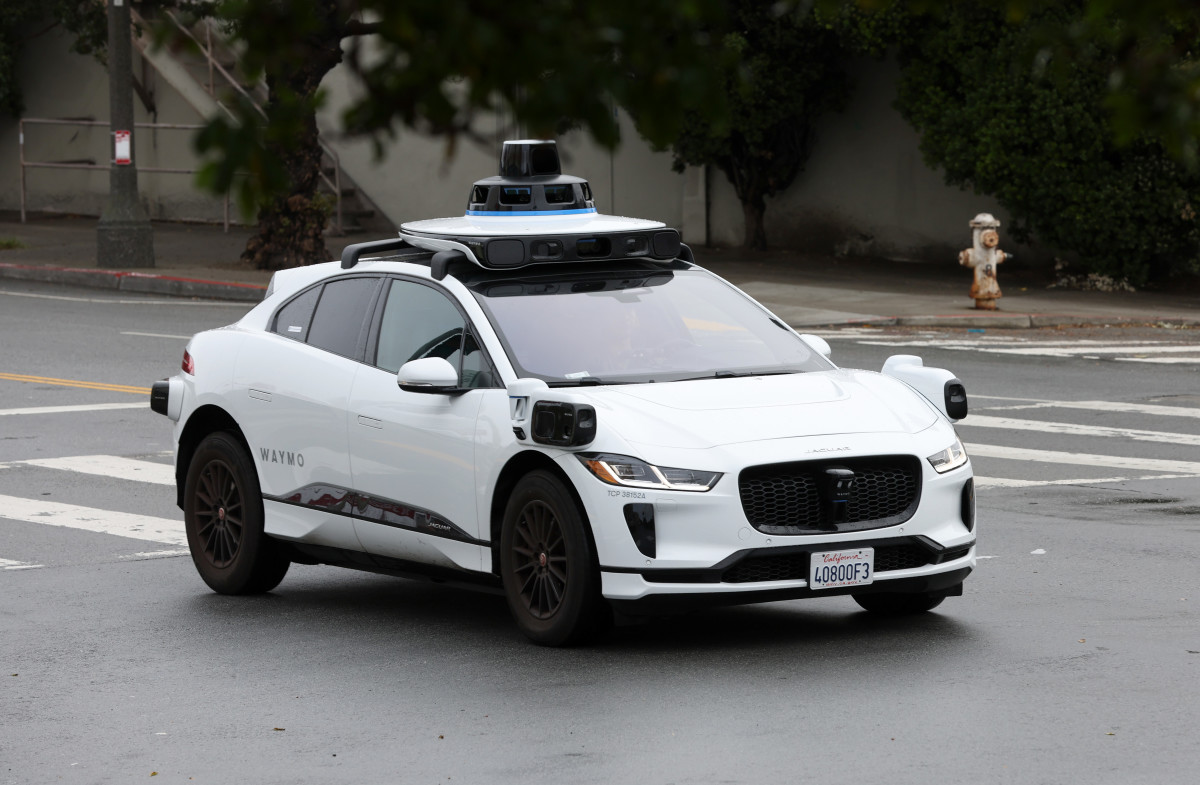
Autonomous driving looks like the wave of the future, but industry-leading companies like Waymo need to work out the kinks if they want the general public to trust them.
According to the companies building it, autonomous vehicle technology promises the world safer streets and fewer accidents.
Waymo quick facts:
- Waymo One available 24/7 to customers in Los Angeles, Phoenix, and the San Francisco Bay Area, as of July 2025.
- Founded in 2009.
- Passed the first U.S. state self-driving test in Las Vegas, Nevada, in 2012,reported IEEE Spectrum.
- Spun out from Alphabet as a separate subsidiary in 2016.
Half of U.S. states reported blood alcohol concentration for at least 70% of fatally injured passenger-vehicle drivers in 2023, according to Insurance Institute for Highway Safety (IIHS). Among these states, Hawaii had the highest estimated percentage of fatally injured drivers with BACs of 0.08% or higher (51%), while West Virginia had the lowest (17%).
Even based on this incomplete data, it’s clear that eliminating drunken driving would significantly improve road safety. And clearing the roads of people whose driving ability is impaired for other reasons puts us well on our way to a transportation utopia.
Currently, Waymo is the company best positioned to lead the world into that Garden of Eden. Still, last week, one of its taxis was caught on camera putting a passenger directly in danger for the second time in just a few months.
Although autonomous vehicle technology promises safer streets, the reality is more complicated.
Photo by Chicago Tribune on Getty Images
Waymo drives through an active crime scene (again)
Earlier this month, Waymo had a lot to celebrate after raising $16 billion at a $126 billion post-money valuation. About a year and a half prior, Waymo’s 2024 series C round raised $5.6 billion at a $45 billion valuation.
But as any decacorn (extremely high-worth company) can attest, more money often brings more problems.
Related: Waymo crosses major threshold amid nagging issues
Last week, a driverless Waymo vehicle with a passenger in the back drove into the middle of an active police scene before stopping in Atlanta, Georgia.
A local television news station that has been covering Waymo’s failure to stop at school buses with their stop signs deployed just happened to be on the scene filming the police standoff with an armed suspect, who had fired at law enforcement, grazing one in the head.
The camera crew filmed the motionless vehicle after it reportedly bypassed squad cars and police officers before stopping in the middle of a crime scene. A policeman can be seen in the front seat attempting to move the vehicle out of the way.
“While navigating the parking lot, we entered an unsecured, not-taped-off lane (to the left of your video framing) before coming to a stop. As our protocols are designed and we’ve trained first responders to do, a police officer disengaged the vehicle, and our roadside assistance team retrieved it,” Waymo said in a statement to 11Alive.
Meanwhile, when asked about the standard protocol for Atlanta police in a situation like this, the police department gave the news channel the runaround, telling them to check a website that didn’t have any relevant information. 11Alive has since filed an open records request seeking more information.
This situation is eerily similar to one that happened in Los Angeles just weeks prior.
Waymo drives through, then parks in an active police scene in Los Angeles
In December, a viral video on social media shows a Waymo vehicle turning left onto a major avenue in Los Angeles. There is no oncoming traffic while the vehicle makes a left turn because a wall of police cars blocks the traffic coming from the opposite direction.
The police cars are empty as the police are all outside of their vehicles, pointing their guns at the driver of another car, who is lying face-first on the ground.
Related: Waymo investigation could stop autonomous driving in its tracks
A police helicopter searchlight follows the Waymo as it slowly traverses the intersection, putting the vehicle directly in the police’s line of fire. Even the suspect on the ground seems confused by the car driving in front of him.
But that issue pales in comparison to the one that caused Waymo to recall 2,000 vehicles in December.
In November, the Austin Independent School District noticed a disturbing trend: Waymo vehicles were not stopping for school buses that had their crossing guard and stop sign deployed.
Waymo robotaxis had been illegally driving past city school buses an average of 1.5 times per week during the school year. The Austin ISD initially attempted to address the matter privately, sending a letter to Waymo regarding the violations.
The company assured school officials that a software patch had fixed the issue, but five more violations occurred in just the two weeks after Waymo claimed the problem was resolved.
On Dec. 1, after Waymo received its 20th citation from Austin ISD this school year, Austin ISD released the video of the previous infractions to the public.
On Dec. 5, Waymo announced that it will file for a voluntary recall “early next week” to address the issue.
At the time, the company said it had identified the issue that caused the violations. The company also said it believes the software updates it implemented by November 17 “have meaningfully improved performance to a level better than human drivers in this important area.”
But this wasn’t the first time Waymo faced scrutiny for this issue.
The NHTSA opened a Preliminary Evaluation in October to investigate an estimated 2,000 Waymo 5th-gen automated driving system-equipped vehicles, following a Georgia media report that revealed the same school bus violation.
The agency then opened another investigation following the Austin ISD’s actions.
“We’re incredibly proud of our safety record, which shows Waymo is helping make roads safer where we operate,” Waymo spokesperson Julia Ilina told TheStreet.
“We are committed to constantly improving, partnering closely with the local communities we serve, and working with leaders across the country to make transportation safer and more accessible for all.”
Waymo did not return a request for comment for this story.
Waymo admits that its fatal crash data are incomplete
Waymo’s safety data show that its vehicles are significantly safer than human drivers, but the closer you look at the data, the less convincing they become.
Waymo says that, compared to those with human drivers, its autonomous vehicles have been involved in 90% fewer crashes resulting in serious injuries.
But one researcher says that while Waymo can fall back on that number, the vehicle still struggles with basic situations that most humans wouldn’t find challenging at all, such as stopping for a school bus and avoiding police shootouts.
“In like 95% of situations where a disengagement or accident happens with autonomous vehicles, it’s a very regular, routine situation for humans,” Henry Liu, professor of engineering at the University of Michigan, said recently. “These are not challenging situations whatsoever.”
“We have seen many reports from autonomous vehicle developers, and it looks like the numbers are very good and promising,” Liu said. “But I haven’t seen any unbiased, transparent analysis on autonomous vehicle safety. We don’t have the raw data.”
Even Waymo’s data are suspect, according to Liu.
Waymo vehicles primarily drive on urban streets with a speed limit of 35 miles per hour or less. “It’s not really fair to compare that with human driving,” according to Liu.
Waymo ostensibly agrees with Liu, to an extent.
“Waymo is already improving road safety in the cities where we operate, achieving more than a tenfold reduction in serious injury or worse crashes,” Trent Victor, Waymo’s director of safety research and best practices, recently told Bloomberg.
Waymo has driven approximately 127 million miles across its fleet and has been involved in at least two fatal crashes, MSN reported. However, the autonomous vehicle was not directly found responsible for either of them.
The problem is that this actually represents a higher death-per-mile rate than that of average American drivers, who travel about 123 million miles for every fatality, according to the IIHS.
Victor acknowledged that “there is not yet sufficient mileage to make statistical conclusions about fatal crashes alone,” adding that “as we accumulate more mileage, it will become possible to make statistically significant conclusions on other subsets of data, including fatal crashes as its own category.”
After consistently declining for 30 years, roadway fatalities in the U.S. have risen over the past decade.
Fatalities jumped to nearly 35,000 in 2015, an 8% increase from the year prior, and rose another 6.5% the following year, according to U.S. Transportation Department data. Fatalities peaked in 2021 at 43,230, representing a 10.8% year-over-year increase from the previous year.
Related: Despite recall, Waymo can’t seem to fix this dangerous issue
