

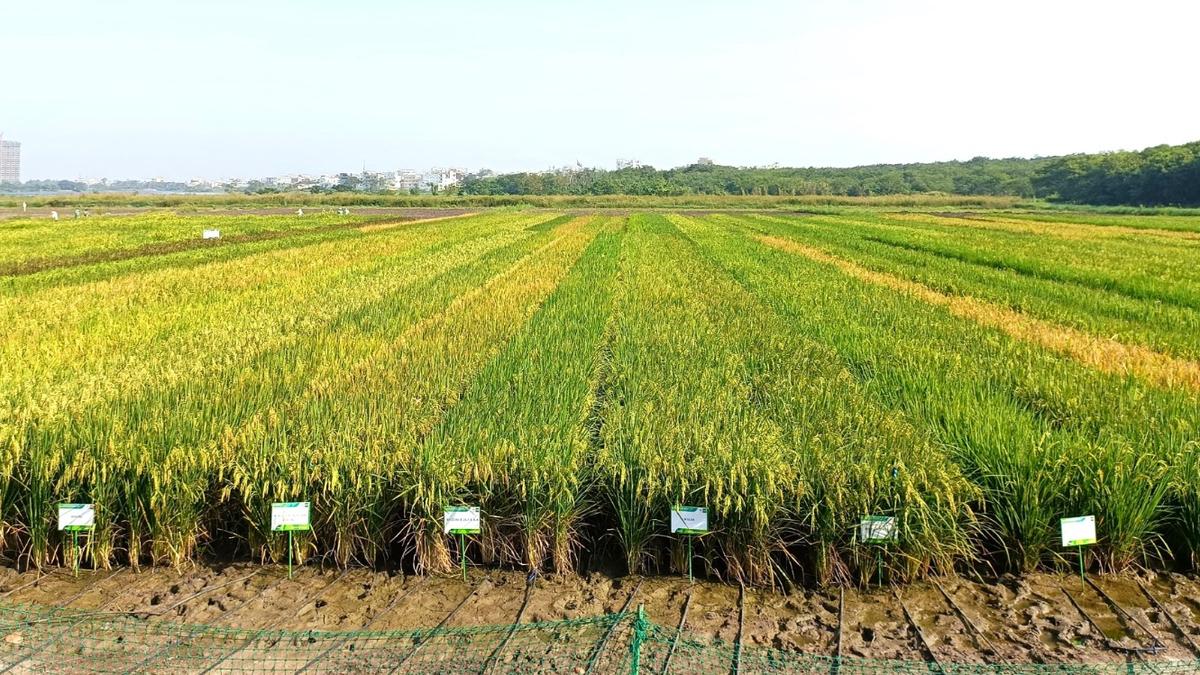
Targeted investment in direct seeded rice (DSR) research can help reshape India’s future of climate resilient farming, according to a study by the International Rice Research Institute (IRRI).
The IRRI study, in partnership with Indian research organizations and supported by the Department of Biotechnology (DBT), demonstrates how targeted investment in DSR research can help address constraints such as water shortage and farm labour costs and provide benefits for farmers and the environment. The Indian government’s support reflects the country’s commitment to climate-resilient agriculture and its international climate pledges, it said.
Rice cultivation in India is facing growing pressures from increasing water shortages, rising farm labour costs, and the effects of climate change. Traditional transplanted puddled rice (TPR) is resource-intensive, while dry direct-seeded rice (DSR) offers a promising alternative. Adoption of dry DSR, however, has been limited as most popular rice varieties were not bred for direct seeding. “Direct-seeded rice only works if farmers can rely on it year after year,” said Pallavi Sinha, IRRI rice breeder. “Consistent investment allows us to deliver varieties that perform under diverse conditions”
The new research focuses on improving widely grown rice varieties for direct seeding so they can establish quickly, grow vigorously, and deliver stable yields while remaining resilient to pests and diseases. Field trials conducted over multiple seasons showed that the top-performing lines yielded about 15% more under the DSR method of cultivation, while also performing well in conventional transplanting conditions. This dual adaptability provides farmers with flexibility and resilience under changing environmental conditions. Vikas K. Singh, Regional Breeding Lead for South Asia at IRRI, emphasized the importance of investments in DSR in bringing improved varieties for farmers’ use.
“Farmers won’t adopt DSR if the varieties aren’t reliable. By upgrading popular rice varieties for direct seeding, we can help farmers achieve higher yields with less water and labor, without forcing them to shift away from varieties they trust,” Singh said.
Scientists noted that expanding DSR aligns closely with India’s commitments under global climate platforms, including efforts to reduce emissions intensity and improve water-use efficiency in agriculture. “Investing in DSR-oriented research enhances India’s capacity to achieve food security while tackling climate change,” said Sanjay Kalia, Scientist and Program Officer for this project at the Department of Biotechnology.
“Fresh water is a resource that is often discounted in rice cultivation, as it’s considered free. DSR technology will reshape the way rice is being cultivated and demonstrate resolve to sustainably feed the world. The vision is to cultivate rice like wheat, and in a decade, it’s going to be a reality,” he said.
Experts believe that broader adoption of DSR-ready varieties could substantially reduce irrigation needs in central rice-growing states, boost farm profits, and lower the carbon footprint of rice farming. As several of the new rice lines are already advancing through national testing stages, researchers say the benefits of current investments could soon be seen in farmers’ fields.
As climate risks increase, investing in DSR is not just an agronomic choice, but a strategic move toward a more resilient and sustainable future for Indian agriculture, the study published in the The Plant Genome said.
Published on February 4, 2026
