
 Recession Profit Secrets · Learn more →Advertisement · Affiliate link — we may earn a commission.
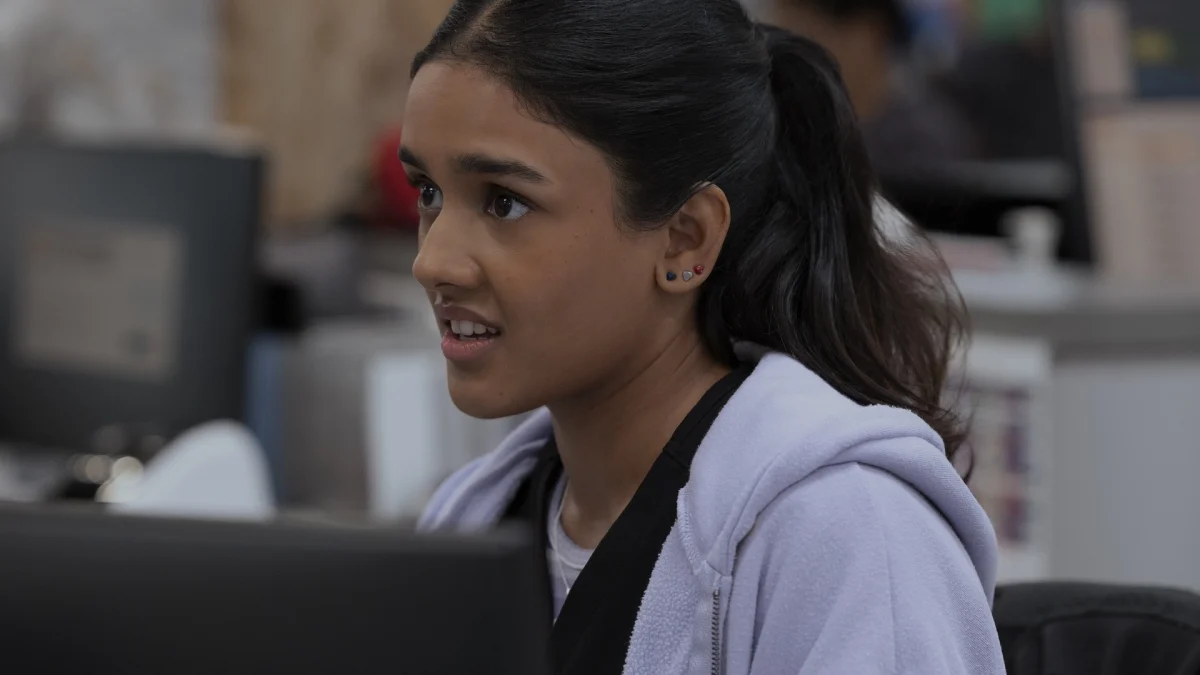
Halfway through The Pitt‘s latest episode, the show reveals that student doctor Javadi has a TikTok account. That a 20-year-old would be on the app isn’t exactly a huge twist. What is surprising is that, as “Dr. J,” she’s built a real audience — one that tunes in for advice, between-shift storytimes, and a version of medicine that feels less scary and more familiar.
SEE ALSO:
‘The Pitt’ Season 2 review: Big changes ahead for Noah Wyle’s stellar medical drama
That tension snaps into focus through one of the episode’s more offbeat cases: a woman named Willow who arrives at the ER after using Gorilla Glue as eyelash adhesive, sealing her eye shut. The scenario feels ripped straight from the internet’s recent past, echoing real viral cautionary tales where beauty hacks tipped into medical emergencies — like the case of Tessica Brown, who went viral on TikTok in 2021 after swapping her hairspray with Gorilla Glue.
Elysia Roorbach as Willow in ‘The Pitt’ Season 2, episode 4, “10:00 A.M.”
Credit: HBO Max
Willow recognizes Javadi immediately. She watches all her videos. “She’s one of the best doctors in Pittsburgh,” she insists to Dr. Langdon. (As a “Dr. J” fan, I have to agree.) But clearly, this is a judgment formed not through bedside manner or actual outcomes, but through an algorithmically curated sense of familiarity. Javadi explains the fix with her newfound sense of calm authority: mineral oil on the eye for 20 minutes, and trimming the lashes halfway down to reduce the amount of glue.
This Tweet is currently unavailable. It might be loading or has been removed.
It’s been genuinely satisfying to watch Dr. Javadi, introduced in Season 1 as a brilliant but timid medical wunderkind, come into her own in Season 2. She’s more confident with patients, more secure in her reasoning, and more willing to trust herself. At the same time, her arc feels instantly recognizable: She’s the TikTok doctor. You’ve probably seen one on your FYP.
The irony is that TikTok is both the ecosystem that enables dangerous misinformation and the one increasingly tasked with undoing it. From viral DIY beauty advice to unverified wellness claims, the platform accelerates trends far faster than traditional medical institutions can respond. At the same time, it’s where board-certified physicians attempt damage control, stitching context back onto content after something has already gone wrong.
For doctors like Javadi, TikTok offers real advantages. The platform allows physicians to translate dense medical information into something accessible, funny, and human, whether they’re debunking flu misinformation, poking holes in diet myths, or explaining why certain shortcuts are risky. According to a 2024 survey, more than half of Gen Z respondents said they use TikTok for health advice.
Mashable Trend Report
As younger audiences increasingly turn to social media for information, TikTok has become a kind of informal triage space, especially for users who may not yet have consistent access to traditional care.
That visibility also builds trust. Doctors who joke, embrace the latest TikTok trend, or admit their exhaustion after long shifts can feel more approachable than the distant authority figures patients encounter during rushed clinical visits. TikTok doesn’t just disseminate information; it softens medicine’s image, making it feel navigable rather than intimidating.
But The Pitt is careful not to present Javadi’s online presence as an unqualified good. It’s introduced as a brief side plot, mostly played for laughs, but it carries real-world implications. Short-form video rewards simplicity, not nuance. When credibility is measured in engagement metrics, expertise risks being flattened into vibes. Dr. Javadi’s treatment plan is identical to Dr. Langdon’s, yet she’s the one Willow trusts thanks to the familiarity built on TikTok.
How The Pitt explores the ER in the age of influence
That ambivalence mirrors how the show has approached another emerging tech force this season: artificial intelligence. Like TikTok, AI is framed neither as a miracle cure nor a looming villain, but as a tool whose usefulness depends entirely on how, and by whom, it’s used. In both cases, The Pitt resists easy tech optimism, instead asking what gets lost when care is mediated by apps.
Where Willow’s case shows how online familiarity can translate into trust, another storyline in the episode reveals how the instinct to document can override self-preservation.
A parkour content creator is brought into the ER after falling 10 feet through glass, and his partner is still thinking like an influencer even as her friend lies injured. The footage, she insists, is essential. “He’s my creative partner,” she says, filming in the ER because they have to get a video up that same day. “I have his written consent to film everything.” (Dr. Robby promptly kicks her out of the room.) Even here, the habits of being online persist, bleeding into spaces where survival is supposed to be the priority.
Filming content in the ER is not prohibited.
Credit: HBO Max
By pairing Javadi’s TikTok reveal with cases born of viral logic, beauty hacks gone wrong, and bodies treated as content, alongside storylines about algorithmic time-saving measures, The Pitt does not just depict the rise of doctor influencers or medical automation. It interrogates the conditions that made them necessary. In a healthcare system that many experience as inaccessible, opaque, or dismissive, apps like TikTok have become unofficial intermediaries.
In The Pitt, medicine doesn’t clock out when the shift ends. It keeps scrolling, following Dr. J from exam rooms to comment sections.


