

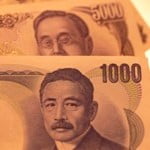
Imagine you found a magical bank that lets you borrow money at 0 percent interest. Naturally, you’d take that free money and put it into a high-yield savings account or the stock market to pocket the difference, right?
That, in a nutshell, is the Yen Carry Trade. For over a decade, Japan’s interest rates were stuck near zero – or even negative. Investors, from massive hedge funds to Mrs. Watanabe (the stereotypical Japanese retail trader), borrowed trillions of yen for next to nothing, swapped them for U.S. dollars, and bought higher-yield assets like U.S. Treasuries or even high-flying tech stocks.
It was the ultimate infinite money machine until very recently. Now the glitch has started to fix itself as increased volatility ripples through global markets. The carry trade only works if the yield differential – the gap between Japan’s rates and everyone else’s – stays wide. But in 2026, that is starting to change.
The Bank of Japan (BoJ) finally blinked at inflation in early 2024 and started slowly nudging interest rates up from below 0 percent. Simultaneously, the U.S. Federal Reserve, under intense pressure from President Trump, has been slowly cutting rates.
While the FOMC announced a dovish pause this week, the federal funds rate is down from 5.25 percent in August 2024 to 3.5 percent today. This narrowing spread forces traders to liquidate positions to cover mounting costs.
Remember, bond yields move inverse to bond prices. Rising yields mean the price of the bonds are going down. The yield on the Japanese 10-year government bond recently spiked above 2.3 percent. That’s the highest it has been this century, effectively ending the era of cheap capital and triggering a massive deleveraging cycle.
Panic in Tokyo
As that gap narrows, the carry – your profit – vanishes. If you’re paying 2 percent to borrow yen but only earning 4 percent on dollars, and you have to worry about the exchange rate, the math starts looking ugly.
To pay back the yen loans, carry trade speculators have to sell their U.S. assets and exchange their dollars back into yen. Should everyone rush to sell U.S. assets and buy yen all at once things could get especially ugly.
This can cause a liquidation feedback loop. Speculators sell U.S. stocks to cover their rising debt, which pushes stock prices down, which triggers margin calls, which forces more selling of U.S. stocks and buying of more yen. Because so much of this trade was done with leverage, an abrupt unwind would cause massive chaos for markets.
At the same time, the need for a stronger yen has become political. While Japan has historically loved a weak yen to boost its massive exporters, this has now become a political and economic problem.
Because Japan imports almost all of its energy and a huge amount of its food, a weak yen makes these essentials incredibly expensive. Japanese households are facing a cost-of-living crisis.
Public discontent has become intense leading to political panic in Tokyo. It has even forced Prime Minister Sanae Takaichi to dissolve the lower house of parliament and call for snap elections on February 8, 2026.
To win voters, Takaichi is proposing to suspend the sales tax on food and beverages. But the Japanese government’s finances, with a debt-to-GDP ratio over 230 percent, are even worse than the U.S. government’s finances. The loss of tax revenue could be the final straw that breaks the camel’s back and triggers a sovereign credit crisis – further weakening the yen.
As of early 2026, the BoJ has held its key short-term interest rate steady at 0.75 percent, a 30-year high reached in late 2025. But it hasn’t been enough to stop the bleeding. The cost of importing energy and food has continued to skyrocket, hitting Japanese households hard.
Gold $5,500, Silver $120
It was reported last Friday that the New York Fed has been checking the yen’s exchange rate with banks. This was seen as a precursor to coordinated intervention. Why would the U.S. help Japan prop up the yen? It’s not just out of the goodness of the U.S. Treasury’s heart.
This all comes back to Washington’s massive pile of government debt. Japan, with a pile of $1.1 trillion in U.S. Treasuries, is one of the largest holders of U.S. debt. If the yen collapses, the Japanese Ministry of Finance would be forced to sell its U.S. Treasuries to bring cash home. This would quickly send U.S. interest rates higher and increase mortgage rates and corporate borrowing costs.
Yet servicing interest costs is already one of the largest parts of the U.S. federal budget. The U.S. Treasury is having to issue new debt just to pay the interest on the old debt. Higher interest rates would compound this debt spiral.
President Trump certainly wants lower interest rates. So, too, he wants to reduce the U.S. trade deficit. A weaker dollar would help American exports be more competitive.
If the U.S. and Japan move forward with a joint intervention, the dollar’s value would further suffer. We’ve already seen gold and silver spike to record levels – gold above $5,500 and silver above $120 – as investors lose faith in paper currency and look for real assets.
An intervention would mean the U.S. Treasury is effectively selling its own currency to buy yen. This would put downward pressure on the dollar index, which has already slipped well below 97. For American consumers this would mean higher costs for imports, above and beyond the costs of Trump’s tariffs.
This would also contribute to stock market volatile. Companies that rely on global supply chains and stable currency will likely suffer as foreign exchange volatility spikes. Moreover, currency intervention to prop up the yen at the expense of the dollar could compel a flight from dollar assets as speculators look to stay ahead of the coordinated operation.
But what else?
Ghosts of the Plaza Accord
These sorts of coordinated currency interventions don’t have a very good track record. To better understand what could happen, we can look back to the 1980s. In 1985, for example, the U.S. dollar was incredibly strong. So strong it was crushing American manufacturers because their exports were too expensive for the rest of the world.
The proposed solution was the Plaza Accord. Central planners from the U.S., Japan, Germany, France, and the UK met at the Plaza Hotel in New York. They agreed to collectively dump dollars and buy other currencies to bring the greenback’s value down.
It worked on surface. The dollar plummeted, and the yen surged. But the unintended consequences directly pumped up the bubble economy in Japan that burst in the early 1990s. The Japanese Nikkei index didn’t recover for nearly 34 years.
At the time of this writing, the chatter of a coordinated currency intervention appears to be nothing more than blowing smoke. We saw reports intervention is imminent. We also saw reports that Japan may hold off for now.
Still, we haven’t heard anything that would resemble a concrete proposal. In fact, when asked this week if the U.S. is intervening in the currency market or strengthening the yen, Treasury Secretary Scott Bessent said, “absolutely not.’
But where there’s smoke there’s fire. And with markets on edge, perhaps the Fed’s reported rate check was enough to keep yen bears from pushing the currency further down – for now.
Intervention, no doubt, is very tempting for control freak central planners. Yet they would be wise to resist.
Efforts to prop up a weak yen would likely fail. And even if they succeed, in the short-term, and fix one problem, this would be at the risk of creating many more – with ramifications that would persist for decades.
[Editor’s note: Join the Economic Prism mailing list and get a free copy of an important special report called, “Cash Machine – Why You Should Own this Mineral Royalty with a 12% Yield.” If you want a special trial deal to check out MN Gordon’s Wealth Prism Letter, you can grab that here.]
Sincerely,
MN Gordon
for Economic Prism
Return from Ghosts of the Plaza Accord to Economic Prism
