

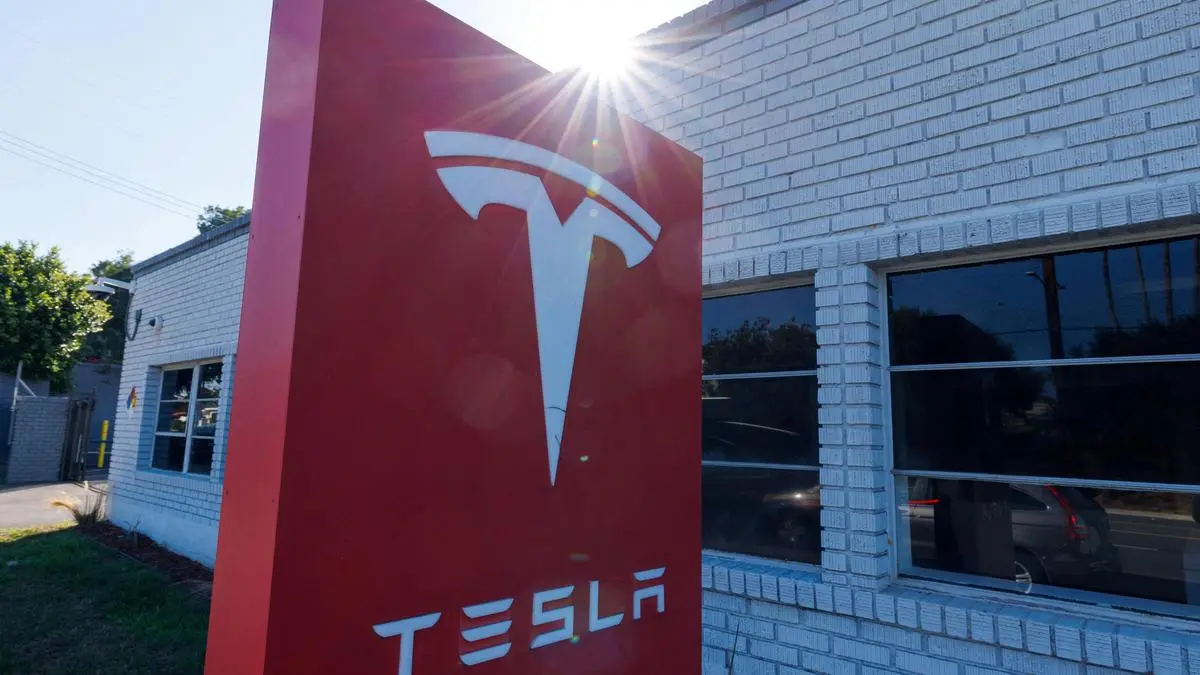
Tesla is reshaping its business with a $20 billion investment in AI, robotics, and autonomous vehicles while halting production of low-volume Model S and X cars.
| Photo Credit:
MIKE BLAKE/Reuters
Tesla Inc. is streamlining its vehicle portfolio while mapping out $20 billion of investment this year as it pivots to robotics and autonomous driving.
The massive planned capital expenditure, announced during the company’s conference call, underscores Tesla’s ambitions to refocus its business. The EV maker is increasingly emphasizing the potential of artificial intelligence, driverless technology and humanoid robots to drive future growth as its traditional business of selling automobiles struggles.
This year, the company is looking to scale up production while improving some factories, creating AI infrastructure and expanding output of Optimus humanoid robots and Robotaxi vehicles that operate without human drivers.
The EV maker is also halting production of its S and X model vehicles and will repurpose the production facilities in Fremont, California, for Optimus. The Model S, a luxury sedan that costs about $95,000 and the Model X, an SUV with a pricetag of nearly $100,000, are low volume vehicles compared to Tesla’s more affordable 3 and Y models.
The company also plans to invest about $2 billion into xAI, giving Elon Musk’s artificial-intelligence startup a cash infusion despite a shareholder vote last year that failed to win approval.
Tesla entered into an agreement this month to acquire preferred shares as part of xAI’s latest funding round, according to the company’s fourth-quarter earnings statement. The companies also entered into a “framework agreement” to strengthen their relationship and “enhance Tesla’s ability to develop and deploy AI products and services into the physical world.”
The investment highlights the deepening ties between Musk’s business interests and reinforces the growing focus on AI.
The xAI investment will likely be welcomed by many investors and overshadow the earnings results, said Matt Maley, chief market strategist for Miller Tabak + Co. Artificial intelligence is seen as a key piece enabling Musk’s ambitious ideas for Tesla’s future.
“If Tesla is going to do as well as the bulls are thinking, it’s going to be with the Robotaxi and robotics,” Maley said. “So, this investment is exactly what the bulls wanted to hear.”
The shares climbed 2% at 6:31 p.m. in extended trading in New York. The stock rose 11% in 2025, underperforming the S&P 500 Index.
While Musk has previously expressed support for Tesla to invest in xAI, the decision comes as a surprise after an unsuccessful shareholder vote at the carmaker’s November annual meeting seemed to cloud the prospects. More of Tesla’s shareholders voted for a nonbinding measure encouraging such an investment, but a heavy number of abstentions meant the measure didn’t pass. Still, Tesla said then that it would continue to explore the possibility.
The two companies, both of which are led by Musk, already work together. Tesla sells megapacks to xAI and xAI’s Grok chatbot is integrated into some Tesla vehicles. Bloomberg also reported that xAI told investors that its aims to build AI will eventually power humanoid robots such as Optimus.
Quarterly Profit
Adjusted earnings per share were 50 cents in the quarter, Tesla said Wednesday, higher than the average of analyst estimates. The results snap a string of quarters in which profit was weaker than expected.
The better-than-expected profit is a positive sign as Tesla navigates lower EV demand. Musk has previously warned the company faces a rough patch while it works on these new priority areas.
The profit beat helps offset disappointment stemming from a steady decline in vehicle sales: Tesla earlier this month reported a 9% decline in 2025 deliveries from the previous year. That slump sharpened in the fourth quarter, when deliveries dropped 16% from a year earlier.
Last year was marked by rising competition, the end of US regulator credits and a backlash against Musk’s polarizing politics and his role in the Trump administration.
Revenue from regulatory credits fell 22% in the fourth quarter from a year earlier, showing how a lucrative revenue stream is drying up. The company receives the payments from competitors who exceed federal fuel economy standards. That income has dropped after the Trump administration eliminated penalties for automakers that failed to meet the standards.
Due to the lower regulatory credit revenue and a drop in vehicle deliveries, Tesla’s 2025 revenue declined for the first time.
The company reported 1.1 million active subscribers for its Full Self Driving driver assistance software — up nearly 40% from a year earlier. The software, which currently is not considered autonomous and requires constant human supervision, is becoming subscription-only starting after Feb. 14.
Tesla on Wednesday said it aims to expand its budding robotaxi business to Dallas, Houston, Phoenix, Miami, Orlando, Tampa and Las Vegas in the first half of this year. The business has been slowly expanding but has also missed a number of predicted timelines.
Robotaxi launched in Austin in June. This month, Tesla started rolling out “a few” robotaxis without human driver supervision in Austin. It plans to scale this to its entire Austin fleet over time. The robotaxis have previously operated with human safety supervisors in the front seats. The milestone has been long-anticipated, and Musk promised it would come late last year.
The company also operates a rideshare service on the same app in the San Francisco Bay Area that is not considered autonomous and has drivers in the front seat. It also has permits to test the service in Nevada and Arizona.
More stories like this are available on bloomberg.com
Published on January 29, 2026
