

 Recession Profit Secrets · Learn more →Advertisement · Affiliate link — we may earn a commission.
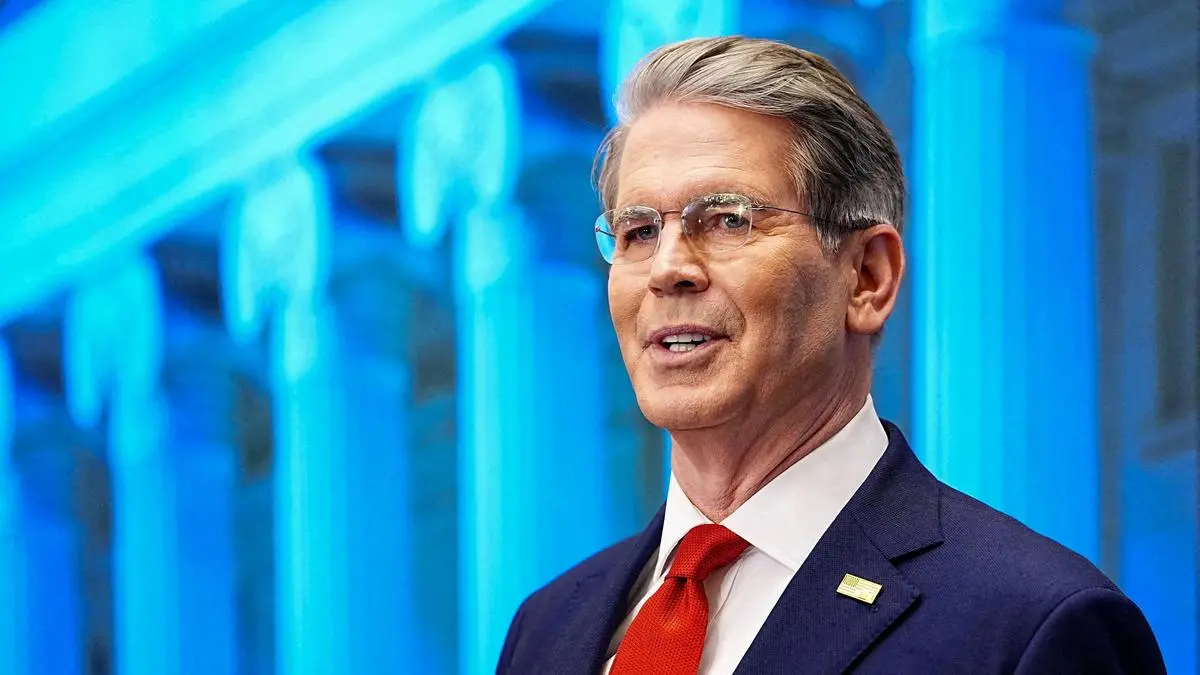
Treasury Secretary Scott Bessent
| Photo Credit:
REUTERS
US Treasury Secretary Scott Bessent has signaled a potential rollback of the 25 per cent tariffs imposed on India over buying Russian oil, citing a “collapse” in its Russian oil imports. While Bessent hinted at a “path” forward to taking off the tariffs, he did not clarify whether a full cessation of Russian oil purchases was a pre-requisite—a move New Delhi has been resisting.
For Indian exporters, reversing these duties would provide critical breathing room for labor-intensive sectors currently reeling under a cumulative 50 per cent tariff burden imposed since late 2025. Beyond immediate economic relief, sources suggest this pivot could finally unlock the long-stalled India-US bilateral trade agreement.
“‘We put 25 per cent tariffs on India for buying Russian oil. The purchases of Russian oil by their refineries has collapsed, so that is a success. The 25 per cent Russian oil tariffs are still on. I would imagine there is a path to take them off,” Bessent said in a media interview at the World Economic Forum
If the US insists on a complete stop to Russian oil purchase, it could be a problem .“India’s Russian oil purchases have reduced as it is not sourcing from the companies sanctioned by the US. But it will not stop purchases from non-sanctioned entities as long as the transactions are economically feasible,” a source tracking the matter told businessline.
Withdrawal of the 25 per cent penalties for Russian oil purchase imposed on Indian goods is key to taking forward the India-US bilateral trade talks, Indian officials had earlier indicated.
“It is not possible to have a India-US trade deal if the 25 per cent Russian oil tariffs continue because it is no use negotiating only on the other 25 per cent reciprocal tariffs,” an official had pointed out.
Even if India manages to negotiate a reduction in US reciprocal tariffs to 10 per cent (the base level tariff), the total levies would be a high 35 per cent if the Russian penal tariffs are not removed. “Indian exports would still be highly uncompetitive compared to rival countries such as Vietnam and Bangladesh facing a 19-20 per cent tariff unless the Russian tariffs go,” the official explained.
Bessent claimed that India’s Russian crude purchase had “collapsed”, but the latest estimates shared by data and analytics firm Kpler highlighted that inflows continued, although at a lower level. In December 2025, India’s purchase of crude from Russia declined 22 per cent to 1.38 million barrels per day (compared to the previous month) following US sanctions on Russian oil companies, but in January 2026, the December levels have more or less been sustained.
“The fact is that India cannot officially stop purchase of Russian oil because of its long-standing alliance with Moscow. But it has cut down on Russian purchases and is also buying more of US energy. This should be good enough for Washington,” the first source said.
Published on January 24, 2026

