

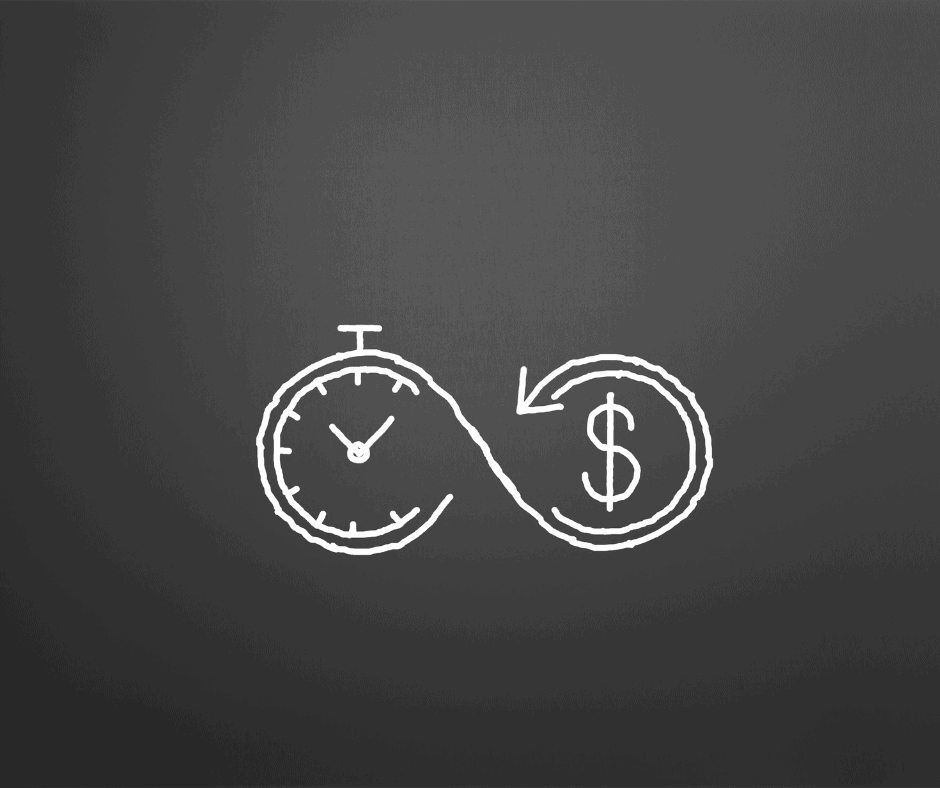
There’s a quote that’s been rattling around in my head lately: Life isn’t about transactions. It’s about transitions.
I don’t know who, if anyone said it. And honestly, that feels fitting. Some ideas don’t belong to anyone—they just arrive when you’re ready to notice them.
Most of the systems we’re given for living assume life is transactional. You do this, you get that. Put in the time, earn the result. Check the box, move on to the next.
That framing shows up everywhere: in productivity advice, in relationships, in how we think about work, money, even time itself.
But when you zoom out—really zoom out—that’s not how life actually unfolds.
Life moves by way of transitions.
Time Doesn’t Pay You Back. It Carries You Forward.
Time is often treated like a currency. We spend it. We save it. And we want a return on it.
But time doesn’t behave like money. It doesn’t keep a ledger.
Days don’t end because you “used them up.” Weeks don’t arrive because you earned them. Seasons don’t change because you hit some invisible quota.
They transition.
Morning becomes afternoon. Work gives way to rest. Attention loosens, then tightens again.
Even the most structured day isn’t a series of exchanges—it’s a sequence of passages.
This is why I’ve never been interested in squeezing more out of time. I’m far more interested in moving through it well.
Productivity Obsession Is a Transactional Hangover
Much of what we call productivity is really transaction thinking dressed up as discipline.
We say, “If I do enough of the right things, I’ll deserve the outcome.” Or,
“If I manage my time perfectly, I’ll finally arrive.”
But arrival is a myth.
There is no final screen where the game tallies your score and says, Congratulations, you’ve optimized life.
There is only the next transition.
From focus to fatigue, effort to recovery, and certainty to doubt—and back again.
Productiveness, as I see it, isn’t about maximizing output. It’s about respecting these transitions instead of fighting them.
Relationships Aren’t Exchanges Either
This matters just as much outside of time and work.
The moment a relationship becomes transactional—I did this, so you should do that—something vital thins out.
Healthy relationships move through phases: Closeness and distance. Listening and speaking. Support and autonomy.
They breathe. They stretch. They transition.
Trying to “balance the books” in human connection almost always leads to resentment or withdrawal. The relationship stops flowing and starts calcifying.
Days, Weeks, Years: All Thresholds, Not Checklists
One of the reasons I focus so much on daily and weekly rhythms is because they’re natural transition points.
Not resets. Not scorecards. Thresholds. The end of a day isn’t a verdict on your worth, the end of a week isn’t a performance review, and the end of a year isn’t a moral judgment.
They’re moments to notice what’s shifting. What’s closing, what’s opening, and what needs a pause before the next step.
A Different Question to Ask
Transactional thinking asks: “What do I get out of this?” Transitional thinking asks: “What am I moving into—and what am I leaving behind?”
That question changes how you plan. How you rest. How you relate to your work—and to yourself. It invites humility instead of control, awareness instead of optimization, and presence instead of pressure.
And in my experience, that’s where a healthier relationship with time actually begins. Not at the point of transaction… but at the moment of transition.
