

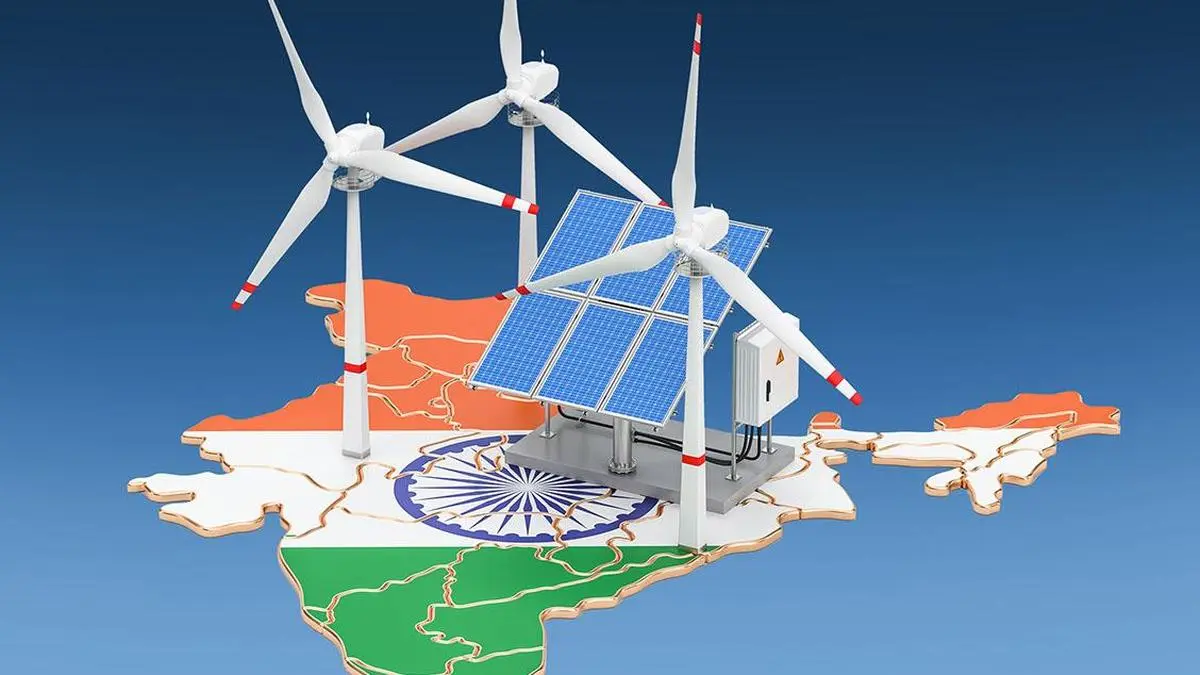
The renewable energy industry has sought incentives for research and development as well as for the manufacturing of ingots and wafers in the FY27 Union budget, as the sector looks to transition from capacity additions to execution certainty.
The industry has also asked for measures to ramp up transmission infrastructure and long-term green finance.
Finance Minister Nirmala Sitharaman is scheduled to table the Union Budget for the financial year 2026-27 in Parliament on February 1.
Industry stakeholders said sustained growth in renewables would depend on policy clarity, financially sound utilities and bankable power purchase agreements, along with targeted interventions to support distributed solar, storage-linked solutions and hybrid systems.
Jakson Group Chairman Sameer Gupta said the FY27 budget offers an opportunity to shift the focus from headline capacity announcements to ensuring execution across the renewable energy ecosystem.
A clear policy push towards distributed energy adoption, particularly rooftop solar and hybrid solutions for commercial and industrial consumers, would help decentralise generation, ease grid stress, and accelerate the clean energy transition in a commercially viable manner, he said.
According to OMC Power Chief Executive Officer Rohit Chandra, India’s clean energy journey has reached an inflection point, making access to affordable, long-term green finance critical for scaling distributed solar and hybrid systems.
He suggested that support for credible carbon monetisation frameworks could play a transformational role in accelerating clean energy adoption.
Premier Energies Chief Business Officer Vinay Rustagi said renewable energy has been a priority area for the government, and the industry expects announcements supporting incentive packages for R&D and domestic manufacturing of ingots and wafers to enhance self-sufficiency in solar module manufacturing.
Highlighting grid readiness as a persistent challenge, Volks Energie Co-Founder and Chief Executive Officer Piyush Goyal said that a stronger push on transmission and grid modernisation, including funding support for inter-state transmission systems, digital grid management and forecasting infrastructure, would ensure reliable absorption of renewable power at scale.
Solex Energy Chairman and Managing Director Chetan Shah also stressed the need for incentives for recycling and responsible end-of-life management of solar modules, batteries and storage systems, which he described as essential for building a resilient and environmentally responsible energy ecosystem.
“As India moves into a decisive phase of its clean-energy transition, Union Budget 2026-27 should focus on strengthening domestic manufacturing, grid readiness and distributed solar adoption to ensure sustainable long-term growth,” said Pawan Garg, Managing Director, Fujiyama Power Systems (UTL Group).
“We expect deeper support across the full solar value chain — from ingots, wafers and cells to batteries and power electronics — along with rationalised GST structures, low-cost long-tenure green finance, and enhanced investment in transmission and energy storage,” Garg said.
Avaada Group Chairman Vineet Mittal said the industry is looking at the next Budget for support through customs duty exemptions on clean-tech manufacturing of capital equipment, easing land acquisition thresholds under project financing norms, waiver of refinancing prepayment penalties and mandates to stimulate demand for green fuels across sectors such as refining, fertilisers, shipping, and mobility.
EKI Energy CMD Manish Dabkara said the sector will be watching for clarity and continuity in policies influencing renewable energy deployment, carbon markets and corporate decarbonisation.
A policy focus on single-window clearances and dedicated transmission funding would support the Ministry of New and Renewable Energy’s push towards its long-term capacity targets by bridging gaps in connectivity and infrastructure planning, said Chandra Kishore Thakur, Global Chief Executive Officer, Sterling and Wilson Renewable Energy Group.
Published on January 13, 2026
