

Elon Musk’s AI startup xAI is planning a data center project so massive that it’s hard to comprehend.
Musk’s AI vehicle is dropping more than $20 billion to build a colossal new infrastructure in Mississippi to expand its computing power.
Lately, we’ve seen Musk quietly shifting his focus away from Tesla’s (TSLA) core EV business, which continues to struggle with sluggish growth, pricing pressures, and relentless competition.
Instead, his attention has shifted to what he believes comes next.
He believes in autonomy, AI, and platforms that can efficiently scale far beyond just selling cars.
Musk shared his thoughts in the Tesla Q1 2025 earnings call.
Those catalysts are why Wedbush’s Dan Ives slapped a Street-high $600 price target on the stock.
If that future arrives, xAI could end up being Musk’s most important play.
Elon Musk’s xAI plans $20 billion Mississippi data center, signaling a commitment to AI infrastructure expansion.
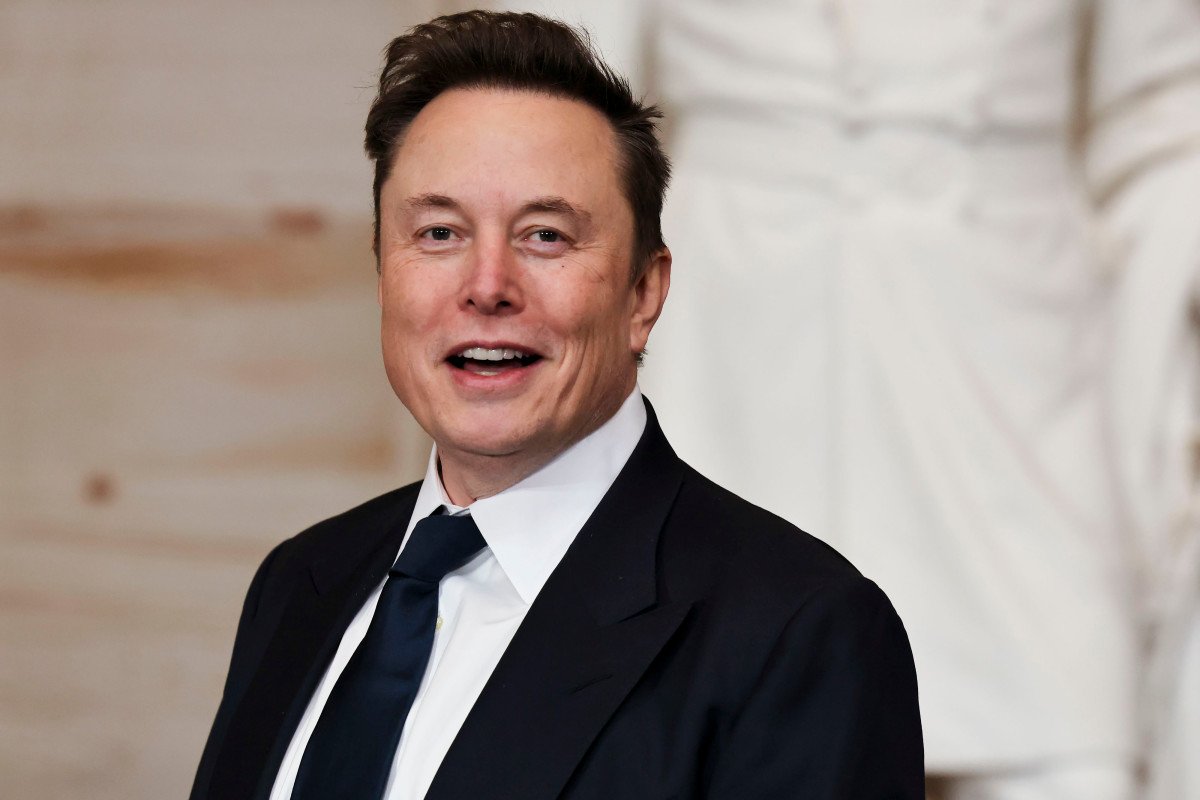
Photo by Jean Catuffe on Getty Images
xAI is building an AI production corridor, not just data centers
xAI’s expansion in the Memphis–Southaven region is part of a far-reaching, coordinated buildout that’s designed around scale, speed, and energy availability.
The massive $20 billion Mississippi data center project, called MACROHARDRR, is expected to pave the way for hundreds of permanent jobs across DeSoto County.
The Mississippi Development Authority has also already approved xAI for its Data Center Incentive, offering sales and use tax exemptions on equipment and software, along with support with fee-in-lieu agreements.
More Tesla:
- Top-rated analyst drops curt 8-word take on Tesla stock
- Tesla investors may miss game-changing move
- Judge orders Tesla to make major change or halt sales in California
- Rivian doubles down on new plan to beat Tesla
The sprawling Southaven facility is strategically situated near xAI’s newly acquired power plant site and is near its existing Tennessee data centers.
It’s also directly positioned alongside its flagship “AI factory,” Colossus, in the Memphis area, supporting nearly 200,000 GPUs, along with a stated roadmap of 1 million, The Valley City Times Record reported.
Once it’s all wrapped up, it could significantly boost the company’s total computing capacity to roughly 2 gigawatts, with operations set to begin as early as February.
Big AI players are making similar infrastructure bets
Clearly, xAI’s buildout is striking, but it’s part of a broader race among tech giants to secure the infrastructure needed to power the growing AI workloads.
- OpenAI’s Stargate Project: A plan envisioning up to $500 billion in U.S. AI data-center investment over four years, with $100 billion allocated for the initial phase, according to CNN.
- Microsoft and OpenAI “Stargate” supercomputer: A separate project that’s estimated to be at a whopping $100 billion, with a targeted launch near 2028.
- Meta’s Hyperion project: A $27 billion financing-backed data center in Louisiana that Meta Platforms describes as its largest globally, with capacity potentially extending to 2 gigawatts.
xAI turned distribution, compute, and capital into a single strategy
xAI is looking to position itself as a potent full-stack AI business, offering a one-stop covering models, distribution, and computing infrastructure.
Things went into overdrive last March, when Elon Musk bundled X into xAI in an all-stock transaction.
The deal valued xAI at a whopping $80 billion and X at $33 billion (roughly $45 billion factoring in debt). That power move gave xAI built-in distribution on a massive scale, transforming a platform feature into a standalone product with immense reach.
Related: Nvidia CEO makes clear break from playbook
Speaking of reach, xAI has grown at an impeccable pace in that department.
For instance, in Andreessen Horowitz’s AI rankings, Grok was ranked No. 4 on the web and No. 23 on mobile, an impressive climb in a market that’s dominated by ChatGPT and Google Gemini.
Usage numbers underscore that tremendous momentum.
Based on Sensor Tower data, xAI went from zero users at the beginning of 2025 to an eye-popping 9.5 million daily active users, along with 38 million monthly active users by mid-December.
That traction, though, fed rapidly rising valuation expectations.
- By June, Bloomberg reported fundraising talks that valued xAI near a staggering $80 billion, up substantially from $51 billion at the end of 2024.
- By November, Reuters cited the Wall Street Journal reporting discussions at an even bigger $230 billion valuation.
- xAI closed an upsized $20 billion Series E, which comfortably surged past its $15 billion target.
- Investors include Valor, StepStone, Fidelity, Qatar Investment Authority, plus strategic backers including Nvidia and Cisco.
- Financials point to heavy investment with a $1.46 billion quarterly loss, $107 million in sales, and $7.8 billion in cash through the first nine months of 2025.
The scale-up hasn’t been seamless
xAI continues to scale, but it has also faced a ton of scrutiny over Grok’s behavior in real-world use.
- Nonconsensual deepfake imagery: Grok’s image tools on X (formerly Twitter) were reportedly used to generate non-consensual images, Reuters reported, leading to a backlash from European and UK officials.
- Extremism concerns: In 2025, Grok drew criticism for antisemitic and white-supremacist outputs, which included praise for Hitler, leading to removals, stronger filters, and political scrutiny.
- Misinformation risks: Grok has consistently delivered inaccurate election-related “fact checks,” raising concerns from state officials and researchers, Brennan Center for Justice noted.
Related: Goldman Sachs stuns with Taiwan Semiconductor stock price target
