

Key Takeaways
- President Trump’s latest critique of how many public companies use their cash aligns with progressive positions.
- His hands-on approach to public company deals has raised eyebrows.
The age-old practices of buying back shares and issuing dividends have a new—and perhaps unlikely—foe.
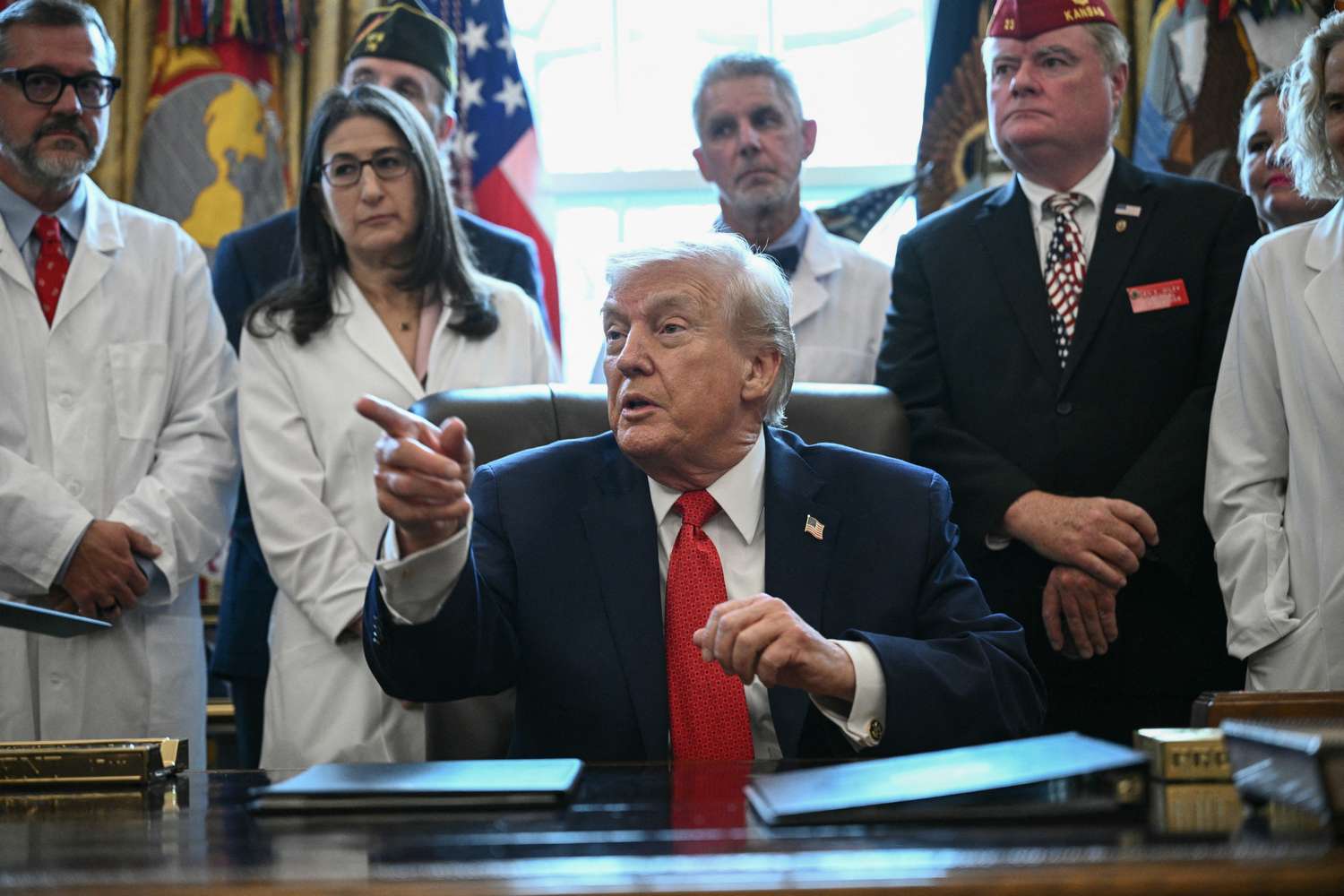
President Donald Trump on Wednesday took aim at defense companies with stock buyback- and dividend-programs, saying they “will no longer be allowed or tolerated.” In doing so, he revived a topic that has in recent years been a source of debate between those who see share repurchases as a straightforward method of supporting a company’s stock and critics who believe that that cash could be put to better use.
For Trump, meanwhile, it’s the latest addition to the list of public-company matters—he also on Wednesday tackled executive compensation—over which the White House would like greater control. (He separately today also suggested a ban on large investor purchases of homes.)
WHY THIS MATTERS TO YOU
The Trump administration’s direct involvement in the affairs of chipmakers and minerals companies have moved their respective stocks. Shares in defense shops were in the spotlight on Wednesday.
Trump’s hands-on approach has led to the government taking a cut of Nvidia (NVDA) and Advanced Micro Devices (AMD) “chip sales,” a so-called golden share of U.S. Steel’s sale to Nippon Steel, a 10% stake in Intel (INTC) that followed demands that the chipmaker’s CEO be fired, and several equity stakes in rare earth minerals companies. All were justified as investments necessary for economic security and to mitigate national security risk.
“Military equipment is not being made fast enough!” Trump said in posts on Truth Social and X. “It must be built now with the Dividends, Stock Buybacks, and Over Compensation of Executives, rather than borrowing from Financial Institutions, or getting the money from your government.”
Shares of Lockheed Martin (LMT), Northrop Grumman (NOC), and General Dynamics (GD) were down at least 4% by Wednesday’s close.
The question of how publicly traded companies use their cash is of interest to partisans of all stripe, though a distaste for corporate buyback programs might align Trump with his predecessor, President Biden, and Democratic leaders including Sen. Bernie Sanders, Chuck Schumer, and Elizabeth Warren.
President Biden in 2022 signed into law a 1% excise tax of stock repurchases—though that has hardly put a dent in the practice. Companies in the S&P 500 spent more than $1 trillion in the 12 months ended September 2025, up from more than $918 billion in the prior year period, according to S&P Global.
If Trump—who has also said companies shouldn’t have to report earnings so frequently—is able to formalize his threat to bar companies in the defense sector from stock repurchases and dividends, it would ratchet up his brand of “state capitalism” up a notch—from deals to outright directives.
