

While companies may be hesitant to re-enter Venezuela without assurances, a significant consideration for oil market watchers is whether crude tankers can keep loading. Several ships have turned away from Venezuela as the US launched a blockade in mid-December to seize vessels transporting oil that help fund the regime of Nicolas Maduro.
Trump said the oil blockade remains in place. But it’s clear he wants a US-backed administration to revive the country’s oil industry, bringing it back to its former heights in the mid-20th century when it was the world’s largest exporter and a founding member of OPEC.
The US president said on Saturday that America would sell “large amounts” of oil to current buyers and additional clients, without elaborating.
Trump suggested Venezuelan oil revenue could help fund a variety of causes — from reimbursing the US government for its spending in the country to compensating oil companies that have seen regional operations disrupted and assets seized. Venezuelans, both inside and outside the country, also will be “taken care of,” Trump promised.
China — the biggest buyer of oil from the South American country, as well as its largest creditor — condemned the US’s military strikes. Officially, China hasn’t taken the Venezuelan crude since March, but third-party and ship-tracking data indicate flows to the Asian nation remained robust last year.
Currently, Venezuela produces around 800,000 barrels of oil a day, less than 1% of global output, according to Kpler, which tracks shipping data. Production could rise by about 150,000 barrels a day within a few months if sanctions are lifted, but getting back to 2 million barrels a day or higher would require “massive reforms” and large investments from international oil companies, according to Matt Smith, Americas lead oil analyst at Kpler.
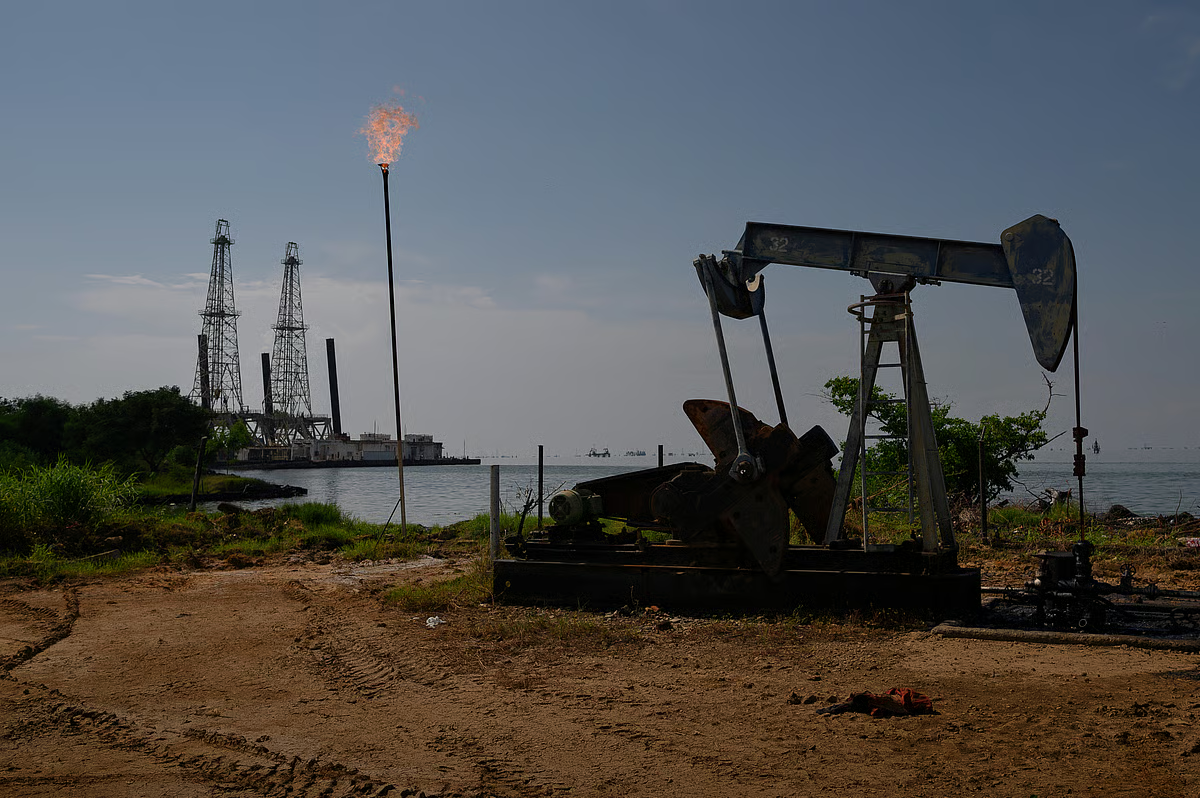
The scale of reviving Venezuela’s oil industry is immense. To get there, companies would need to fix the country’s derelict oil infrastructure, overlooked by decades of mismanagement, corruption and lack of investments. Millions fled the country, including skilled oil personnel that now staff oil refineries, drilling companies and trading desks in the US, Middle East and Europe.
There’s also the question of other countries’ assets in Venezuela.
Spain’s Repsol, Italy’s Eni SpA and France’s Maurel et Prom SA are still present in Venezuela and partner in oil and gas ventures with state-owned Petroleos de Venezuela SA.
“Chinese firms are heavily invested in Venezuela’s infrastructure (power, telecoms) so efforts to exclude Chinese investments and operators from the country could lead to unintended consequences,” Michal Meidan, Director of the China Energy Programme at Oxford Institute for Energy Studies, said on LinkedIn.
