

Key Takeaways
- Berkshire shares have significantly lagged the S&P 500 since Buffett’s retirement announcement—what analysts call a “succession discount.”
- With one of Berkshire’s two stock-pickers departing for JPMorgan, investors worry about who’s looking after the company’s $300 billion equity portfolio.
Warren Buffett wants investors to relax.
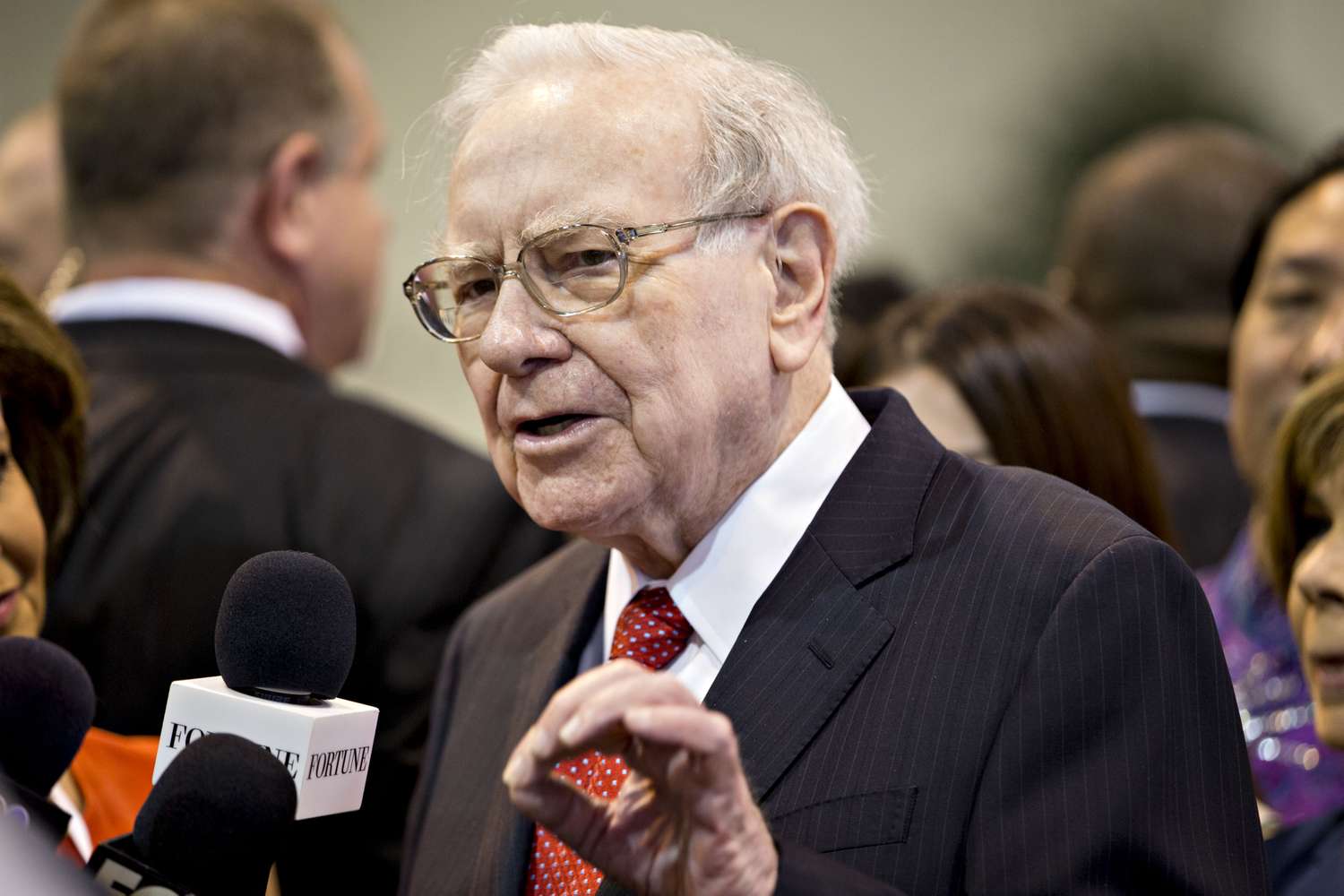
In an interview out Friday, the 95-year-old assured shareholders that his departure from the role of CEO at Berkshire Hathaway (BRK.A, BRK.B) changes nothing. “Everything will be the same,” he told CNBC.
The market doesn’t seem to agree. From the time Buffett announced his retirement in early May, Berkshire Hathaway shares fell about 7% through the end of the year, while the S&P 500 gained 20% over the period. Some analysts called it a “succession discount.”
Berkshire shares dropped more than 1% on Friday, the first day of trading in the era of new CEO Greg Abel, while the S&P 500 ticked higher.
Why This Matters To You
If you own Berkshire Hathaway or an index fund that holds its shares, you’re wagering on a company with a new CEO for the first time in decades. The stock’s retreat since the news of Buffett’s departure suggests the market has concerns. The transition highlights the risks of holding shares in companies headed by such singular leaders.
What Abel Inherits
Buffett spent six decades turning a failing textile mill into a trillion-dollar empire. During that time, Berkshire’s stock delivered a compounded annual gain of 19.9%, almost double the S&P 500’s 10.4%.
That legacy is a nearly impossible act to follow, but Buffett suggested Abel was ready. “I’d rather have Greg handling my money than any of the top investment advisors or any of the top CEOs in the United States,” Buffett said.
Abel has also sought to reassure investors. “We will remain Berkshire,” he said at the May 2025 annual meeting. “How Warren and the team have allocated capital for the past 60 years, it will not change.”
Abel, 63, is a Canadian-born accountant who joined Berkshire in 1999 when the company acquired MidAmerican Energy. He transformed that utility into Berkshire Hathaway Energy. Now a $90 billion-plus operation, the subsidiary spans renewables, pipelines and utilities across North America and the U.K. In 2018, Buffett promoted him to vice chair of non-insurance operations, putting him in charge of businesses ranging from BNSF Railway to Dairy Queen.
The Stock-Picker Problem
Berkshire doesn’t just manage its own businesses—it holds a $311 billion stock portfolio, one of the largest in the world. That portfolio, built on Buffett’s famed bets on Apple Inc. (AAPL), Coca-Cola Co. (KO), and American Express (AXP), is why investors have long paid a premium for Berkshire shares.
Investor concerns go beyond Buffett’s exit as CEO. Last month, Todd Combs, one of Berkshire’s two investment managers, left for JPMorgan Chase. That leaves Ted Weschler as the primary steward of Berkshire’s equity portfolio.
Weschler grew a $70,000 IRA in the late 1980s into $221 million by 2018. But Buffett acknowledged in 2019 that both Weschler and Combs had “slightly” lagged the S&P 500 since joining Berkshire.
Stock picks linked to Weschler haven’t inspired confidence: Berkshire’s $4 billion investment in DaVita (DVA), a kidney dialysis provider, is roughly flat over five years. Sirius XM (SIRI), in which Berkshire invested $3 billion, has dropped by two-thirds.
Not Quite Gone
Buffett isn’t entirely out the door. He remains Berkshire’s board chair and holds about 30% of the company’s voting shares. He’ll still attend the annual shareholder meeting, though he won’t be addressing the Berkshire faithful.
The Oracle of Omaha has said his successor’s operational background should be enough for Berkshire’s investors, despite Abel’s lack of renown for stock-picking acumen. “He understands businesses extremely well,” Buffett said at the 2024 shareholder meeting. “If you understand businesses, you understand common stocks.”
And, during the CNBC interview Friday, he made a bold claim for Berkshire’s durability: “It has a better chance I think of being here 100 years from now than any company I can think of.”
