

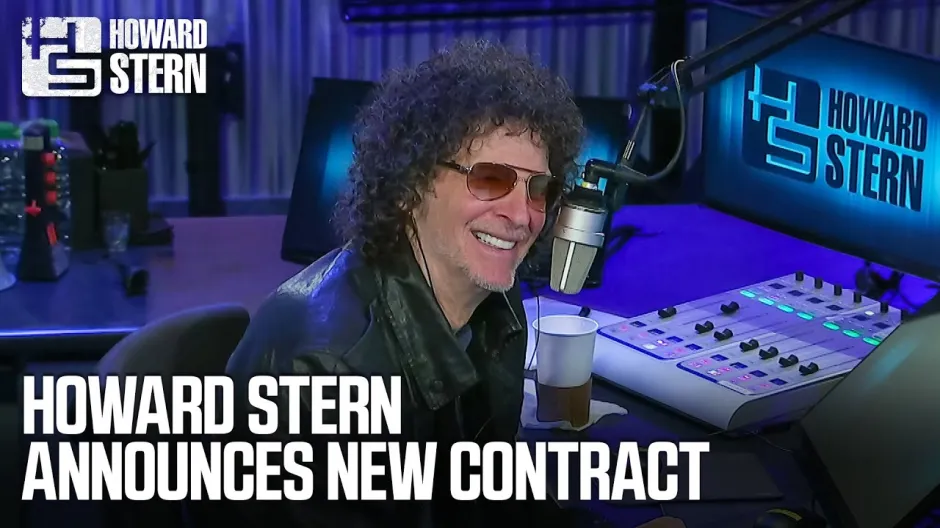
“The writing has “been on the wall for well over a year now” that SiriusXM wouldn’t be renewing Howard Stern’s colossal contract — and his employees have been taking advantage, “coasting” on the clock and trolling for new gigs, two current show staffers told The Post.” –New York Post
Let’s delve into an example of declarative reporting predicting an upcoming event that ended up being completely, laughably wrong. You may have missed this one during the dog days of summer.
Supermarket tabloid The U.S. Sun reported on August 4th that “The iconic Howard Stern Show on SiriusXM is set to be canceled after a stunning 20-year run, [unnamed] sources exclusively told The U.S. Sun.” Four days later, The New York Post confidently reported that the Howard Stern Show’s 19-year run at SiriusXM was coming to its final and ignominious end.
Both papers, not coincidentally, are owned by the Murdoch family’s NewsCorp. Each relied on unnamed “longtime staffers” as sources. Both reported Stern’s audience had dwindled “from 20 million a day to 125,000” – if true, a 99.38% drop in listeners. Both misled their readers.
Data from Sirius (and elsewhere) puts Stern’s audience anywhere from 5x to 10x what was misreported –a substantial drop that requires no additional exaggeration. The more complete context would have explained the broader drop in all of SiriusXM audience numbers, and how its time-shifting and streaming app has affected broadcast numbers.
But the big error was simply the declaration that Sirius was finished with Stern. The satellite company just renewed his contract for another 3 years.
Instead, anonymous sources said things like: “Most of us have been coasting at work the last year,” because “we know he’s retiring, whether by choice or because he’s forced out…”
Perhaps motivated reasoning was at play at the Murdoch-owned properties: “The looming end of the once mighty radio personality comes after a sharp change in Stern’s politics.”2
I don’t know Sun/Post reported this in the manner they did; I only know they got the story wrong while engaging in poor journalistic practices.
Anonymous quotes are the stock-in-trade of gossip columnists; it would not surprise me to learn these quotes were entirely fabricated.1 Even with journalists and outlets with a sterling reputation for fairness and objectivity, you should treat any anonymous source with the utmost caution.
~~~
Besides Sirius XM’s stock price, what does Howard Stern’s contract have to do with how we view coverage of markets or the economy?
Surprisingly, a lot. The parallels are there when you see people talking about things they don’t or can’t know about specific future events. The details in Stern’s negotiations are a minor example. There were a dozenish people – lawyers, agents, managers, corporate execs, perhaps board members – involved in the Stern-Sirius contract negotiations.3
Note that a lack of accurate inside dope did not stop reporting in an authoritative voice; was it trashing a political opponent that was so attractive? Might it have ironically been the broad interest in Stern’s activities?
This is the time of year when people confidently talk about things they cannot know. Turn on the TV, browse a website, read a newspaper, magazine, or Substack, and you will see authoritative predictions about what will happen next year, based on what is either unknown or unknowable. A lack of insight or knowledge doesn’t stop the speaker or writer from discussing a topic with great authority and conviction. Expressing doubt, acknowledging multiple possible outcomes, or admitting what you don’t know is considered unacceptable.
This is true regardless of whether the expression is opinion, commentary, speculation, or even wild guesses. Human nature favors precise errors over ambiguous accuracy. This is the default standard—lots of self-assured cockiness and very little humility. History informs us that this approach is flawed when talking about the inherently unknown and unknowable future, especially when capital is at risk.
Media malpractice is everywhere, but this one was exceptionally egregious. The Stern example goes beyond proof of how little we know about what the future holds; it shows how it manifests in supposedly authoritative sources.
We put a lot at risk when we ignore our own lack of knowledge and blind spots. This is especially true when we do not know what we do not know…
Previously:
“Nobody Knows Anything,” Wall Street Strategist Edition (January 2, 2025)
Nobody Knows Anything, DeepSeek Edition (January 28, 2025)
Nobody Knows Anything, The Beatles edition (September 26, 2024)
Let’s Say It All Together: Nobody Knows Anything (May 5, 2016)
Nobody Knows Anything (Full archive)
Sources:
BYE-BYE BOOEY The Howard Stern Show ‘to be canceled’ after nearly 20 years on SiriusXM as ‘$100m’ contract is up later this year
by Jessica Finn
The Sun, August 5, 2025
Howard Stern staffers prepping for show’s demise, withholding best material as future uncertain
By Chris Harris
NY Post, Aug. 9, 2025
__________
1. Beginning in the 1980s a wave of fabrication scandals of sources were perpetrated under the cover of anonymity. See, e.g., Janet Cooke at The Washington Post; Jayson Blair at The New York Times; Jack Kelley at USA Today; Stephen Glass at The New Republic, and others involving fabricated and unverifiable sources.
2. From the NYPost:
“I don’t know if its wokeness that alienated some of his audience, or if he just got tamer with age, but whatever it is, its apparent no one wants to hear it anymore,” the second staffer offered.
3. Anyone who has ever been involved in a large deal knows that the fewer people who know anything, the less chance of an accidental derailment…
~~~
I extensively detail why “Nobody Knows Anything” in How Not to Invest: The ideas, numbers, and behaviors that destroy wealth―and how to avoid them.”
It’s on sale at Amazon for $18.01!
