

California is once again testing how much its richest residents are willing to pay to live and build companies inside the state. A proposed ballot initiative, often described as a “billionaire wealth tax,” would levy a one-time 5% tax on residents worth more than $1 billion, with proceeds earmarked to help fund health care.
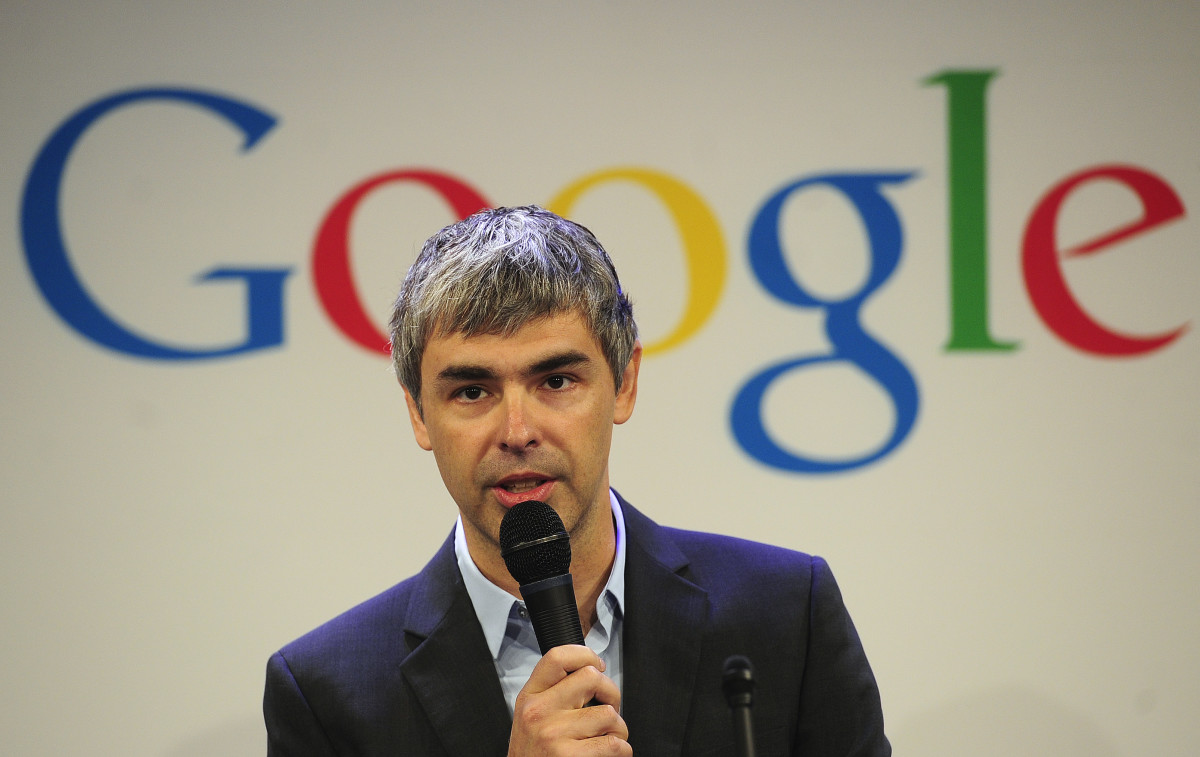
Tech heavyweights, including Google co-founder Larry Page and venture capitalist Peter Thiel, are actively weighing whether to cut ties with California ahead of the measure, even though it has not yet made the ballot, according to reporting from The New York Times.
The prospect has turned a state-level tax fight into a national story about the limits of progressive taxation, the mobility of the ultra-rich, and the future of Silicon Valley as the default home base for American tech.
What California is actually proposing
At the center of the controversy is a measure that would apply a 5% one-time tax on the assets of California residents whose net worth exceeds $1 billion, if they are residents on January 1, 2026. The proposal is being pushed by the Service Employees International Union–United Healthcare Workers West, which argues the tax could raise around $100 billion to backstop health funding, as Fortune and Yahoo Finance have both reported.
Supporters still need to gather enough signatures to qualify the initiative for the November 2026 ballot, and voters would then decide whether to approve it.
In addition, California’s Legislative Analyst’s Office and Department of Finance have warned that while the state might see “tens of billions” in one-time revenue, it could lose hundreds of millions of dollars a year in future income-tax receipts if enough wealthy residents leave.
Why tech titans are eyeing the exit
For the tech founders at the heart of the current uproar, the biggest issue is not the marginal rate on income; it is the idea of taxing their entire balance sheet at a fixed date. Fortune reported that the proposal would hit Page, whose net worth the Bloomberg Billionaires Index pegs at about $270 billion, with a theoretical bill in the neighborhood of $13.5 billion, while Thiel’s $27.2 billion fortune could face a roughly $1.36 billion tax, payable over several years.
That math explains why billionaire advisers are sounding the alarm. Business Insider published a letter from high-profile attorney Alex Spiro to California Governor Gavin Newsom in which he warned, “It will trigger an exodus of capital and innovation from California… Our clients have made clear they will permanently relocate if subjected to this tax.”
The New York Times reported that Thiel is considering spending more time outside the state and opening a Thiel Capital office elsewhere, while Page has discussed leaving by year-end and has already linked several limited liability companies to Florida.
What critics and supporters are saying
The wealth tax proposal has quickly turned into a Rorschach test for the tech economy, inequality, and the role of the ultra-rich in state finance. Billionaire investor Bill Ackman told Yahoo Finance that California is “on a path to self-destruction” if it drives out top founders and funders, implying that a short-term revenue boost could undermine long-term growth and tax capacity.
Perpetuating income inequality is one criticism tech founders like Peter Thiel face in California face.
Shutterstock
Tech founders themselves are also going public with warnings.
In an interview cited by Fortune, one California founder said, “One market correction, nationalization event, or prohibition of divestiture (not at all uncommon during wartime) and I am screwed for life,” arguing that a one-time tax on paper wealth leaves entrepreneurs exposed to shocks they cannot easily hedge.
On social media, entrepreneur Palmer Luckey called the proposal a blueprint for an “exodus of the state’s most talented entrepreneurs who can and will choose to build their companies in less regressive states,” and added that moving to Texas was “under serious consideration.”
More Personal Finance:
- Why selling a home to your child for a dollar can backfire
- Elon Musk says ‘universal high income’ is coming
- FTC, 21 states sue Uber over ‘shady’ subscription billing
- Trump’s bold new tax promise has families asking one big question
- SoFi Bank Shakes Up Subscription Product, Launches New Charge Card
Supporters counter that the ultra-wealthy have benefited disproportionately from California’s public investments and should help stabilize its health-care finances. Advocates for the measure told Fortune and other outlets that the billionaire tax could offset expected federal funding cuts without forcing the state to squeeze middle-income residents, especially if the tax is structured as a one-time charge.
How real is the threat of a billionaire exodus?
Investors and voters have heard variations of this story before. New York and California have both faced warnings about high earners decamping over rising taxes, and the state already watched Elon Musk shift Tesla’s corporate headquarters and his own residency to Texas.
Yet Silicon Valley still dominates the startup landscape, and recent fears of a mass exodus from New York after a democratic socialist mayoral election have not yet translated into a measurable flight of capital, with Manhattan luxury sales actually rising in recent data.
Related: Why payment giants are handing the keys to AI agents
That historical context matters if you are reading this as a retail investor or tech employee trying to separate signal from noise. California has a long track record of high-profile threats from wealthy residents, some of whom ultimately stay after negotiating political compromises or simply deciding that the benefits of staying outweigh the costs.
Still, the specific structure of this proposal makes the current tension more acute. Because the tax would be keyed to residency on a particular date, advisers such as tax and immigration specialist David Lesperance told one outlet that “almost all of my clients are taking steps as quickly as possible both to sever California residence and to move assets outside of the state.” That accelerates decision-making and makes it more likely that plans to leave turn into real moves, even if the measure never becomes law.
How to think about this as an investor or taxpayer
You can’t control what Larry Page or Peter Thiel do, but you can control how you factor state tax risk into your own long-term plan.
First, if you hold heavy exposure to California-centric companies, it’s worth watching their commentary on taxes and regulation in earnings calls and annual reports. Many CFOs already flag California as a risk factor given its high income-tax rates, complex regulations, and rising costs for power and water.
Second, if you’re considering relocating for work or retirement, you want to look beyond headline income-tax rates. Ask:
- Is the state talking about wealth or asset-based taxes?
- How reliant is the budget on a small number of high earners?
- Are major employers threatening to move or expand elsewhere?
According to a summary of the proposal cited by Forbes, the “2026 Billionaire Tax Act” is narrowly targeted, but it is being closely watched by tax-policy analysts as a test case for future wealth taxes. If it passes and survives legal challenges, you could see more experimentation with net-worth-based taxes at the state level, especially in progressive jurisdictions with big budget gaps.
Finally, for entrepreneurs and highly compensated professionals building substantial equity stakes, this fight is a reminder to build tax- and domicile-planning into your wealth strategy early.
Related: Trump’s bold new tax promise has families asking one big question
