

Key Takeaways
- Moving to Mediterranean regions like Bari or Alanya can cut your daily expenses by 30% to 50% compared with the U.S.
- Greece just claimed the No. 1 spot in International Living’s 2026 Global Retirement Index, while Spain and Italy hold the top spots in rankings for health.
The math of American retirement keeps getting harder. In coastal locales around the Mediterranean, an American retiree’s budget often buys a dramatically different life, while offering stunning natural beauty and profound historical backdrops.
Below are seven Mediterranean areas where the math can work in your favor—plus a quick guide to what makes them worthwhile as retirement destinations.
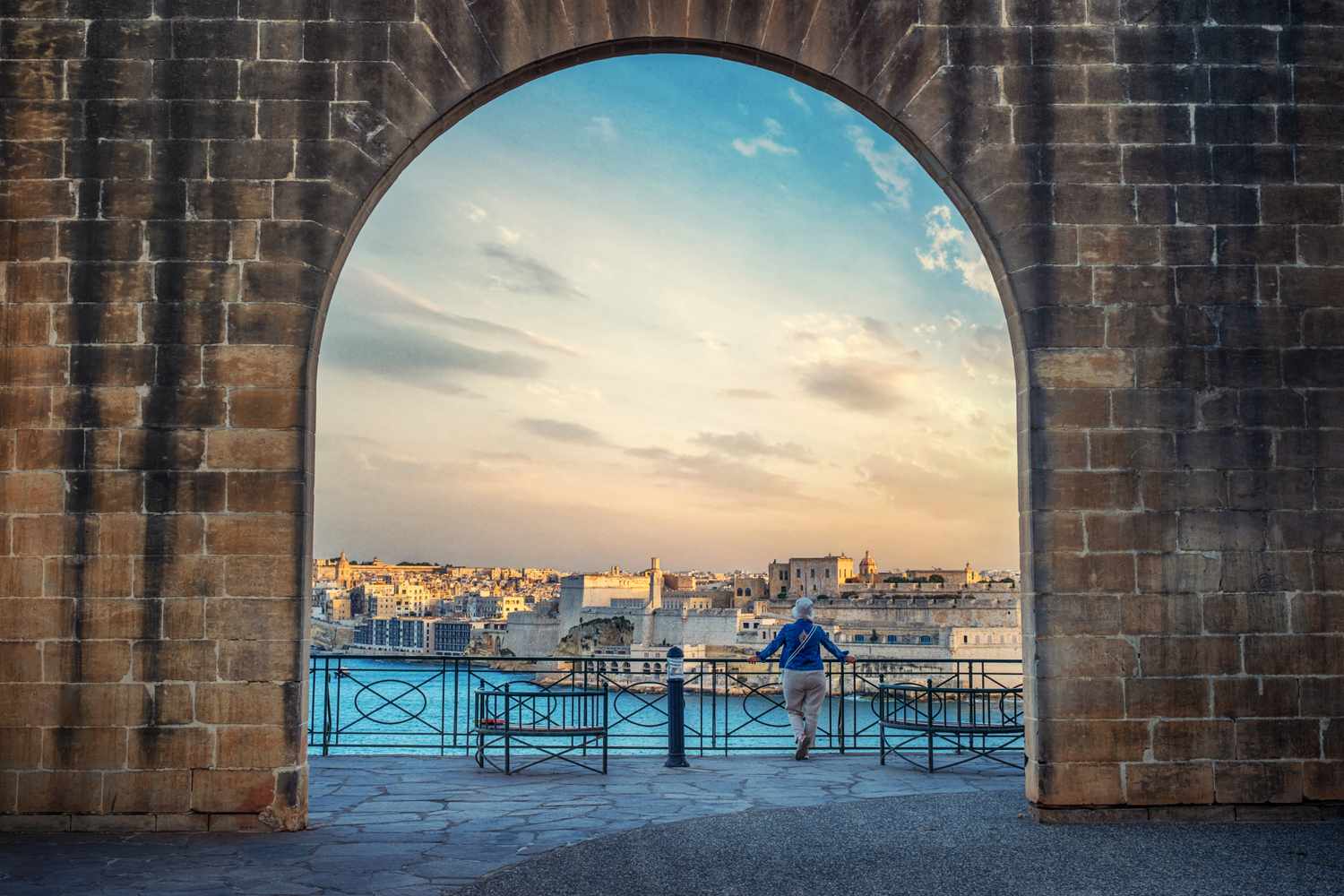
Valletta, Malta
Boats dot the harbor at Senglea, one of Malta’s “Three Cities” just a quick ferry ride from Valletta’s historic center.
Dado Daniela / Getty Images
The entire city of Valletta is a UNESCO World Heritage Site, with honey-colored Baroque buildings, an opera house, and a harbor that has drawn sailors since the Knights of St. John fortified it in the 1500s.
Time spent here means ferry rides to the quieter island of Gozo, 300 days of annual sunshine, and evening passeggiata (a traditional post-dinner stroll) along the harbor walls. As a former British colony, English is an official language, removing the biggest hurdle to retiring abroad.
The cost of living for a single person in Valletta runs about $1,770 per month, including rent, about 30% less than the U.S. average. The health care system ranks among Europe’s best—the World Health Organization rated it 5th globally—and public buses are free for residents over 60.
Tip
Malta recruits retirees through its Global Residence Programme, which offers a special tax status.
Alicante, Spain
The view from Alicante’s hilltop castle: Costa Blanca beaches, a working marina, and 300 days of sunshine annually.
Sergio Formoso / Getty Images
Alicante sits on the Costa Blanca, but it’s a working Spanish city—not a resort town—with a hilltop castle, a palm-lined promenade, and a daily central market where you can shop for fish, olives, and produce.
Bloomberg’s Global Health Index has ranked Spain the healthiest country in the world, with a score of 92.75 out of 100, citing its strong public health care system, access to preventive care, and Mediterranean lifestyle. The average cost of living for a single person in Alicante runs about $1,461 per month—about 42% less than the U.S. average.
The Non-Lucrative Visa is the standard route here, and soon enough, you’ll be able to gather with locals for tardeo—afternoon socializing with tapas and drinks.
Chania, Crete (Greece)
Chania’s Venetian harbor with Crete’s snow-capped White Mountains in the distance.
Maximilian Müller / Getty Images
International Living just named Greece the world’s best retirement destination for 2026. Chania is one of the best places to see why.
Crete is Greece’s largest island, big enough to function year-round—unlike smaller tourist islands that shut down in winter. Chania’s Venetian harbor dates to the 14th century and is a labyrinth of narrow streets lined with Ottoman and Venetian architecture, with the often snowcapped White Mountains visible from the waterfront.
Daily life here means inexpensive, fresh produce at the Agora market, weekend trips to pink-sand beaches like Elafonissi, and a pace that encourages you to slow down.
The average cost of living for a single person in Chania runs about $1,245 per month—about half the U.S. average. Greece offers a Financially Independent Person visa for non-EU citizens with a monthly income of at least €3,500 (about $4,100).
Split, Croatia
A quiet corner inside Diocletian’s Palace—Split’s old town is built directly into 1,700-year-old Roman ruins.
Armand Tamboly / Getty Images
Split isn’t built near ancient ruins—it’s inside them. The city’s old town is situated within the walls of Diocletian’s Palace, a 1,700-year-old Roman emperor’s retirement home that locals have continued to use.
You can also make this your retirement spot. You’ll find apartments carved into ancient stone, cafes tucked into Roman basements, and a cathedral that was once the emperor’s mausoleum. You can join locals who spend hours sipping coffee on the Riva promenade or hop on to a ferry to Hvar or Brač that takes less than an hour.
The average cost of living for a single person in Split runs about $1,623 per month—about 35% less than the U.S. average of $2,516. U.S. citizens can apply for a Temporary Residence Permit, often by prepaying rent or buying property. Croatia is part of the EU and adopted the Euro in 2023, providing access to the Schengen zone for easy European travel.
Bari, Italy
A quiet harbor in Puglia where fresh seafood and unhurried mornings are on offer for retirees.
Peter Adams / Getty Images
Bari offers an authentic Italian experience without the prices of Tuscany or Rome. It’s the capital of Puglia—the sun-bleached heel of Italy’s boot—and a working port city with an opera house, a massive seafront promenade called the Lungomare, and a tangled old town where workers still roll orecchiette pasta on tables in the street.
If you’re out dining and dip some fresh bread in olive oil or enjoy a glass of vino, it’s likely local—Puglia produces more wine than any other Italian region and about 40% of the country’s olive oil. Daily life here means picking up fresh burrata at the market, having an aperitivo on the harbor at sunset, and getting easy train access to whitewashed hill towns like Ostuni and Alberobello.
The average cost of living for a single person in Bari runs about $1,588 per month—about 37% less than the U.S. average. Nevertheless, the old town of Bari, once so crime-ridden that even locals avoided it, has become a major draw for tourists, pushing up rents in the city center as landlords convert apartments to short-term rentals. Retirees may find better value in outlying areas or nearby towns like Molfetta or Trani, where the cost of living is even lower.
The Elective Residence Visa allows you to live in Italy if you can show you have enough passive income (about €32,000/year for individuals). For €2,000 a year (about $2,350), the visa allows you to access Italy’s national health care system.
Tip
Neos Air launched the first direct route between New York’s JFK airport and Bari in June 2025, a boon for American retirees who won’t have to endure the lengthy connections through Rome or Milan.
Alanya, Turkey
Alanya’s old town climbs the hillside above Turkey’s aptly named Turquoise Coast.
tunart / Getty Images
This resort city on Turkey’s Turquoise Coast offers the lowest cost of living of any destination here—$734 per month for a single person, far less than the U.S. average. Cleopatra Beach—named for the Egyptian queen who, legend has it, received the city as a gift from Mark Antony—stretches two kilometers beneath a 13th-century Seljuk castle skirted by six kilometers of walls.
A cable car (the teleferik) connects the beach to the fortress above, the Kızılkule (Red Tower), located near the Alayna Shipyard, which is Turkey’s only surviving Seljuk-era shipyard, and was once a significant Mediterranean naval base. This is a unique historical heritage site dating back to 1228.
Turkey doesn’t offer a dedicated retirement visa; however, you can apply for a short-term residence permit after renting or buying property, which is valid for up to two years and is renewable. English-speaking doctors are available in private clinics, and you will need to obtain health insurance for your residence application.
Warning
Alanya is a destination perhaps meant for more adventurous retirees: Turkey isn’t in the EU, and the Turkish lira’s volatility means your dollar’s purchasing power can swing. Outside tourist zones, English is less common, while summer temperatures can be brutal, with the heat often pushing into the mid-30s Celsius.
Kotor, Montenegro
The Church of Our Lady of Remedy overlooks Kotor, Montenegro, a UNESCO-protected old town where the Adriatic meets the Alps.
tunart / Getty Images
If you want a dramatic bay where mountains plunge straight into the Adriatic, a medieval walled town, and a potential backdoor for trips to the rest of Europe, Kotor delivers.
This UNESCO World Heritage Site offers a maze of cobblestone streets that wind past Romanesque churches, Venetian palaces, and the 12th-century Cathedral of Saint Tryphon, all enclosed by 4.5 kilometers of fortifications that climb up the mountainside to a fortress 1,350 steps above.
The cost of living for a single person is approximately $1,261 per month—nearly half the U.S. average. Montenegro is part of the euro zone, making currency conversions easier. The government raised the real estate value required for residency to €200,000 in late 2025; therefore, please check the latest rules.
