

Key Takeaways
- You can find active gallery scenes and theater districts in towns where homes cost half the national average.
- In smaller artistic towns, social life can involve gallery walks and workshops rather than expensive country clubs.
- These towns might be small, but they all host or sit near regional medical centers capable of handling older adult needs.
Most people assume retiring to an “art town” means paying Santa Fe prices or fighting for parking spots in Asheville. But the creative impulse isn’t exclusive to pricier zip codes. A quiet migration is possible toward smaller, quirkier American towns where you can still buy a bungalow for $250,000 and take a master class in ceramics on a Tuesday morning.
For retirees, these spots offer something golf courses can’t: a built-in purpose and creative communities.
Eureka Springs, Arkansas
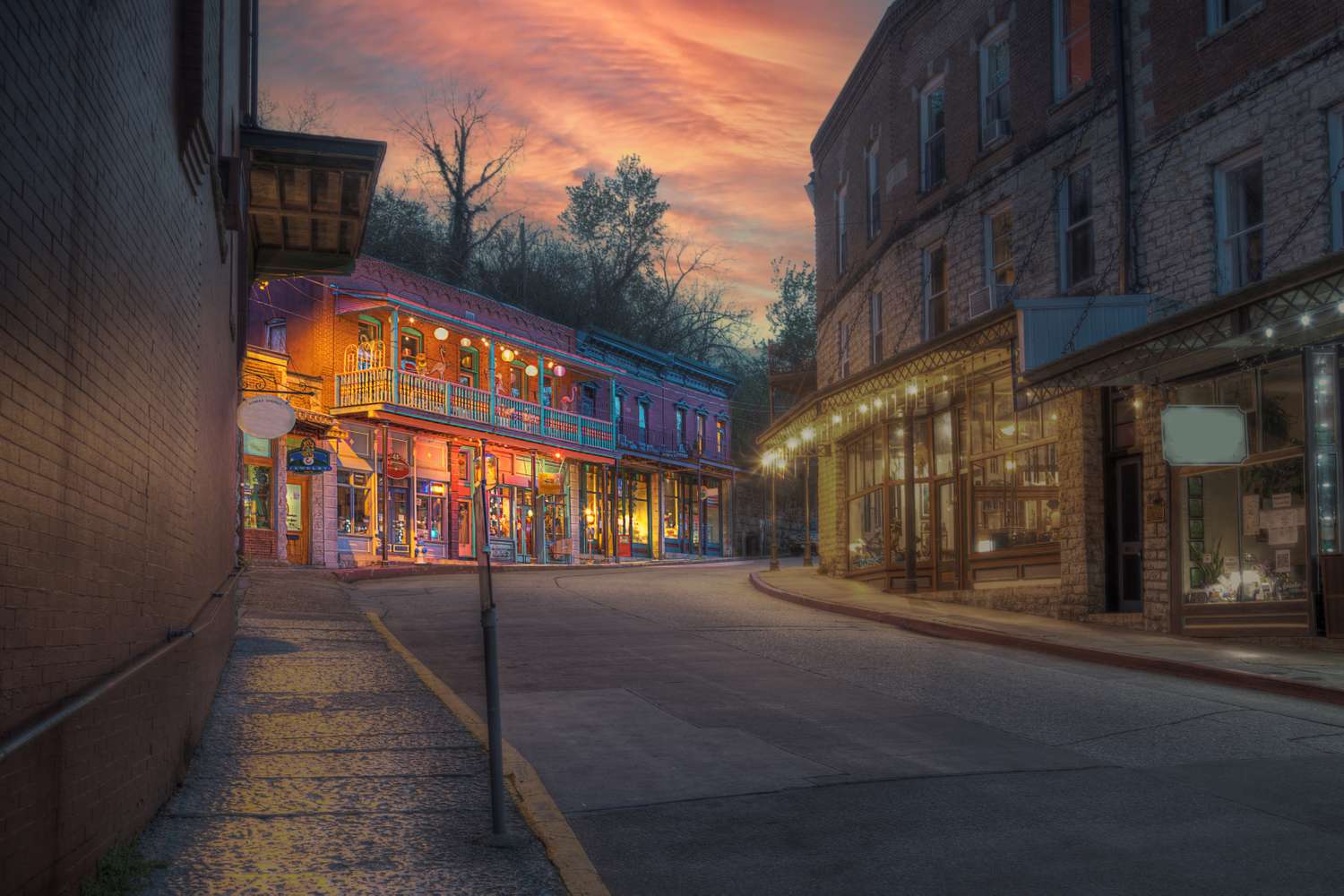
Downtown Eureka Springs, Arkansas, where Victorian architecture and winding streets are nestled into the Ozark hillsides amid fall foliage.
JeremyMasonMcGraw.com / Getty Images
- Average home value: $308,000
- Relative cost of living: 12% less than the U.S. overall
Eureka Springs looks like a Victorian village that slid down a steep Ozark ravine and decided to stay there. The streets wind so aggressively that the town has no traffic lights. This geography attracted a massive wave of counter-culture artists in the 1960s, and they never left.
Today, the Eureka Springs School of the Arts (ESSA) anchors the community, offering workshops for those using iron, wood, and clay. About 300 of the 2,000 people in the town are working artists—one in six.
ESSA keeps a full calendar, most notably with the Festival of the Arts, where the entire town effectively becomes an open studio. That’s in addition to the Original Ozark Folk Festival, the longest-running such festival in the U.S.
While prices have climbed, a median home value of about $308,000 remains a bargain compared with other mountain resort towns, and is well under the U.S. average of $359,000.
Tip
The Museum of Eureka Springs Art opened in 2024, featuring works from 150 artists over the past century and a half.
Bisbee, Arizona
Historic Bisbee, Arizona, where colorful buildings from the town’s copper mining days climb the slopes of the Mule Mountains.
Danny Lehman / Getty Images
- Average home value: $218,000
- Relative cost of living: 8% less than the U.S. overall
Bisbee is the anti-Phoenix. Sitting a mile high in the Mule Mountains, it escapes the deadly desert heat, which explains why hippies and artists took over the miners’ shacks in the 1970s. The town feels like a living museum of the eccentric.
The Bisbee Arts Commission supports a dense network of galleries, and the “Bisbee After 5” art walk is the twice-monthly social glue, with galleries, studios, and wine available streetside. The town’s steep hillside staircases double as public art galleries, with colorful murals painted along the steps. The 1905 Central School has been converted into a community arts center hosting poetry readings, comedy nights, and theater.
Even the town’s geology contributes to its creative identity: “Bisbee Blue” turquoise, discovered as a byproduct of copper mining, is now one of the rarest and most valuable gemstones in the world—the mine closed in 1974, making authentic pieces highly collectible and a staple of local jewelers.
You can still find renovated historic homes here for around $220,000, a figure that is unheard of in Sedona or Flagstaff.
Paducah, Kentucky
Colorful storefronts line the revitalized Lower Town Arts District in Paducah, Kentucky, where the city’s Artist Relocation Program transformed once-derelict buildings into creative hubs.
Paducah, Kentucky / Getty Images
- Average home value: $186,000
- Relative cost of living: 16% below the U.S. as a whole
Paducah didn’t just hope for an art scene; it paid for one. The city’s Artist Relocation Program became a national model for urban revitalization by paying artists to restore derelict properties in the Lower Town district.
That investment paid off, landing Paducah a designation as a UNESCO Creative City—the smallest city with the designation. The National Quilt Museum draws fiber artists from around the world, but the day-to-day scene is local with artisans working in open studios along the Ohio River.
With a median home price under $200,000 and Kentucky’s tax exemption on Social Security income, your retirement budget stretches further here than almost anywhere else on this list.
Silver City, New Mexico
Silver City, New Mexico, glows at dusk against the high-desert mountains near the Gila Wilderness, offering the famous New Mexico light without the Santa Fe price tag.
Denis Tangney Jr. / Getty Images
- Average home value: $221,000
- Relative cost of living: 15% less than the U.S. overall.
This town of just 10,000 residents supports more than 50 galleries and art spaces, earning it a designation as one of nine official Arts and Cultural Districts in New Mexico. It sits on the edge of the Gila Wilderness, near the Chino Mine (one of the largest open-pit copper mines in the world), and maintains a rougher, more authentic edge.
The Silver City CLAY Festival is a major draw, celebrating the region’s adobe heritage and ceramic artists. Western New Mexico University provides the intellectual anchor, and its museum houses one of the most comprehensive collections of prehistoric Mimbres-Mogollon pottery in the world. Every Memorial Day weekend, the free Silver City Blues Festival fills Gough Park with three days of live music.
You can find Adobe homes and territorial-style ranches for around $221,000. It’s quiet, incredibly dark at night (great for stargazing), and deeply connected to the high-desert landscape.
Abingdon, Virginia
A welcome sign showcases Abingdon, Virginia’s charm, where historic architecture and a thriving theater scene make this Blue Ridge town a cultural hub for retirees.
Katherine Frey / Getty Images
- Average home value: $277,000
- Relative cost of living: 13% lower than the U.S. overall.
Abingdon punches way above its weight class because of one institution: The Barter Theatre. Opened during the Great Depression, it allowed patrons to pay for tickets with produce—most did at the time. The theater became a launching pad for careers: Gregory Peck, Patricia Neal, Ernest Borgnine, and Ned Beatty all performed here before Hollywood came calling. Today, the State Theater of Virginia hosts professional productions year-round, drawing actors and designers from all over.
This culture bleeds into the rest of the town. The Virginia Creeper Trail begins here, attracting photographers and plein air painters who want to capture the misty Blue Ridge scenery. With homes averaging $277,000 and a tax-friendly environment for retirees, it offers a sophisticated cultural life for less.
