

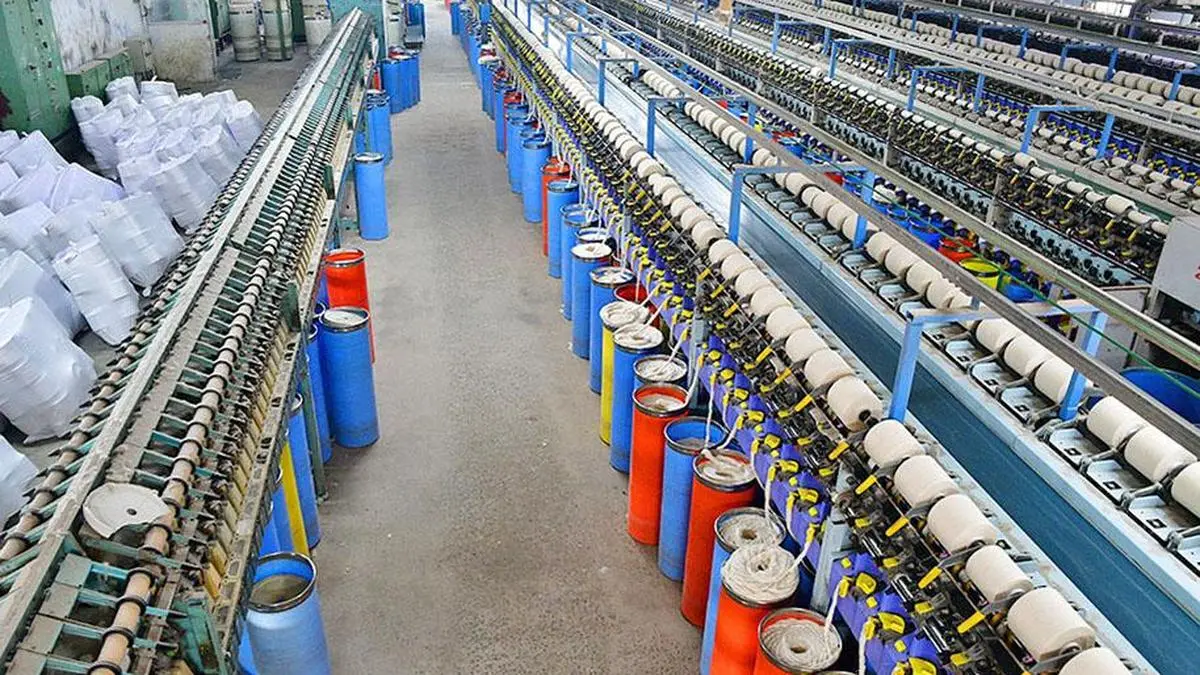
Open-end spinning mills, numbering over 600 in Tamil Nadu, have cut their production by 50 per cent in an effort to improve profitability and market conditions.
Open-end mills are facing losses as prices of cotton waste, the main raw material for themills, have increased amid a fall in cotton and yarn prices, said G Arulmozhi, president, Open-End Spinning Mills Association (OSMA).
Tamil Nadu’s open-end spinning mills produce about 25 lakh kg of cotton grey yarn and 15 lakh kg of colored yarn daily. “This crisis (closure to improve market) echoes recent reports of mills halting operations due to similar cost pressures,” he said.
Cotton prices have dropped from ₹60,000 per candy (356 kg) in October to ₹53,500 in December. “Yet, cotton waste like comber noil (short-fibre byproduct from the cotton combing process in yarn manufacturing) rose from ₹100/kg to ₹113. Open-end yarn prices also fell, with 20s weft from ₹150/kg to ₹140kg and 20s warp from ₹165/kg to ₹158,” said Arulmozhi.
Open-end mills rely on waste cotton for grey yarn, but hikes of ₹15/kg despite lower raw cotton costs have eroded margins. This has forced them to run their units at 50 per cent capacity or bring production to a total halt. “Daily output losses could exceed ₹10 crore during full halts, affecting powerloom and handloom suppliers,” he said.
Curb cotton waste exports
OSMA demands that the cotton waste price be controlled, the State government reduce electricity tariffs. The Centre should curb the export of cotton waste to stabilise the sector. “The scaling back of production to 50 per cent of the capacity is to avoid further losses until cotton waste prices align with falling cotton values,” the OSMA president said.
Cotton waste comber noil is exported in huge volumes, and if this is made available in the domestic market, it can be used to make “made-up” products that would benefit cities such as Karun in Tamil Nadu and Panipat in Haryana. These cities can ship value-added products.
“Instead of exporting a production at ₹100 a kg, we can value-added and export at ₹1,000/kg and get more foreign exchange,” said Arulmozhi. Also, the exports of these have resulted in a shortage of raw material for open-end mills, he said.
Published on December 27, 2025
