

Key Takeaways
- The end of the year boost associated with Saint Nick tends to boost stocks by around 1%.
- Jeff Hirsch, author of the Stock Trader’s Almanac, is looking out for a rally that will help boost the S&P 500 to a new record next year.
If Santa delivers this Christmas, investors could be cheering through 2026.
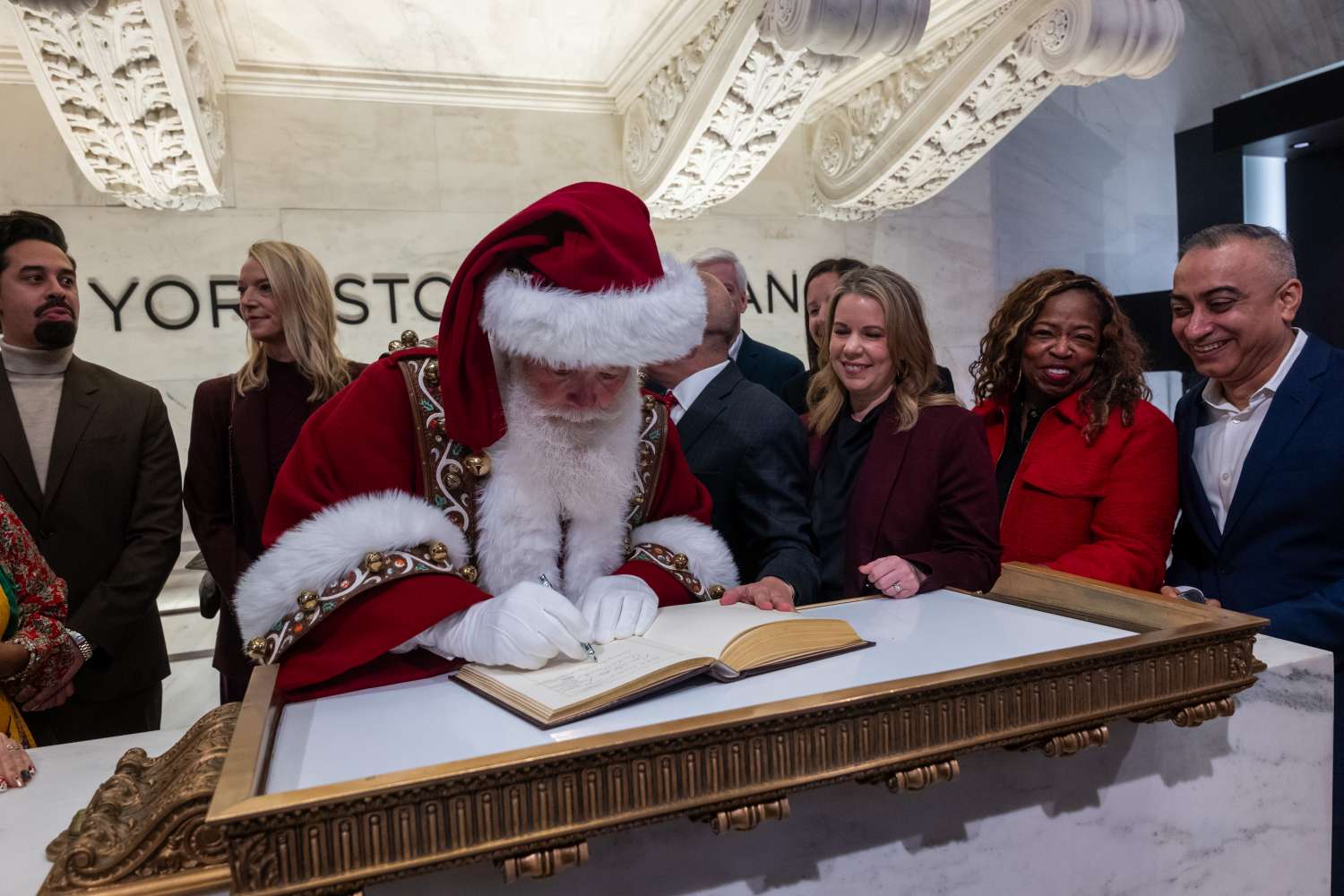
The so-called Santa Claus rally describes the historical tendency for stocks to rise over the final five trading days of December and the first two trading days of the new year—in this season’s case meaning the period from Christmas Eve through Monday, Jan. 5.
Historically, the rally range has been good for stocks. Its average gains have been around 1.3% over that seven-day stretch since 1950—not a huge pop, perhaps, but still better than the 0.2% average return notched over “typical” 7-day periods, according to Invesco research.
Why does this happen? Some attribute it to the generally festive atmosphere, while others suspect a lack of liquidity that allows retail investors to take the wheel from institutions and professionals who step away for the holiday.
Why This Matters to Investors
The Santa Claus rally is a festive indicator some investors use to divine where stocks are going. It’s not scientific, but rather a simple signal, flashing green or red, for the year ahead.
The purported rally isn’t just a stock stuffer. It’s sometimes seen as a directional market indicator for the year ahead—meaning that if Saint Nick is spotted lifting the major indexes over the next week or so, it could be a bullish sign.
The choppiness seen earlier this month is consistent with the seasonal pattern that eventually leads to the Santa Claus rally, Jeff Hirsch, son of Yale Hirsch—the writer of the Stock Trader’s Almanac and the coiner of the term—said in an interview with Investopedia. His yearend target for the S&P is 7100, which would mean a new record and mark a roughly 20% gain for 2025. (As of Tuesday’s record close of over 6909, the index is up 17% year-to-date.)
Santa doesn’t always show up. The S&P 500 only locked in a 1%-plus gain over those 7 days in four out of the past 10 years, according to John Butters, senior earnings analyst at FactSet Research. Still, a miss from Santa hardly guarantees a downbeat year: The S&P 500 fell during the last rally period, but it’s on track for big gains in 2025.
As for the year ahead, Hirsch said to look at two other other indicators, or what he calls the First Five Days and the January Barometer; the former measures performance over the first trading days of each year, and the latter measures the month. Since 1950, the S&P 500 has been up 90% of the time that all three—the Santa Claus Rally, First Five Days, and the January Barometer—happened at the start of the year.
And there are other reasons for optimism in 2025. Investors’ interest rate expectations are flashing positive for stocks next year, for example. “This market sees just enough weakness in labor markets to justify easing, but not so much as to indicate any real risk of recession,” Datatrek’s Nicholas Colas and Jessica Rabe said in a report Sunday.
Put another way, according to Hirsch, if Santa Claus doesn’t show up “it doesn’t mean it’s a bummer for 2026 as a whole.”
