

Key Takeaways
- Australia’s most affordable retirement cities—from Launceston to Adelaide—offer a lower cost of living than the U.S.
- While median home values are above those in the U.S., they are about 30% to 50% lower than in the major cities of Sydney and Melbourne.
- These destinations already have established retiree communities, with 15% to 23% of residents aged 65 and older—meaning infrastructure, health care, and social networks are already in place.
Australia offers Americans walkable cities, less crime, stunning coastlines, and a genuine slow-down-and-enjoy-life culture—all in a country where English is the native language, and the coffee is world-class.
While the median home prices in these five cities are at or above typical U.S. levels, day-to-day living costs tell a different story. Groceries, dining out, transportation, and utilities run 15% to 35% lower than in comparable American cities. Sydney and Melbourne are as expensive as California. But venture beyond the big metros, and you’ll find scenic cities with costs of living well below that in the U.S.
Selection Criteria
- Housing costs: Median prices for homes are usually a good indicator of overall affordability; however, in fact, Australia’s cost of living is lower overall, despite higher median home costs. For reference, as of 2025, the median home prices in Sydney, Brisbane, and Melbourne were $845k, $732k in Brisbane, and $548k in Melbourne. The national median was $591k. (All values here and below are in U.S. dollars, using the exchange rate as of mid-December 2025.)
- Living expenses: Other daily costs, such as parking, dining at restaurants, and purchasing local food, are typically lower in smaller cities than in capital cities.
- Healthcare: Each place has at least one major public hospital or a network of public and private clinics.
- Lifestyle and environment: Parks, beaches, gardens, vineyards, or other natural settings, plus mild climates (compared with more inland or northern locales).
- Community and safety: Smaller populations and a history of attracting older residents as part of established community networks.
1. Hobart, Tasmania
Hobart’s Constitution Dock at sunrise. The Tasmanian capital offers retirees waterfront living, mild weather, and home prices roughly 45% below Sydney.
Steve Daggar Photography / Getty Images
- Population (2024): 56,000
- Aged 65+ (2024): 18.6%
- Median home price (2025): $468,000
- Cost of living compared to the U.S.: 15.5% lower (for one person, including housing).
Hobart sits between the River Derwent and kunanyi/Mount Wellington, with a mild maritime climate, a busy waterfront, and a strong arts scene anchored by the Museum of Old and New Art and Salamanca Place. The city is compact, affordable, and easy to navigate on foot, by bike, or by public transportation.
Retirees have been drawn to the city’s walkable streets and plentiful parks, as well as the easy access to scenic walks like Mt. Wellington or local beaches.
Hobart boasts excellent medical facilities, low traffic levels, and a slower pace of life compared to larger cities. It’s a small city with a strong community feel, making it a good option if you’re looking for somewhere peaceful and unpretentious.
Tip
According to a 2025 Monash University study, Hobart is the “healthiest” place to live in Australia.
2. Adelaide, South Australia
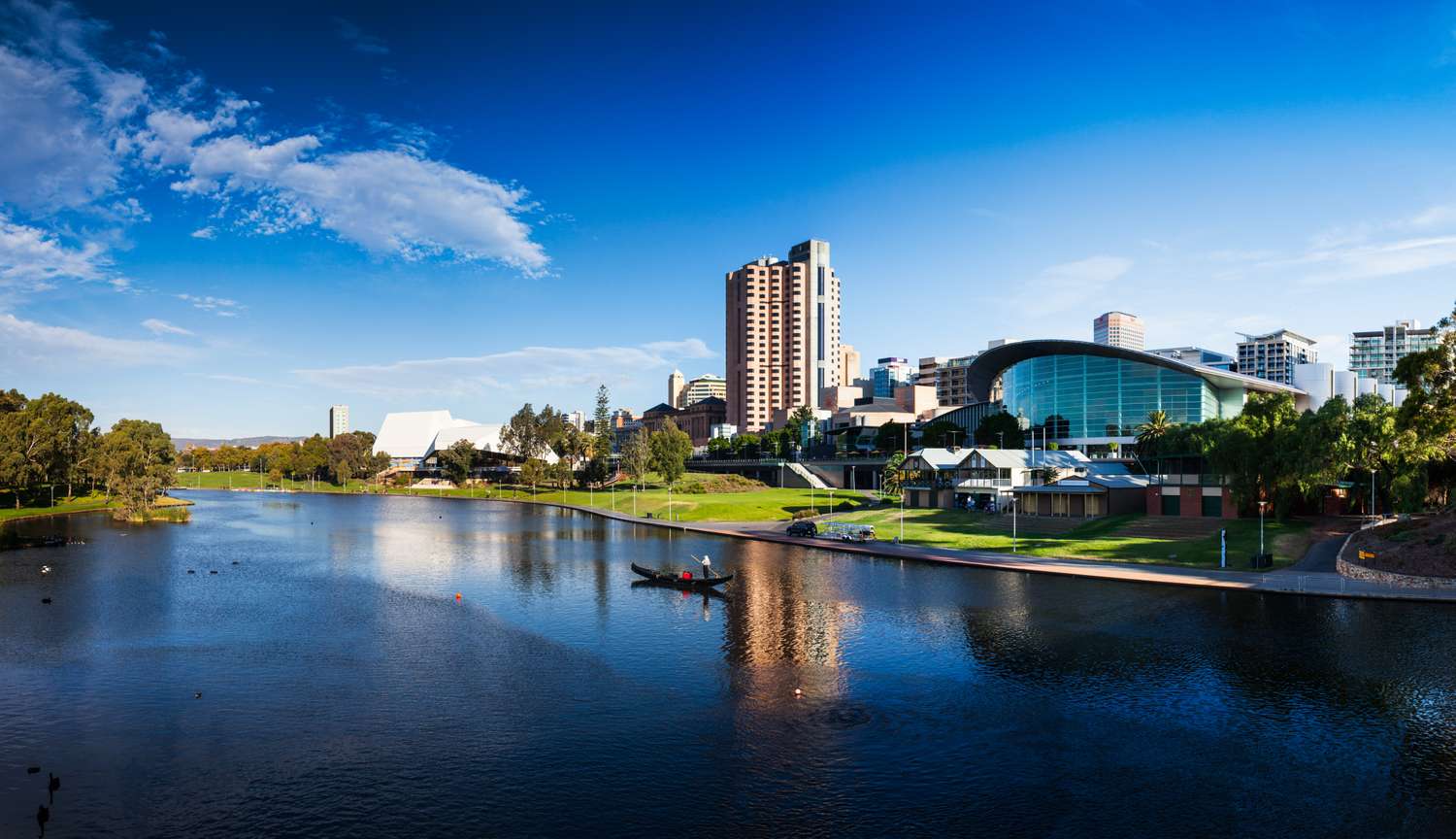
The Adelaide Festival Centre on the Torrens River in South Australia’s capital city.
Nick Rains / Getty Images
- Population (2021): 198,000
- Aged 65+ (2021): 15.8%
- Median home price (2025): $592,000
- Cost of living compared to the U.S.: 15.8% lower (for one person, including housing).
Adelaide is a friendly, affordable city with strong regional and national connections. It has a slightly slower pace of life, where you can find bigger houses and live an outdoor lifestyle.
Adelaide offers leafy suburbs, long sandy beaches, and easy day trips to the Barossa wine region, McLaren Vale, and Adelaide Hills. While a bit more bustling than some other places in South Australia, Adelaide can be good for more social and relaxed retirees, especially those who prefer big-city services and access to cultural and social events.
3. Coffs Harbour, New South Wales
Coffs Harbour offers retirees the chance of exercise, as well as a laid-back beach lifestyle without the Gold Coast price tag.
Adam Smith / Getty Images
- Population (2021): 78,750
- Aged 65+ (2021): 23.1%
- Median home price (2025): $592,000
- Cost of Living Compared With the U.S.: 21.4% lower (for one person, housing included).
Coffs Harbour is a laid-back yet comfortable coastal town offering shopping, entertainment, and a variety of restaurants. It combines sunshine and warm sea temperatures year-round, making it a pleasant place to live, with outdoor activities and family-friendly places to visit and things to do.
You can access beaches or bushwalking areas within a few minutes’ drive, or explore great seafood restaurants along the main shopping strip.
The area has a more communal feel than the Gold Coast or New South Wales’ Central Coast. It offers a comprehensive range of healthcare services, including a 357-bed regional referral hospital that provides specialist care.
4. Toowoomba, Queensland
Manicured gardens at Laurel Bank Park in Toowoomba. Known as the “Garden City,” this inland Queensland hub trades beachfront living for flower festivals and crisp but not freezing winters.
Traceydee Photography / Getty Images
- Population (2021): 173,200
- Aged 65+ (2021): 19.4%
- Median home price (2025): $486k
- Cost of living compared to the U.S.: 34.9% lower (for one person, including housing).
Like Coffs Harbour, Toowoomba is a good spot for an affordable Queensland location with a large range of health care and community services. Toowoomba is the bigger city, however, and tends to appeal more to retirees who enjoy a slower pace but still want a bit of a cultural and urban hub.
Cool summers and crisp winters make Toowoomba a good choice for those who prefer a slightly cooler climate and want to escape the coastal heat and humidity. Along with great hiking, bushwalking, and access to biking trails, the city is surrounded by regional areas and country towns, where it’s easy to visit beaches or explore the national parks.
The “Garden City” is well-known for its over 250 parks and gardens, as well as the Carnival of Flowers festival. Toowoomba boasts exceptional healthcare, featuring multiple hospitals and specialist clinics.
Tip
Before making any permanent move, an extended stay first is a good idea to get familiar with the lay of the land.
5. Launceston, Tasmania
Launceston emerges from the morning mist, with the North Esk River winding toward the Tamar Valley beyond. Tasmania’s northern city offers retirees historic charm, compact walkability, and the lowest median home price of any destination on this list.
Wenyi Liu / Getty Images
- Population (2021): 70,055
- Aged 65+ (2021): 20.1%
- Median home price (2025): $416k
- Cost of living compared to the U.S.: 34.0% lower (for one person, including housing).
Launceston is a compact city with a mild climate that makes for an easygoing, active lifestyle. Residents can socialize, shop, and travel easily without using a car. Like other Tasmanian cities, Launceston offers easy access to nature and the outdoors, and it has a reputation for high-quality local produce.
This smaller city can be a bit quieter, but its community is well-organized, with a range of social activities and cultural events. It’s a historic city with stunning river views, boasting a more laid-back atmosphere than Hobart.
A convenient rail link to bigger hubs such as Hobart or the East Coast, and it’s close to the Tamar Valley wine region. The city’s slower pace and well-maintained walking paths make it attractive to retirees wanting urban conveniences without the big-city bustle.
