

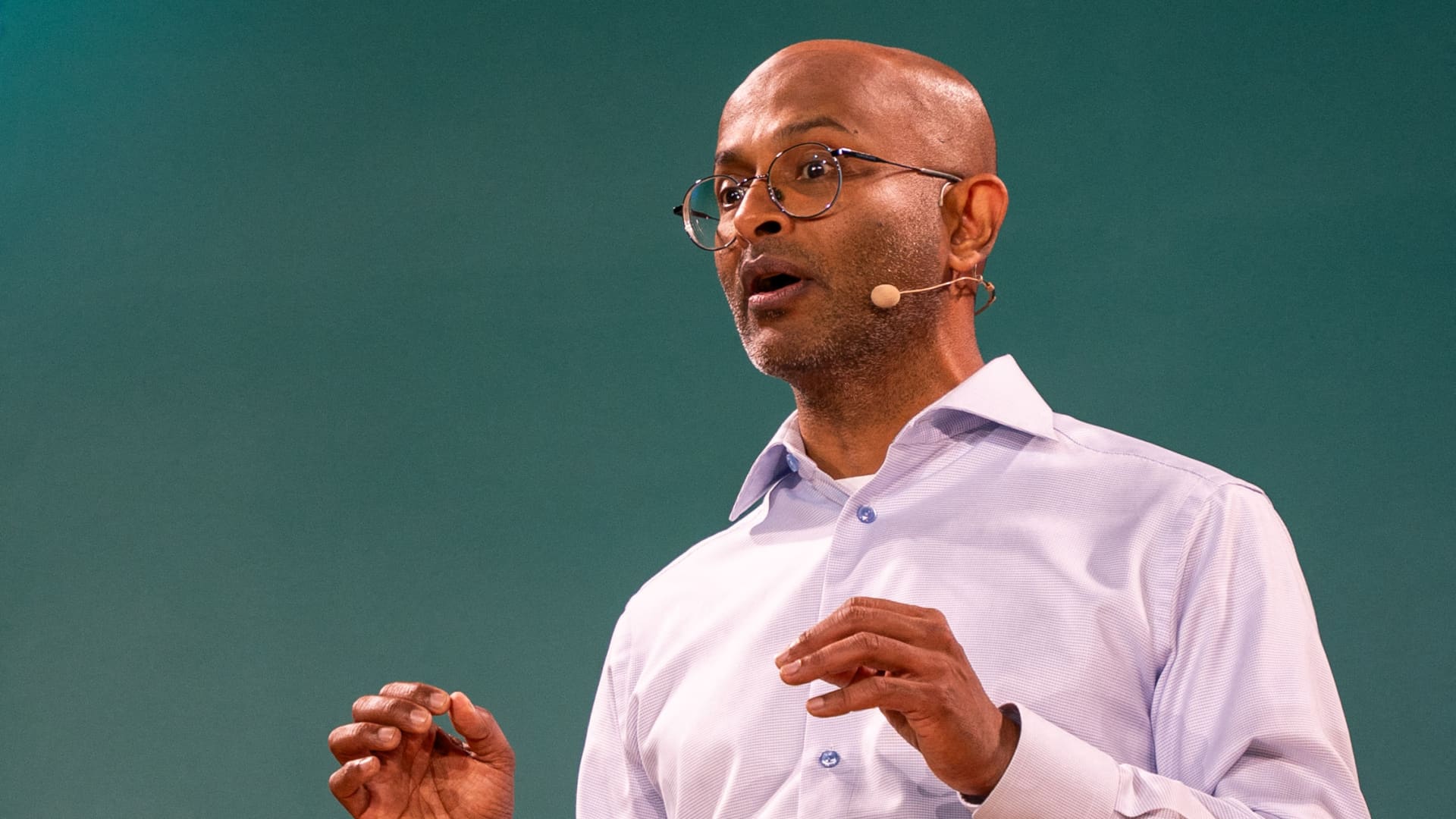
Anand Varadarajan, Amazon Vice President of product and technology and worldwide grocery stores speaks during the Delivering the future conference in Mt. Juliet, Tennessee, on October 9, 2024.
Seth Herald | Afp | Getty Images
Starbucks announced Friday that it has hired its new chief technology officer, Amazon veteran Anand Varadarajan.
Varadarajan, who spent nearly 19 years at Amazon, most recently led technology and supply chain for the tech giant’s worldwide grocery stores business.
Varadarajan, who also previously held software engineering roles at Oracle, will begin Jan. 19 as executive vice president and CTO, reporting directly to CEO Brian Niccol, according to a memo. The hire comes after Deb Hall Lefevre, Starbucks’ former CTO, departed in September as the company underwent a second round of layoffs and announced a $1 billion restructuring plan as a part of its ongoing turnaround.
“[Varadarajan] knows how to create systems that are reliable and secure, drive operational excellence and scale solutions that keep customers at the center. Just as important, he cares deeply about supporting and developing the people behind the scenes that build and enable the technology we use,” Niccol wrote in a memo announcing the hiring.
At Amazon, Varadarajan had recently been elevated to oversee the worldwide grocery technology and supply chain organizations, which include both its homegrown Fresh brand and Whole Foods. He reported directly to Jason Buechel, Amazon’s grocery chief and the CEO of Whole Foods.
During his tenure, Amazon has experimented further with grocery tech innovations like a pilot to incorporate mini robotic warehouses in Whole Foods supermarkets that enable consumers to shop both its in-store selection and products from Amazon’s wider inventory that aren’t typically stocked by the organic grocer.
Starbucks, meanwhile, is still in the early stages of a turnaround overseen by Niccol, who took over as CEO in September 2024. In the most recent quarter, Starbucks’ quarterly same-store sales returned to growth for the first time in nearly two years, a sign that its strategy is winning over lapsed customers. Holiday sales have also been strong so far this season as the company contends with an ongoing strike of unionized baristas impacting a small number of its stores.
Part of that strategy is its hospitality platform, Green Apron Service, which at $500 million is the company’s largest investment into labor. The program is backed by changes to ensure proper staffing and better technology to keep service times fast. It was born out of growth in digital orders — which now make up more than 30% of sales — and feedback from baristas.
— CNBC’s Annie Palmer contributed to this report
