

Authored by J Scott Turner via RealClearScience,
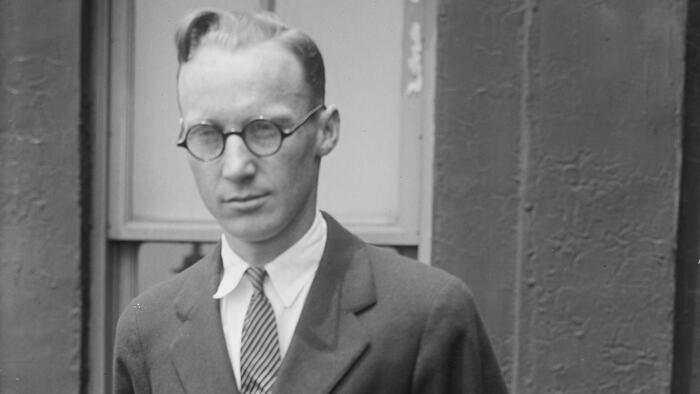
This is the centennial year for the Scopes “monkey trial” in Dayton, Tennessee, 1925’s “trial of the century”. In the dock was John Scopes, a substitute high school teacher who was accused of violating the state’s recently passed Butler Act, which prohibited any state school from teaching any theory of the origin of man that contradicted the account in Genesis. Scopes’ conviction was later overturned by the Tennessee Supreme Court on a technicality.
By any objective measure, the Scopes trial should arouse no greater attention in 2025 than Dayton’s 1925 Strawberry Festival. It set no legal precedent, led to no repeal of the Butler Act, and everyone involved just got on with their lives. Yet here we are, still talking about it a hundred years later, in commemorative conferences, in high profile commentaries, on podcasts, and even a documentary (full disclosure, produced by me).
Interest in the Scopes trial has been kept alive by a prevailing narrative that has built up over the last century: of two titans of 1920s America, William Jennings Bryan and Clarence Darrow, squaring off in an epic courtroom confrontation of science versus religion, evolution versus creation, academic freedom versus state control of education.
We have known for some time that little of this narrative is true. The Scopes trial was a put-up job, instigated by the American Civil Liberties Union (ACLU) and Dayton town luminaries who wanted to bring commerce and publicity to their small town and its sluggish economy. The “epic confrontation” was more performative than substantive, with drama provided by the defense’s claim that evolutionism and Darwinism were crystalline scientific truths, and that any contrary claims, particularly when the doubts were religiously-motivated, posed a threat to civilization itself. Ever since 1925, scientists generally have bought into the Scopes defense’s narrative. But just how strong was their case?
The Scopes defense team brought in a group of scientific expert witnesses to inform the Court how misguided the Butler Act was. The judge, John Raulston, allowed one of the experts, Maynard Metcalf of Johns Hopkins, to testify, but with the jury absent. Based on Metcalf’s testimony, Raulston barred the defense from calling any of the other expert witnesses, and struck Metcalf’s testimony from the trial transcript. Even so, Raulston invited the experts to submit written statements for the trial record, essentially amicus curiae briefs. Their statements give us a window into the strength of the defense’s case.
To put the matter politely, the experts were underwhelming. Metcalf’s testimony was supercilious and condescending, resting on the presumption that something had to be true because he, an expert, said it. The others’ statements were vague and tended to wander off-topic. Two of the experts trotted out the dubious Piltdown Man fossil as proof of the “missing link” between apes and humans. At best, this was evidence of expert laziness and wishful thinking. Since its “discovery” in 1912, doubts had swirled about the Piltdown fossils’ authenticity, later definitively revealed by Charles Oakley and Joseph Weiner as a hoax and an “evolutionary absurdity.”
Aside from those faux pas, the experts fell into a logical error: an insistent conflation of evolutionism – the proposition that life on Earth has a history – with Darwinism, a proposed mechanism for evolution. In the Scopes trial record, the two terms are used interchangeably, one the synonym of the other, when they are in fact quite distinct things.
Since the mid-nineteenth century, evolutionism has rested on a solid scientific foundation, both for life in general, and for human origins in particular. We know it is scientific because scientific knowledge is by its nature tentative and provisional, which the science of human origins exemplifies. In 1925, the science of human origins painted a different sketch of human origins than the one we presently paint, but then as now, the sketch is informed by the ongoing dialogue with nature that defines science. Our picture of human origins will continue to adjust as more evidence emerges.
In 1925, in contrast, Darwinism was at its lowest scientific ebb since its inception in 1859. This period is known broadly as the eclipse of Darwinism. Darwinism’s most serious challenge came from Thomas Hunt Morgan’s mutationist theory for evolution, which he claimed invalidated Darwinian natural selection or at least relegated it to a minor role. While Darwinism’s bacon would eventually be pulled out of the fire by Ronald Fisher’s “genetical theory of natural selection”, that was still five years into the future. How, then, did the scientifically weak Darwinian idea come to be synonymously bound to the more scientifically robust evolutionism, both at the Scopes trial, and in the minds of the public?
Beginning in the late 19th century, Darwinism became transformed into an ideology – “popular Darwinism” – that could be enlisted as support for a wide range of political and social causes. Some of these were flatly contradictory to one another. “Social Darwinism”, for example, has been a justification both for generous social welfare programs, and for abolishing them entirely. Generally, popular Darwinism has served as a proxy for progressive ideology, like Wilson’s “living constitution.”
The nebulousness of popular Darwinism puts William Jennings Bryan and the anti-evolution movements in the 1920s South in a different light. Bryan’s principal complaint about popular Darwinism was its fundamental emptiness: that if Darwinism could mean anything at all, it also could mean nothing at all, making it a nihilistic ideology that would bear bitter fruit wherever it took root. The social and economic upheavals in the decade following the Great War seemed to provide ample evidence for Bryan’s argument, which resonated strongly in the largely agrarian and tradition-minded South. It was not ignorance and religious bigotry that was at work here. To the contrary, people of the South were paying close attention to events, and were not liking what they saw.
Bryan’s critique of Darwinism was the seed crystal that precipitated these anxieties into political action, among them the passage of the Butler Act. John Butler was a communicant of the fundamentalist Primitive Baptist Church, but his eponymous Act drew support from across a broad spectrum of Tennessee society, both secular and religious. So strong was that support that Tennessee’s progressive Democrat governor, Austin Peay, felt compelled to sign it into law.
What was at stake in the Scopes trial was not a conflict of science versus religion, or evolution versus creation. Rather, it was a political tussle over a different question entirely, namely, who gets to decide how parents educate their children? In passing the Butler Act, the people of Tennessee arrogated that decision to themselves. For their temerity, the ACLU decided it had to parachute into Dayton to take the decision back. To the extent that the high-minded rhetoric of the Scopes defense played a role, it was a political agenda masquerading as science.
Loading recommendations…
