

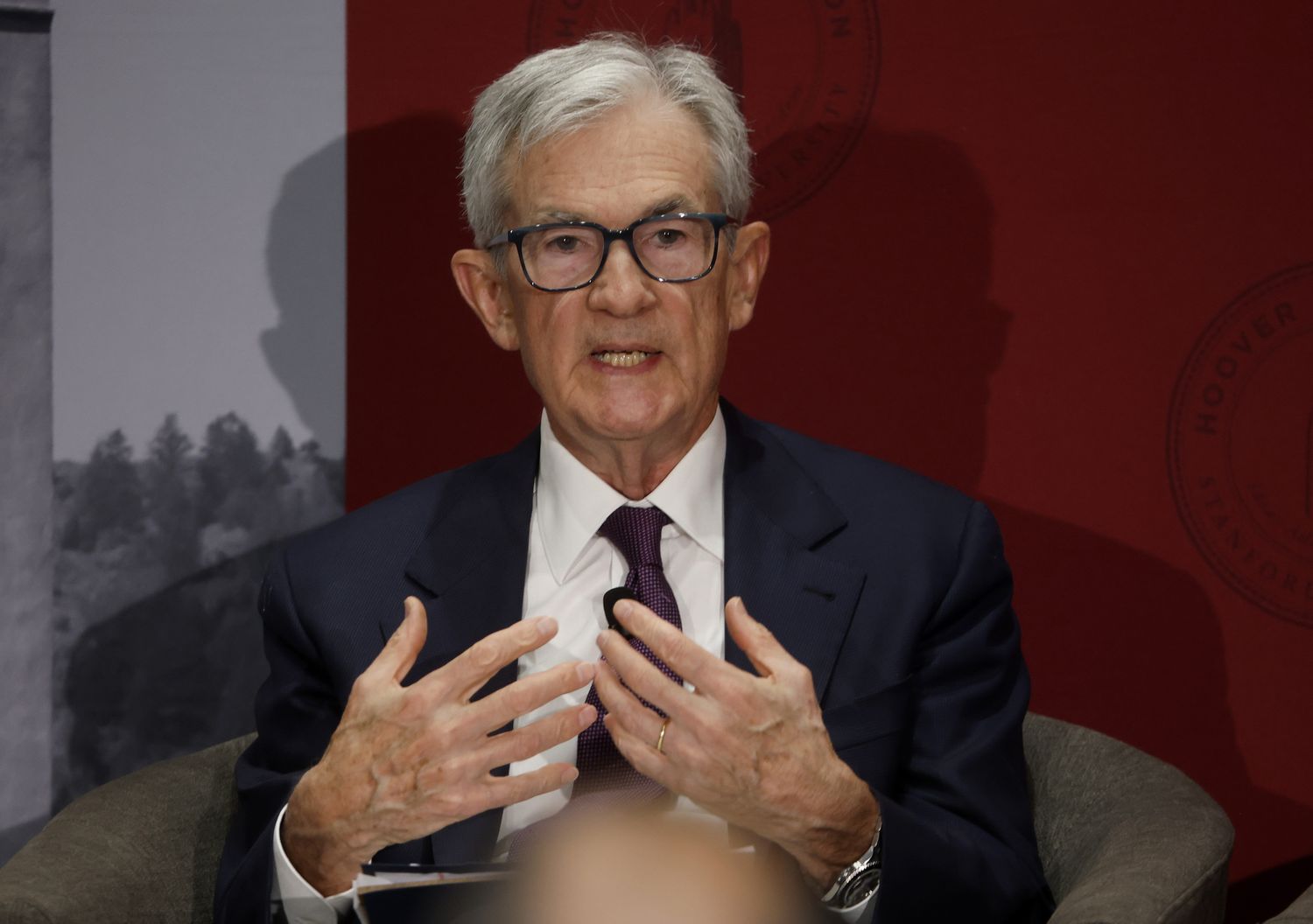
Key Takeaways
- While artificial intelligence spending will likely boost the economy next year, the new technology could have farther reaching impacts on the economy, Federal Reserve Chair Jerome Powell said recently.
- AI could contribute to rising productivity, but the central banker also warned that job losses may be another result of the technology’s adoption.
- The benefits from technology spending on the economy are clear, Powell said, but officials are still waiting to see what kind of impacts AI will have on productivity and the labor market.
Artificial intelligence will give the economy a lift in 2026, but it could also be coming for your job, according to Federal Reserve Chair Jerome Powell.
Powell laid out both the near-term and long-run implications of AI for the economy during a press conference last week after the Fed announced its third interest rate cut in as many meetings. Today, AI infrastructure spending is boosting business investment, which the Fed is factoring into its economic projections. And the new technology could also improve productivity, even as labor market woes could be coming, Powell said.
Why This Matters for You
AI-driven investment has the potential to shape the path of the economy, with implications for wages, corporate profitability and the labor market. Understanding these dynamics is essential for interpreting shifts in the global economy as well as for navigating personal financial decisions within it.
“It could have productivity implications, while also having social and labor market implications that we don’t have the tools to deal with,” Powell said of the burgeoning technology.
AI Set to Give GDP a Boost
At last week’s meeting, Fed officials raised their forecast for economic growth in 2026, pegging GDP growth at 2.3%, up from a September projection of 1.8%. And Powell said a key driver of economic growth will likely be investments in AI technology.
“AI spending on data centers, and related [things], has been holding up business investment,” Powell said. “AI spending will continue. The consumer continues to spend. So it looks like the baseline would be solid growth next year.”
The Fed points to the economic impact of spending on things like new warehouse-sized data centers and billions of dollars in cutting-edge new chips needed to power them. In fact, an analysis by Harvard economics professor and former Obama economic advisor Jason Furman showed that investment in computer equipment accounted for 92% of GDP growth in the first half of 2025.
Productivity May Rise, But So Could Layoffs
Powell added that AI could help keep business growth strong for now, but might have broader implications for the job market in the future.
“If you look at what AI can do and if you use it in your personal life, as I imagine many of us have, you can see the prospects for productivity,” Powell said. “I think it makes people who use it more productive. It may make other people have to find other jobs, though.”
Productivity, which measures economic production for hours worked, rose in the second quarter by 3.3%, according to the latest Bureau of Labor Statistics data. Economists say productivity growth can lead to gains in wages, corporate profits and living standards.
The trend of higher productivity dates back to the start of the decade, Powell said. Most of the recent productivity growth is likely tied to automation and other changes made during the pandemic, but AI may now be starting to have its own impact.
“We’re definitely seeing higher productivity. I think it’s a little quick to be saying it’s generative AI,” Powell said. “The pandemic may have induced people to do more automation and do more things with computers to replace people, and that raises productivity.”
Meanwhile, the Federal Reserve is also factoring a weaker labor market into its forecast, some of which may be the result of business adoption of AI. While some companies have cited AI adoption as part of announced layoffs, there hasn’t yet been a surge in unemployment claims, a fact that Powell described as “curious.”
“It’s probably part of the story. It’s not a big part of the story yet. We don’t know whether it will be,” Powell said of AI’s impact on the job market.
