

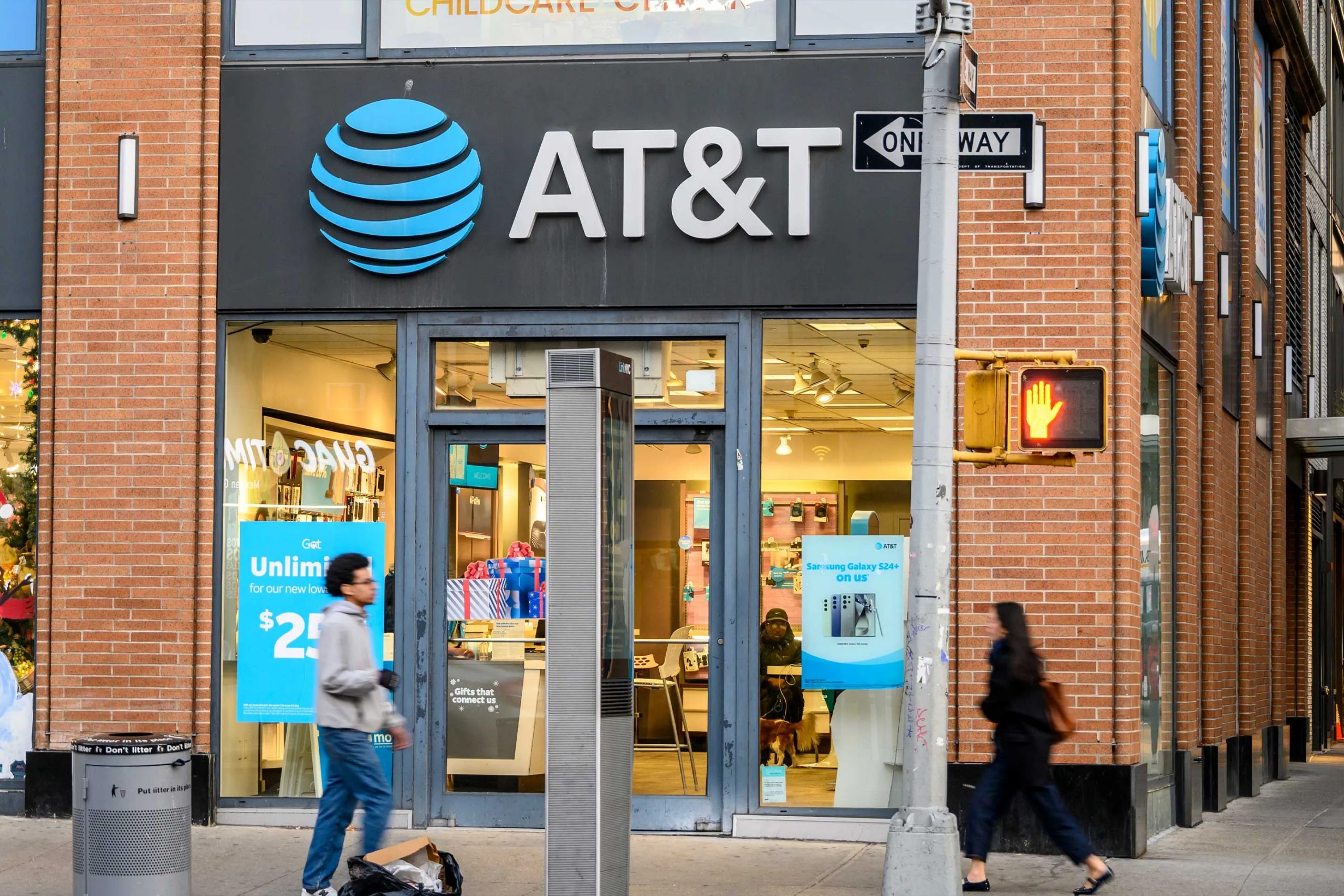
The deadline to request payment from AT&T’s $177 million class action settlement is quickly approaching, with just days left before applications close on Thursday.
The telecommunications giant was sued as a result of two major data breaches that exposed the sensitive information of over 1 million Americans. Under the settlement, people affected by the first breach from 2019 to 2024 can claim up to $5,000 in losses; those impacted by the second from May to October 2022 can claim up to $2,500. So anyone who suffered losses from both breaches can request a combined maximum of $7,500 — as long as they do it before Thursday.
Still haven’t submitted your claim? Here’s what you need to know to find out if you qualify for either (or both) of these payments and to successfully file for compensation.
Ads by Money. We may be compensated if you click this ad.Ad
What is the AT&T settlement all about?
The settlement stems from two large data breaches AT&T disclosed last year. The first breach exposed data that ended up on the dark web, including names, addresses, birthdates, account passcodes, Social Security numbers and other personal details tied to customers between 2019 and 2024.
The second breach was different but still far-reaching. Hackers accessed an AT&T workspace hosted on a third-party cloud platform. They obtained phone numbers associated with AT&T accounts, along with the numbers those customers called or texted between May and October 2022 and on Jan. 2, 2023.
This means that even people who didn’t have AT&T as their carrier — anyone who communicated with an AT&T customer during those dates — could have had their phone numbers swept into the breach.
Attacks of this scale are, unfortunately, nothing new. Last year also saw the National Public Data breach, one of the largest ever, with over 2.9 billion records exposed. And although AT&T denies doing anything wrong, it agreed to settle the lawsuits to avoid a prolonged court fight.
How to check if you’re eligible for the AT&T settlement
The easiest way to find out whether you’re eligible or not is to visit the settlement’s official website.
Those who have received a notice about the data breaches via mail or email from Kroll Settlement Administration, the service provider managing the settlement, can enter the provided Class Member ID. Otherwise, you can use your AT&T account details, such as the account number, name or email address, to look yourself up.
After inputting your information, the site will inform you whether your information was included in the first breach, the second breach or both. You’ll also see which compensation options you qualify for and how to proceed.
If you have any questions, Kroll Settlement Administration has a support line at (833) 890-4930 to help claimants.
How to file your AT&T claim
You can file a compensation claim online through the AT&T settlement website. After checking for eligibility, you’ll have to choose between submitting documentation of financial losses or selecting the no-proof cash payment.
If you opt for the first method, you’ll need to upload sufficient evidence that shows the money you actually lost because of the data breaches (think: receipts, bank statements or records of credit-monitoring costs). You may receive up to $5,000 for a claim with supporting documentation of the first breach and/or up to $2,500 for a documented-loss claim of the second one.
The no-proof option is the easier route, requiring only that your form be filled out and submitted. But it also provides less in the way of compensation: Claimants will receive a share of the net settlement funds — $149 million for breach one, and $28,000 for breach two — after administrative and attorney fees are paid out (and depending on the final number of claims).
Once the form is complete and any documents are uploaded, you can submit your claim electronically. Claims can also be mailed in, but they must be postmarked by Dec. 18 (that’s Thursday).
After the filing window closes, all submissions will be reviewed, and payments will start going out once the court grants final approval on Jan. 15. Keep in mind that the distribution could stretch well into 2026.
Ads by Money. We may be compensated if you click this ad.Ad
More from Money:
TransUnion Data Breach: Who’s Affected, What Was Exposed
Facebook Settlement Payments Won’t Go Out Until Early 2025 (or Later)
6 Best Identity Theft Protection Services of November 2025
