

For years, rookies have heard the same bad news: starter homes are disappearing, and first-time buyers are getting older. But the newest data shows something very different, and we’re breaking down how these recent changes can help you buy your first or next rental property in 2026!
Welcome back to the Real Estate Rookie podcast! Nationally, fewer than four in 10 non-homeowner households can afford a typical starter home. But in some states, things are getting a little easier. We’re breaking down where this market opening exists, where the headlines can be misleading, and how to turn a smaller new construction home or an overlooked resale home into a profitable investment property.
We’re also sharing our own starter home stories, the difference between an affordable home and a “cheap” one, and a five-part screening checklist that will help you separate the two before making an offer. Whether you’re looking to buy a house or find a more affordable real estate market to invest in, stay tuned to learn exactly how to spot a smart next deal!
Ashley:
For years, rookies have heard the same bad news. Starter homes are disappearing. First time buyers are getting older and anything affordable is either in a market you do not understand or needs more work than you think you can handle. But the newest data shows something more interesting than housing is unaffordable. The starter home market is beginning to loosen in a few very specific places.
Tony:
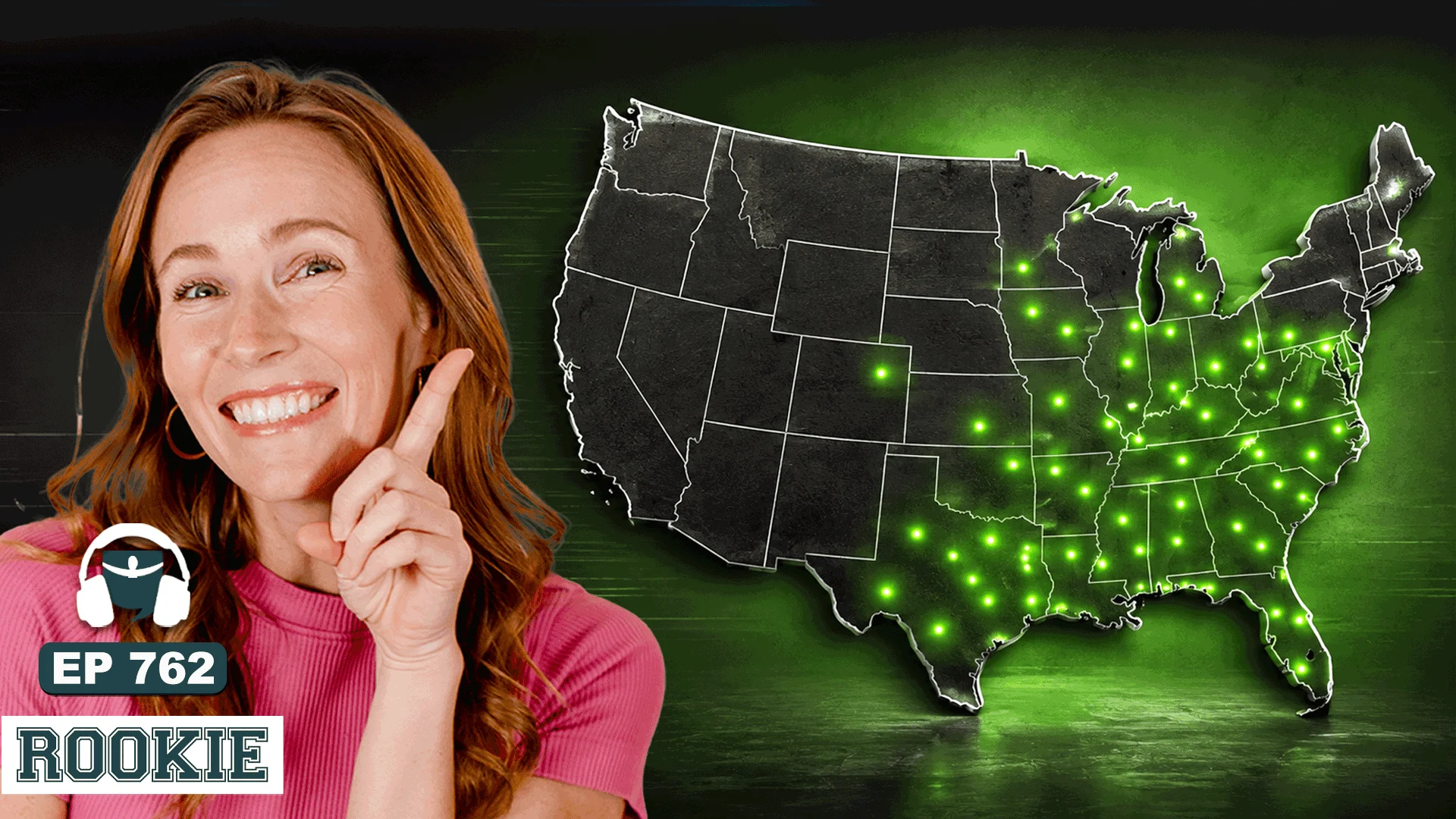
Now, that does not mean that cheap houses are back everywhere. Nationally, fewer than four in 10 non-homeowner households can afford the city’s typical starter home. But in Mississippi, that share is nearly 62% and several other states are above 50%. At the same time, builders are sitting on more inventory, offering more incentives, and designing smaller homes to reach buyers who cannot afford the old model.
Ashley:
Today, we’re breaking down where this opening is real, where the headline can mislead you, and how a rookie can turn a smaller new build or an overlooked existing home into a smart first purchase. We’ll also give you a five-part screen to separate an affordable home from a cheap property that still does not work. Okay. Tony, your first starter home, was that in a good time to buy or was it an expensive market, hard to find affordable homes in your starter home?
Tony:
Yeah, it’s funny. From a layout perspective, my first investment property and my first primary home were almost identical. They were both three bedroom, two and a half baths, good school districts, different parts of the country. Primaries in California, the investment was in Louisiana, but very, very similar. I think my primary was a little bit bigger in terms of square footage, but three bedrooms, two and a half baths, nice house, that was me. And we bought our primary home back in 2018, I think we moved in. And it was a great time to buy. And we got super lucky. I mentioned this on the podcast before, but we got super lucky because we bought in a new development and they’ve continued to build the same exact floor plan. They’re still building it today, but now it’s like, I don’t know, almost double the price that we paid for it back in 2018.
So it’s worked out pretty well for us buying that starter home.
Ashley:
Well, I think you’ll be a great asset to this episode, really specifically talking about building in phase one in the beginning and to getting into one of these starter homes. So a starter home, the best way that I guess we could explain it is that this is a home that typically newer families get into. It’s usually your first property you’re purchasing as your primary residence where it’s maybe not the lavish and every single expensive detail that you would really like in a home. But in my area, typical starter home is three beds, one bath or three beds, two bath is what you see. A lot of them are ranch style houses where just one floor, and then typically no lavish upgrades or any things like that. And a lot of them that I’m seeing right now that are going really fast, selling really fast in the market are outdated, but really, really well taken care of.
Where somebody older is moving on to another property or something like that and they just haven’t updated in a long time, but they’ve kept it in really great condition. Those properties are actually selling really fast, but they’re going as starter homes where maybe DIYers are coming in and slowly adding value over time to the property by doing cosmetic updates here and there.
Tony:
Just out of curiosity, is there such thing as a starter farm?
Ashley:
No, because farms are really, really expensive to start from scratch. So you basically have to be born into a farm family where you already have all of your equipment, all of your cows and things like that. One cow can just cost you $3,000. So do not recommend starting a farm from scratch unless you already have wealth and you’re looking for agricultural tax write-offs. One other thing I would mention about a starter home is that it’s usually an affordable home in your market. So it’s not on the higher end, but it’s not a super cheap property, but it’s still affordable. So in my market, that would be around 200 to $300,000 for a typical decent starter home in my area. What about in your market, Tony?
Tony:
It’s crazy. In my immediate neighborhood right now, buying a three bedroom, two bath, in terms of new inventory, new construction, they’re almost not even building traditional single family homes anymore. Almost everything that they’re building, a lot of the new inventory right now are town homes. They aren’t even really building a lot of new starter single family homes. If you’re buying a three bedroom, a lot of the new construction right now is townhomes and they’re going for six, 700K probably for that type of product. If you’re buying resale, you can still find those for around the same price, but everything new construction’s about that price point, which is crazy to think right now.
Ashley:
We pulled up a couple articles and things here to give you guys some data, but realtor.com had this article and this is how they describe a starter home. It is a smaller, affordable home, often around 1500 square feet or less. And then we also looked at LendingTree, what their actual definition was, and theirs was the weighted 25th percentile value of owner occupied homes in each state. So basically what this means is the lower priced quarter of each state’s owner occupied housing stock. And then there was actually another inventory analysis done by realtor.com and they said homes price below $350,000 nationally or below 80% of a local market’s median list price. So look at your market and what is the median list price and take 80% of that and that’s kind of the price point of a starter home. So basically your takeaway from that is a $200,000 home could be an entry level starter home in one market, but not in another market.
And me and Tony just kind of shared that as an example comparing our two markets.
Tony:
So let’s talk a little bit more about the affordability piece. So we mentioned Mississippi earlier, but let me just break down what we actually meant by that. So 61%, and again we’re looking at Misissippi, 61% of non-homeowner households in Mississippi have the income that would allow them to meet the threshold of buying a starter home for that state. Nationally, that number’s only 37.6%. So you’ve got 61% of people in Mississippi that based on their finances can afford a starter home compared to 30, almost 8% and other nationally that can afford to buy a starter home in their market. And the data says that the average starter home value is about 200K. The income needed is about 62, $63,000, and the median non-homeowner household income is $55,000. So there’s a gap there. If the income needed is 62 and the average income is 55, we’ve got a gap there of seven to almost $8,000 that we’re seeing nationally across the market.
I think just for context sake, Ash, people always talk about how do we fix affordability and what does that actually mean and how do we get there? Obviously I’m not an economist and there’s lots of other people who are way smarter than me who I’m sure are working on solving this. But just in my mind as someone who’s a real estate investor, I think if a few things were true, we could probably get housing costs down. Number one is make it easier to build things. I think part of the big challenge in a place like California is that there’s so much red tape to build and it’s such a pain and a lot of times it’s not worth it because of how difficult it is. And then I think if we also adopted maybe cheaper ways of building homes, have you seen Ash, these 3D printed homes?
Ashley:
Yeah, I’ve never seen one in person, but yeah, I’ve seen the YouTube videos.
Tony:
And it seems, I think we’re all just so used to these traditional stick-built homes that there’s maybe a stigma around things that aren’t, or even prefab homes that are super similar to stick build, but they’re just majority assembled offsite and they’re just installed on a foundation when they get there. But there’s all of these other building strategies that I think maybe if we adopted and there was less stigma around, we could also have an opportunity to bring costs down. So making it easier for builders to build, employing strategies that are just generally more cost efficient. I think those are the two things that come to mind for me because it’s like supply and demand, right? It’s like the laws of economics say that if we increase the supply dramatically and supply outpaces demand, then we can get some balance there of affordability. Now, I think the bigger question, Ash, and I’m curious what your thoughts are, is say we do get to this point where every home is 3D printed and they can build a home in four weeks and so the prices come down exponentially, what does that happen to everyone like us who has all this equity in our homes if the supply has now just flooded the market and home prices have gone down?
So there’s some give and take. So I don’t have all the answers, but I do think if we want to help affordability, those two things that come to mind. What are your thoughts Ash?
Ashley:
Well, like everything, I think there’s something else that would be offset by that plan. So in theory, that seems like a great idea is to remove the red tape, let more people build. There’s this town near me that has let, it’s a really small town. They don’t even have a grocery store or anything like that. They have their own elementary school that is connected with a town over that is a larger school that has three of their own elementary schools, middle school and high school. The smaller town, just the town permitted two new developments. One just did 63 single family homes. Every single person that moved into those homes besides one family brought kids from other districts. Now the school has two classrooms per grade. The town also just approved development of 163 prefab houses to be built, which will also be going to the school that has two classes per thing.
So I think some of these towns, by me, they can’t keep up if they were to allow more building and keep up with the demand that would come for the resources that the government provides such as school, the staffing, the police, I don’t know, other things like that. But that’s the first thing I thought of is that even if you were going to increase the supply in some areas that –
Tony:
The infrastructure has to keep up.
Ashley:
Yeah, negative effects in that market. Okay, so the purchase price of the property is only one line item. When we come back, we’re going to discuss more about the affordability of starter homes and other expenses you’ll incur, such as property taxes, insurance, HOA fees, and many more that you need to look at before you actually purchase the deal. We’ll be right back. Okay, welcome back. So now that we know the national average is not the opportunity, let’s look at where the numbers are actually moving and what rookies should search for. So we found some markets and rated them by affordability. So Kentucky, 50.7%, $125,000 value, and you need an income of 42,280 to be approved.
Tony:
Kansas comes up next at 52.3% and the home values are 125K and the income you need is about $46,000. And
Ashley:
Next up we have North Dakota at 52.7% and that’s $150,000 value and you’ll need an income of $48,000 on that one.
Tony:
Next we have Alabama at 54.1%. And again, guys, just to clarify in case you forgot, the 54.1% represents all of the non-household or non-property owning households that have the income to actually qualify for a mortgage. So that’s what the 54.1% means. And the value there is 120K for properties and the income needed is only $39,000.
Ashley:
Next up we have Arkansas, 54.3% with $110,000 value and the income you need is $37,862.
Tony:
Side note, we always talk about my lack of geographic know-how. And I remember when I found out that Arkansas was a state because we were going on a road trip and I was young. I had to be in, I don’t know, second grade maybe. And we did this long road trip and I knew Kansas, but I’d never heard of Arkansas. And I saw it on paper and I was like, “Mom, what’s Arkansas?” And she’s like, “Actually, it’s Arkansas.” So if you wanted some trivia on Tony Robinson’s ineptitude of maps, it traces all the way back. I
Ashley:
Never ever put that together that it has Kansas in the name.
Tony:
Kansas is in there, right? It’s like how does SAS, how is that pronounced Saw? It makes no sense to me and it never has, even when I was in second grade. We got to lobby to get Arkansas to change how they spell it. All right. But anyway, Arkansas comes up next at 54.3% of households, $110,000 value and income at 37,000.
Ashley:
Then we have West Virginia, and this one is at 58% with a value of 90,000 and income needed is only $29,114.
Tony:
West Virginia also just from a median home price, it actually has the lowest median home price across all the states in the country. So it’s just generally a really, really affordable or low cost place to live.
Ashley:
You had looked at a deal there before, right? Like a glamping?
Tony:
We did, yeah. We were looking at a glamp site and there’s a national park in West Virginia as well. A lot of people don’t know, but in 2020 during COVID, it got its designation, so it wasn’t super popular. But yeah, there is a national park that’s pretty popular as well. And then rounding out the list, we have Mississippi coming in number one. Again, 61.8, almost 62% are able to afford. $85,000 is the typical starter home value, and then the income needed is only 29,000. Now, Ash, I just want to get your take because obviously long-term rentals are your thing. From your perspective as a landlord, is it better to buy in an area like this where the starter home is so accessible or is it better to buy in an area where it is slightly out of reach so that you do have more consistent rental demand?
Ashley:
Well, like we said in the intro, it is important to not confuse affordability with cheaper options. So when I started investing, I was going for those cheap properties and they just ended up being headaches and didn’t see a lot of appreciation and just I wouldn’t do it again. Yes, it got me started, but we’re talking about a completely different thing. Those cheap properties, they had lots of updates to them that were bandaids. They were never well taken care of properties. They had been resold and resold and resold multiple times with people doing different DIY things and everything like that. So I think a big thing to really be cautious of is not only the property itself, is this going to just be a money pit to you where you’re constantly going to have to be doing repairs to the property? And repairs are different than maintenance, where maintenance is maintaining and more proactive than actually making repairs because things are constantly breaking in the property.
With these older properties, you want to take that into account, but also you want to look at the market. So just because a property is affordable or cheap in one of these markets doesn’t mean that you should go and invest in that market. You still need to do your market analysis. So right off the bat, I’m probably not going to purchase a property in Mississippi or West Virginia. I don’t know a ton about either property, but West Virginia is, I’m pretty sure the last I looked was seeing a huge decline, people actually not moving into the property or to. Let me say that again. Is seeing a huge decline in property. God, I still can’t say it. Is seeing a huge decline in population growth where people aren’t moving to West Virginia. Arkansas though, I would be very interested in investing there. Our good friend, Henry Washington from the BiggerPockets Real Estate Podcast, he does a lot of investing in Arkansas and is from there also.
So they have a lot of industry drivers, a lot of headquarters are also in Arkansas, like I think Walmart and a bunch of other ones. So definitely looking at the property itself and looking at the market that it’s in. The markets that I had invested in, they were very small. They didn’t have any industries. There was no economic drivers and there was not population growth, anything like that. I just saw the price tag and I saw that there was renters that wanted units in these areas and I just purchased them. So make sure you know the difference between these affordable starter homes and cheap properties.
Tony:
And me, I’m just kind of looking at the math. If we use Mississippi, $85,000 starter home, 3.5% down, say they go FHA, that’s just under $3,000 that they’d need in terms of down payments to get into that deal. The income’s $30,000 that they need to qualify. So maybe in the course of a couple of years, someone could save up the three grand on a $30,000 income to buy a house. Whereas in other markets where maybe it’s like, I would need to save for a decade to be able to actually get to the down payment that I need to buy in this house. It just feels like there’s maybe a little bit more stability if actually the gap in the number of people who can afford a starter home is actually a little bit lower. So affordability as the investor doesn’t always necessarily equate to maybe the best deal.
So just more data points that I think we should try and look at.
Ashley:
Okay. Now this is the part I was really excited talking about because I get shiny object syndrome over this and we’ve had several guests come on and talk about this, but buying smaller new builds and house hacking them as a single family home or maybe renting out the rooms while you’re living there and then moving out after a year going and purchasing another property or just buying it right off the bat as an investment property and renting it out. I actually pulled a report here from the Census Bureau and it reported that 485,000 new homes for sale were in June of 2026. This is equal to 9.3 months of supply if we stay at the current sales pace. The median sale price was 398,000, which is down from about 410,000 one year earlier. So you can see the year over year change isn’t significant, but it is still kind of a little margin of error there that you have.
The big thing I think that makes these new builds so attractive is the builder incentives that can come with it. So we pulled this other report that states that 64% of builders are offering sales incentives and 37% of them have actually cut prices to be able to move through inventory.
Tony:
And guys, I think that’s one of the biggest benefits of new construction is that you can get things like having the builder cover all of your closing costs, giving you permanent rate buydowns, temporary rate buydowns, additional upgrades inside of the property. So I think right now, at least in recent history, might be one of the best times to go after a new build because it could actually in a lot of ways be cheaper to buy a new build than it is to buy a home that was built 20 years ago. And I think that’s kind of a unique situation for us to be in. But to Ash’s point, we’ve had investors who do exactly that. They buy a new build in phase one, they refinance again at phase 10 when they built up a lot of equity and they use that money to go just repeat that same process.
So I love the idea of new builds as a specific strategy to build your portfolio consistently over time.
Ashley:
And here’s a little list we can give you guys. So if you got a pen and paper, take out your notes app. Here’s things you can ask the builder for. The first one is a permanent rate buy down. So they’re going to buy down your rate. The next one is maybe just a temporary buydown. So the first year, first two years, they’re buying down your rate and then it’ll go back to whatever the bank is offering. A closing cost credit, an impliance package, a lot premium waiver and a price reduction as separate line items. So there’s different advantages for asking for things separately, but these are just a list of things that you can ask and see what you can get from the builder.
Tony:
I think the only thing to consider as you’re going after the new builds is also just the total cost. So sometimes you’re going to have to deal with HOAs and a lot of these bigger subdivisions, including that cost. Things like your property taxes. For example, for us, when you buy a lot of times a new construction, really any property in the county that we live in, you get this thing called a supplemental tax bill where you buy the property, it gets reassessed and you get this massive bill at the end of year saying, Hey, here’s how much you owe us because you paid more for the property than what it was the last time that this transacted. So just know that there are some ancillary costs that you want to be aware of as you go through new construction. But I think the last big thing that I’ll say that it’s a benefit is that you often, most builders will give you some sort of warranty for the first year or two after you buy.
And that can help, especially if something big happens. We had a leak, Ash, at our primary residence and it was like 10 months into owning and we had a 12-month warranty and it was right up against the edge of this deadline. But there was this big leak, they had to cut out a big part of my ceiling. They had to reconstruct my guest bathroom upstairs, and it was all covered under the warranty, which would’ve been a much bigger expense had I had to take care of that myself. So I do love new builds for that reason.
Ashley:
And also too, I’m not positive about this, and maybe you can confirm this Tony, but also when you’re buying in phase one, I would assume that the builder wants a higher purchase price to be able to sell for phase two. So say the property is listed at 500 or they’re selling the new build for 500,000 and instead of asking for the purchase price to be 450,000, you keep it at 500,000, but you ask for all these additional things so that way they can close with a sale price of 500,000 and that is then a comp used for phase two.
Tony:
Yeah, absolutely. And that’s my exact understanding as well is that the builders want to protect their appraised value for the second phase. They can continue to increase prices. So we do have leverage as buyers when it comes to new construction. All right guys, new construction is just one of the ways we can go, but there’s also tons of homes that are resale that we can go buy as well. So we’ll talk about that after a quick word from our show sponsors. All right guys, welcome back. So the next area that we want to talk about is the existing homes that are just kind of hiding in plain sight. So these are all of the resale homes, the homes that aren’t new construction, but that are just someone’s been there for a while and now they’re moving out and selling it to you. And I think the kind of sweet spot here is that we’re looking for homes because again, we’re talking about the starter home product.
And I guess we can really go two ways here. As an investor, if you have your investor cap on, I think if we can find the house that has good bones, but just needs to be brought into the year 2026, those can oftentimes be the best deals. And that was my exact first deal. It was a home that was built in, I believe it was the 1950s, and it looked still like a home from the 1950s. It was like pink tile, the parquet floor, but it was in generally really good condition, but we had to renovate everything. And that ended up being a really, really solid first deal for me to walk into because it wasn’t this big heavy rehab where I had to do these additions or move walls or anything. It was like, “Hey, the bones and the structure of the house is actually really well taken care of.
It’s just cosmetically. Everything’s super old and outdated. So we’re going to tear all that down, start from scratch and build it up.” But it wasn’t a full gut renovation. And the benefit of going after these deals, guys, is that generally it’s going to be lower than something that’s already been renovated. So we get some of that upside. And if you can find that sweet spot, it’s a meaningful first renovation for you to step into without feeling overwhelming.
Ashley:
I mean, I’ve been investing for over 10 years now, and I just bought my new primary that was exactly one of those properties is needed some love and updating, but it was kind of taken care of over the years. It had really good bones, but it was a hoarder that lived in there. So it was just tons of stuff, which actually kind of protected the walls and the flooring and things like that. But we still ended up gutting it anyways, but that gave us some time to make it into what we wanted. And we close in February and we just moved in two days ago and we still have one bathroom to finish. There’s still not all the trim on the walls and we’re going to continue to do that. But that is the exact opportunity I’m talking about in my market where you’re finding a property that is in move-in condition, it’s just not updated.
So we had to do a pretty extensive rehab. So my property may not be the exact definition of that, but we’re still going to be doing updates to it as we’re living through it. But I think they talk about mom and pop for businesses like, oh, finding the mom and pop laundromat, buying that, finding the mom and pop campground and buying that. These are the mom and pop homes that have been taken care of and maintained. One thing I will mention though is when you are looking at a property and it’s going to be a rental, look at what it takes to actually maintain the property. So I would like, if I’m buying a single family home that’s going to be an investment property, I want a smaller driveway. I don’t want to have to pay a lot for snow removal. I want a smaller yard to maintain.
So even if I’m paying for the lawn care for somebody to cut it, I want it to be small. Even if you are having a tenant maintain it or pay the cost of it, when you go and charge for rent, they’re going to have to factor in what that cost will be for them. Or if they have a lawnmower to mow it all, or they could just use a push mower, or if they have a snow plow or any kind of means themselves to snowplow it. I want to decrease the size of things that need to be maintained. So those are two small lawn and small driveway. And some people would do it differently and say, no, the bigger the driveway, the bigger the yard, I’ll be able to charge way more rent. I would like to look at less to maintain. And then the same with the actual physical building.
So just what needs to be maintained, the HVAC filters need to be changed out. Does the property have a propane tank where it’s going to need to be filled every once in a while? Different things like that. So making a list of those things that need to be maintained on the property, putting a cost associated with that, the tenant’s going to do it if you’re going to do it. And if a tenant is in charge of doing something like replacing the air filter HVAC system, how are you going to make sure that they’re actually doing it and taking care of your property too? So I would just not only the purchase price and things like that, or what it will cost to update it, look at these other maintenance costs that will be with you throughout the future too.
Tony:
All right. As we wrap up here guys, let’s just talk about the screening process that we can go through, like a five-part checklist of what we want to look at as we evaluate starter homes from the lens of being a real estate investor. And I think the first thing that we want to look at is market liquidity or market health. So we want to look at things like supply, both supply of properties to purchase, days on market, how long are they sitting there? Price reductions on the actual acquisition side, what does that look like? And then also on the actual rental side, how many rentals are there right now? How long have they been active? Are you seeing price reductions on what they’re charging for rent? So just understanding the current balance in a market between supply and demand is the first box that we want to check.
Ashley:
Now the second one is the payment test. So you’re going to want to underwrite the principal, interest, taxes, insurance, any PMI, if you’re putting less than 20% down what your monthly HOA is, utilities you are going to pay each month. If you don’t know what those are, you can call the utility provider and they can give you an average. So they won’t be able to tell you exactly what they’re billing for the property, but they can go back over a year and tell you what the average that was billed for the year. So that’s pretty useful information to get. Figure out your maintenance to maintain the property. Any repairs, I would leave a percentage available for repairs. Vacancy, if you have one month vacancy, two month vacancy, how much do you want to set aside for that? And then also a management fee. So do put these together, run the payment after any temporary builder incentives you may have now, and then what happens after they expire?
So say you get the interest rate buydown, but it’s only for one year, what does the property look like year one? And then what do the numbers look like year two after the rate changes?
Tony:
And the number three is just really understanding your total all-in costs. So your closing costs. I feel like a lot of people just think about down payment, not realizing there are other closing costs associated with closing on a property as well. Any immediate repairs you need to make to get the property ready for your tenants or for your guests or whoever it may be, appliances, landscaping, just really making sure you’ve got a full picture of everything that needs to be done, front loading your reserves. We talked earlier about, or in other episodes about the importance of building out your reserves, just having a clear picture of not just what does it cost for me to acquire the property, not with just my down payment, but everything that I need to get to the point where I can start producing revenue. What are all the costs to get me there?
Ashley:
And then our fourth one is functional demand. So you want to find out what people actually want in a rental in your area. So how many bedrooms, how many bathrooms are they looking for? Also the layout. In my area, nobody cares renting an apartment if there’s a dining room or not. Nobody cares. I have one property right now that the person just moved out. I’ve owned it since 2014. I’ve had three different renters in there. Every single person used the dining room as a bedroom, as an additional bedroom. So thinking about what tenants are going to want, and then also whenever you plan to sell this property as to, that’s I think a big advantage of buying a single family home is in your exit strategy. You not only have investors that are looking to purchase your property, but also just everyday people to buy the property as their primary, which is a very slimmer pool when you’re selling a small multifamily property.
And then also looking at comps in the area of what other rentals are offering. You can look at just Google properties for sale, see what’s being listed, what’s available in the area. And then also what industries are you near, what school districts do people want to be in and maybe kind of tailor your choice of property in one of those markets or neighborhoods.
Tony:
And then the final piece, number five, is just having a clean exit strategy. So obviously the first goal, at least for the context of this episode is that we’re thinking about traditional long-term rentals, but could you sell this property to another non-investor who just wants to live there or is the layout so wonky that maybe it only makes sense for an investor? We have some folks who buy properties and they convert three bedrooms into six bedrooms by getting rid of the dining area and the living room because they’re not needed for co-living. So can you resell this to someone who just wants to live there as their primary residence? I think sometimes if you get into a deal and maybe it’s too unique or too tricky, your exit strategies kind of dwindle. So just make sure you’ve got a clear roadmap or exit ramp to get out of the deal as well.
Ashley:
Now for our final takeaway, just remember the opportunity is not moving to the cheapest state or buying there and it’s not buying the smallest new build property you can find. It is finding the overlap between an attainable payment, improving local supply, durable rental demand, and a property that ordinary buyers will still want later on when you’re ready to exit the property. Thank you guys so much for joining us on this episode of Real Estate Rookie. I’m Ashley and he’s Tony and we’ll see you guys on the next episode.
Help us reach new listeners on iTunes by leaving us a rating and review! It takes just 30 seconds and instructions can be found here. Thanks! We really appreciate it!
Interested in learning more about today’s sponsors or becoming a BiggerPockets partner yourself? Email [email protected].
